Wegen eines peinlichen Fehlers hätte Österreich nun fast keinen Vizekanzler

Wegen eines peinlichen Fehlers hätte Österreich nun fast keinen Vizekanzler

Am Montag hat Österreichs Bundespräsident Alexander Van der Bellen die neue Regierung von Kanzler Sebastian Kurz vereidigt. Fast hätte der 73-Jährige die Vizekanzlerschaft von FPÖ-Rechtsaußen Heinz-Christian Strache verhindert – wegen eines Missgeschicks.

Van der Bellen vergaß, dem Politiker die Hand zu geben und ihm zum Gelöbnis aufzufordern. Es wäre ein Fehler mit Folgen gewesen.

Hätte Van der Bellen Strache tatsächlich nicht das Gelöbnis sprechen lassen, wäre der FPÖ-Chef jetzt nicht im Amt, sagt der Verfassungsjurist Heinz Meyer der österreichischen Tageszeitung “Die Presse”. 

Der Präsident bemerkte seinen Fehler jedoch noch rechtzeitig und ging zu Strache zurück. 

Und noch ein Fehler

Doch noch ein weiteres Missgeschick unterlief Van der Bellen am Montag. Nachdem er allen neuen Ministern die Gelöbnisformel abgenommen hatte, griff sich Van der Bellen an den Kopf.

Ihm fiel ein, dass die sogenannten Bestallungsurkunden noch unterschrieben werden müssen.

Diese Episode verdeutlich: Dass Van der Bellen Strache überging, war wohl keine Absicht, um den Rechtspopulisten eins auszuwischen. Sondern wirklich nur Vergesslichkeit.

Mehr zum Thema: Wer glaubt, dass Österreich nun wie Polen und Ungarn wird, hat die wahre Gefahr nicht erkannt

Langeweile in Wien?

Auch seinen einstigen Rivalen um das Amt des Bundespräsidenten, FPÖ-Politiker Norbert Hofer, begegnete Van der Bellen am Montag. “Man hatte fast den Eindruck, die beiden könnten gleich noch einen Kaffee trinken gehen, um über alte Zeiten zu sprechen”, berichtet die “Welt” über diesen Moment.

Die aufgeladene Wahlkampf-Zeit in Österreich ist vorbei. Von den Beschimpfungen und Vorwürfen der Vergangenheit war am Montag nicht mehr viel zu spüren.

Ohne die Fehler von Van der Bellen wäre die Vereidigung des jüngsten Kanzlers mit seinem unerfahrenen Team wohl fast langweilig gewesen.

 Mehr zum Thema: Das ist die rechtsextreme Vergangenheit von FPÖ-Chef und Vizekanzler Strache

(lp)

www.huffingtonpost.de/entry/van-der-bellen-strache-vizekanzler-vereidigung_de_5a38c80ae4b0860bf4aab3b0

The Grenfell Fire Report Shows There Is No Time For Complacency On Cladding Regulations

The Grenfell Fire Report Shows There Is No Time For Complacency On Cladding Regulations
Today’s interim report on fire regulations in relation to the Grenfell Tower fire confirms what many of us have always known. In the words of Judith Hackitt, ‘the route for residents’ concerns to be raised and addressed is unclear and inadequate’. Hackitt has held interviews with panels of experts and residents around the country, but not those directly involved with the Grenfell tragedy.

If she had, she would have learnt that in Kensington and Chelsea, the line of communication was clear. The building owner was the Council, and the management was the KCTMO. In this case, it wasn’t that residents did not know who to contact, it was that they were not listened to.

Residents had called on RBKC Council and KCTMO to deal with innumerable problems relating to fire safety and access in Grenfell Tower over many years. They were mocked and side-lined by those in authority. In 2013 RBKC solicitors sent the bloggers behind Grenfell Action Group a ‘cease and desist’ letter in relation to their warnings. In November 2016 the blog stated: ‘it is a truly terrifying thought but the Grenfell Action Group firmly believe that only a catastrophic event will expose the ineptitude and incompetence of our landlord’.

Instead of engaging with residents the Council had acted to silence them. Seventy-one people lost their lives on 14 June in an entirely preventable atrocity. Had they listened families would not have lost their loved ones, over 200 children would not be spending Christmas in bed and breakfast hotels, and we would not have a wounded and bereft community fighting for their rights to rehousing.

Hackitt notes in the foreword to her interim report ‘this tragic incident should not have happened in the 21st century’. This is true, but not because there was no defined line of responsibility. During her appearance at the Communities and Local Government Select Committee today, she repeatedly stated ‘it’s complicated’. But we need clarity.

There are many good points in the report, such as: an acknowledgement that the current regulatory system is not fit for purpose; the need for better defined roles and responsibilities, specifying who is accountable for fire safety; better oversight of construction, repair and maintenance work; tighter enforcement of building control; improved skills and competence in the design, construction and maintenance of buildings. 

But the report omits to implement the one issue that many would welcome: a total ban on types of cladding which have any degree of combustibility. As matters stand, many Councils and other building owners have already begun work on ‘at-risk’ buildings with combustible cladding. But cladding which is simply ‘less combustible’ is still legally permitted as the current guidance has not be updated or improved.

The Royal Institute of British Architects expert advisory group has called on Hackitt to implement an immediate ban on all cladding with any degree of combustibility. They also call for a greater role for sprinklers and recommendations that high-rise buildings should have two staircases.

A summit is being called for late January to discuss the next steps and work towards a further report in spring with recommendations. They will look at good practice in other countries, many of which have far more stringent fire safety regulations.

We can only hope that the very obvious step of implementing the Lakanal House inquiry recommendations, after six people died in 2009 from an external cladding fire, will finally be put in action without further delay.

The ‘systemic problem’ which Hackitt refers to has clearly emanated from the ‘bonfire of red tape’ that was lauded during the coalition government, at a time when many were warning of it potential repercussions.

This is no time for complacency or delay, while people now living in tower blocks are afraid. Implement the Lakanal House recommendations now.

www.huffingtonpost.co.uk/entry/grenfell-fire-interim-report_uk_5a38cba1e4b0c65287abe78c

“Hart aber fair”: Foto bringt auf den Punkt, wie die Parteien versagt haben

“Hart aber fair”: Foto bringt auf den Punkt, wie die Parteien versagt haben
Oppermann fand das Jamaika-Scheitern peinlich – musste aber selbst große Fehler zugeben. 

  • Bei “Hart aber Fair” kamen SPD-Mann Oppermann und CDU-Kollegin Klöckner in die Schusslinie der anderen Gäste
  • Ihr Fazit: Das Jahr 2017 war vom politischen Scheitern der großen Parteien geprägt

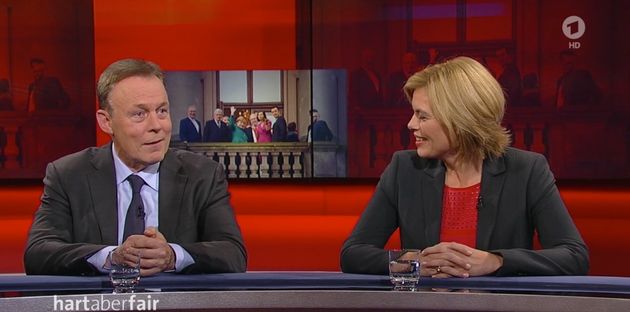
“Ich möchte meinen Gästen ein Geschenk machen”, sagte ARD-Moderator Frank Plasberg, “freies Schießen, keine Fragen von mir”.

Am Montag sollte “Hart aber Fair” eine besondere Sendung werden: ein Rückblick auf das, was die ARD-Redaktion schon einmal suggestiv das “Flopjahr” getauft hatte.

Es wurde ein offener Schlagabtausch, bei dem weder SPD noch CDU eine besonders gute Figur machten.

Die Gäste:

► CDU-Vize Julia Klöckner

► “Taz”-Journalistin Bettina Gaus

► Comedian Abdelkarim Zemhoute 

► SPD-Bundestagsvize Thomas Oppermann

► “Welt”-Journalist Robin Alexander

Gaus: “Herr Oppermann, was meinen Sie damit?”

Natürlich war das Thema Nummer Eins: die schleppende Suche nach einem neuen Regierungsbündnis nach der Bundestagswahl. Erst zerschellte Jamaika, jetzt hat sich die SPD trotz anfänglichem “Nein” an den Verhandlungstisch geschleppt.

Zu “ergebnisoffenen Verhandlungen”. “Taz”-Journalistin Gaus entlarvte schnell den Denkfehler dahinter. “Herr Oppermann, was meinen Sie damit?”, fragte sie das SPD-Urgestein.

CDU-Chefin Angela Merkel habe immerhin “für ihre Verhältnisse sehr deutlich” gemacht, dass sie nur für eine “richtig normale Koalition” zu haben sei.

Gaus stellte einen Vergleich auf, der zeigen sollte, wie aussichtslos die Strategie der Sozialdemokraten ist, “alternative Regierungsmodelle” ins Spiel zu bringen: “Wenn Sie Ihr Haus behalten möchten, ist es ziemlich sinnlos, mit Ihnen über den Verkauf des Eigenheims zu verhandeln.”

Comedian: “Ich wusste, dass das nichts wird”

Der SPD-Mann geriet so schnell in die Defensive. Auch weil Gaus kein gutes Haar an den von SPD-Chef Martin Schulz geforderten “Vereinigten Staaten von Europa” ließ.

Der ehemalige SPD-Fraktionschef musste schnell zugeben: “Das schaffen wir ganz sicher nicht in vier Jahren.” Schulz habe eine “alte Forderung der SPD von 1925” aufgegriffen.

Ein Argument, das eher für zynische Belustigung bei den anderen Gästen sorgte. Oppermann hatte Glück, dass das Gespräch bald auf ein anderes Thema kam: das Scheitern der Jamaika-Koalition.

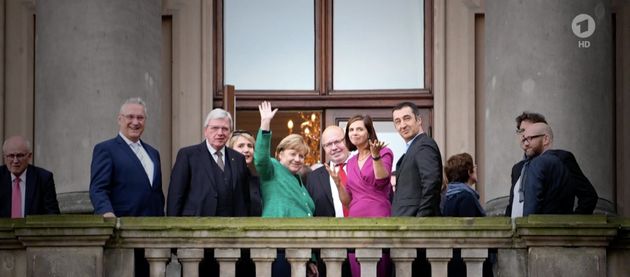
► Plasberg zeigte dazu eines den mittlerweile berüchtigten Balkonfotos der Sondierungen.

Comedian Abdelkarim Zemhoute machte sich über das gekünstelte Bild lustig: “Als ich das gesehen habe, wusste ich, das kann nichts werden.” 

CDU-Frau Klöckner gab zu, dass die Bilder nicht glücklich gewesen seien. “Ich rate uns, dass wir uns für die Gespräche mit der SPD einen Ort suchen, der keinen Balkon hat.”

Oppermann: “Peinlichste Wochen der Politik”

Auch Oppermann durfte dann einmal angreifen: Die Sondierungen seien “die peinlichsten vier Wochen der Politik” gewesen. Klöckner ließ sich das nicht gefallen und schoss dazwischen: “Das ist keine peinliche Veranstaltung, das ist Demokratie, Herr Oppermann.“

Die SPD habe die schwierigen Sondierungen immerhin mit ihrer Verweigerung erst nötig gemacht.

“Welt”-Journalist Robin Alexander brachte die Jamaika-Verhandlungen dann wohl am Treffendsten auf den Punkt.

Das Bild, das Plasberg einspielte, sei ein Sinnbild für die Fehler bei den Verhandlungen: “Auf den ganzem Bild ist kein Liberaler und die CSU ist ganz am Rand.” Im Zentrum hätten immer nur Merkel, Altmaier und die Grünen gestanden.

Das viel diskutierte Balkonbild.

“Schulz dachte echt, die Leute mögen ihn”

Nun ist es an der SPD, es besser zu machen.

Doch die Sozialdemokraten haben sich längst nicht von der Wahlschlappe erholt. “Wir haben richtige Fehler gemacht”, musste Oppermann zugeben.

“Schulz dachte tatsächlich, die Leute finden ihn toll. Das stimmte aber nicht“, ätzte Journalist Alexander. Der SPD-Chef habe sich “an sich selbst besoffen”. 

Versöhnliche Worte kamen dann ausgerechnet von CDU-Kollegin Klöckner. Ganz im Koalitionsmodus warb sie für ein neues schwarz-rotes Bündnis und mehr Selbstvertrauen bei den Sozialdemokraten.

“Die SPD hätte sich gar nicht so klein machen müssen”, findet Klöckner. Man habe in den vergangenen vier Jahren “viel zusammen erreicht”.

Zumindest einmal schien auch bei Oppermann deutlich durch, dass er sich die GroKo wünscht. “Neuwahlen sind indiskutabel”, sagte der konservative SPD-Mann.

Mehr zum Thema: Es gibt 4 Theorien, warum Jamaika gescheitert ist – das ist die wahrscheinlichste

(ll)

www.huffingtonpost.de/entry/hart-aber-fair-flopjahr_de_5a38a91de4b0860bf4aaa276

Vast Majority Of Public – Including Brexit Voters – Want To Keep EU Bans On Pesticides, New Poll Reveals

Vast Majority Of Public – Including Brexit Voters – Want To Keep EU Bans On Pesticides, New Poll Reveals

An overwhelming majority of the British public – including those who voted to Leave the EU – want tough European controls on pesticide to continue after Brexit, a new poll has revealed.

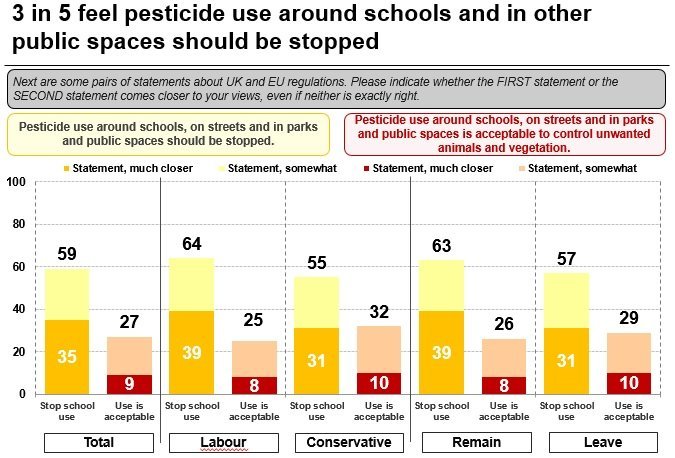
The exclusive survey by GQR, shared with HuffPost UK, suggests that many voters want to go even further and back an outright ban on chemical products sprayed on parks, playgrounds and other public spaces.

The poll, commissioned by Pesticide Action Network and online activism site SumOfUs.org, follows concerns among environmentalists that Brexit could be used to water down current regulations on pesticide use.

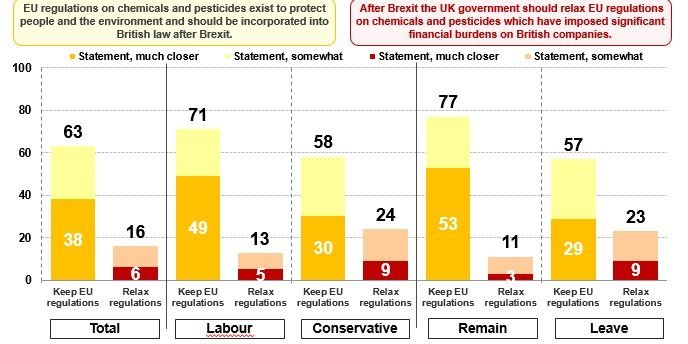
It found that 63% of the public want to keep the EU regulations, compared to just 16% who want them relaxed.

Among ‘Remain’ voters in last year’s EU referendum, the gap was 77% to 11%. But even among former ‘Leave’ voters, some 57% want to keep European rules and just 23% want them changed.

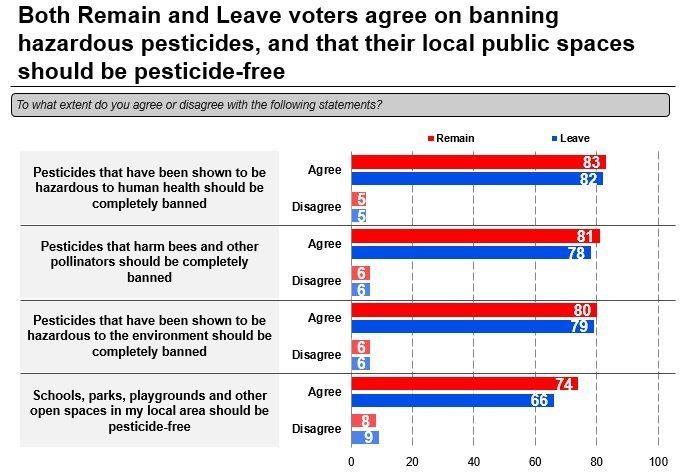
Big backing for not watering down EU rules after Brexit.

Environment Secretary Michael Gove won praise from green groups last month when he changed Government policy to back a total ban on neonicotinoids, products that harm pollinating bees and other insects.

Gove’s decision – which echoes a wider attempt by the Tory Party to take tougher lines on animal welfare and anti-plastic pollution – came after his chief scientific advisor said that use of the chemicals posed an ‘unacceptable’ risk to honeybee health and to biodiversity.

The poll shows the new ban – due to be extended by the EU in 2018 – has huge public support.

However, the National Farmers Union has since expressed its concerns and campaigners fear that Gove could use Brexit to cave to some in the farming lobby who want to slash red tape and allow new pesticides to boost production.

Local parks and playgrounds were particular areas of concern.Opinions were matched among Leave and Remain voters.

The GQR poll found that only half of the public trust the Government to keep them safe from the harm caused by the chemicals. 

Josie Cohen, Head of Policy and Campaigns, PAN UK told HuffPost: “When people voted for Brexit they weren’t opting to trash the UK’s food and environmental standards and copy the American model which currently allows 1,430 pesticides, compared with just 486 approved in the EU.

“In fact, regardless of whether they are Leavers or Remainers, UK citizens don’t want more pesticides in our food and natural environment. The government has promised the British public a Green Brexit. Now they must put their money where their mouth is by keeping our existing pesticide laws strong and committing to reduce the amount of chemicals we use in our farms and urban spaces once we leave the EU.”

Sondhya Gupta, Senior Campaigner for SumOfUs.org, added: “Brexit could present the opportunity for the agrochemicals giants to strengthen their grip on UK farming.

“Or we could choose to move away from our reliance on toxic pesticides and change the way we produce food. The public clearly want to see more support for farmers working hard to reduce their pesticide use and opt for truly sustainable alternatives ― something the government must heed.”

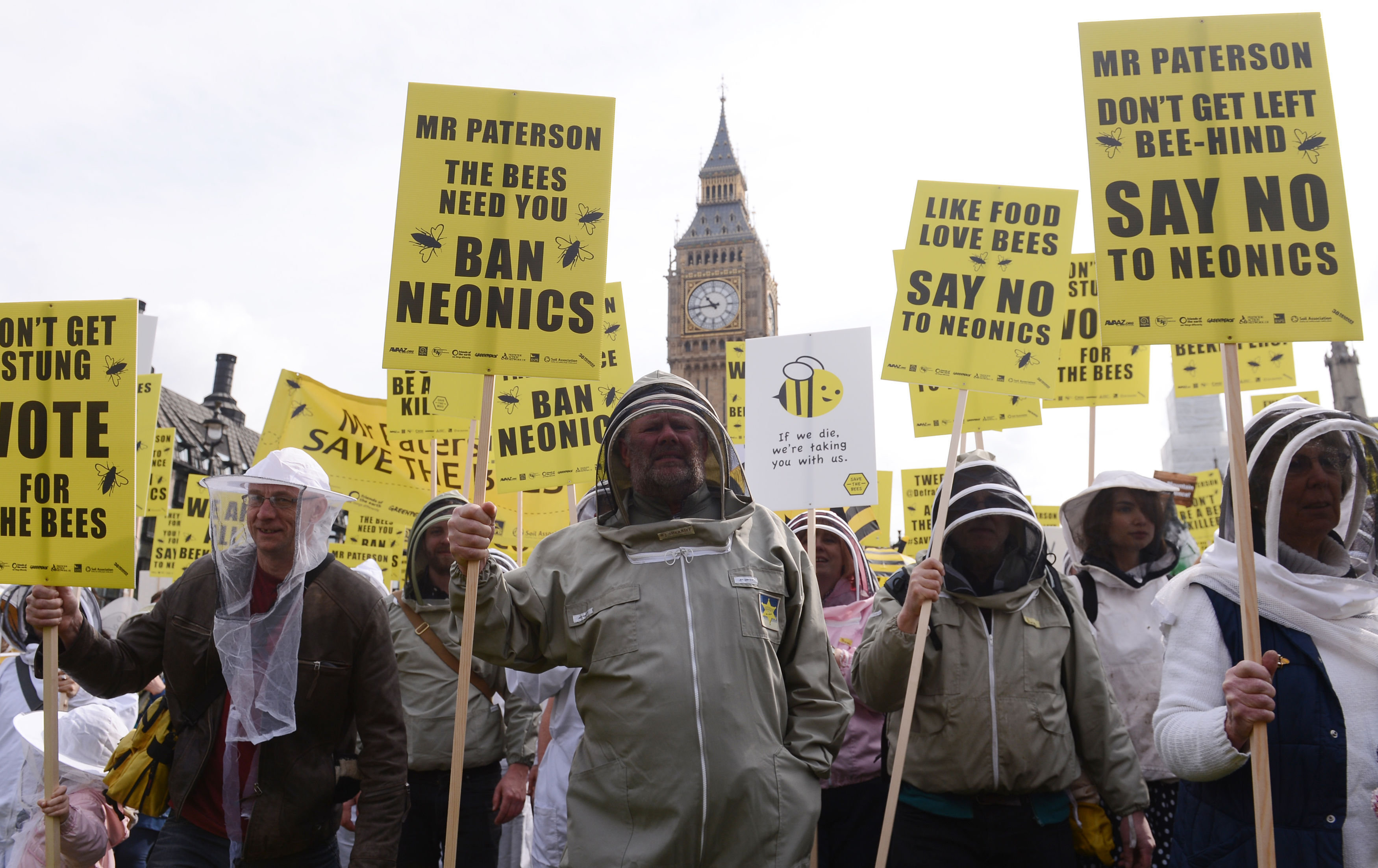
In 2013, former Environment Secretary Owen Paterson blocked a ban on pesticides harmful to bees

A spokesman for the Department of the Environment, Food and Rural Affairs (DEFRA) said that the Government wanted to “not just maintain but enhance” pesticide controls after Brexit.

But the spokesman stressed that each product had to be judged on a “case by case” basis in line with scientific evidence.

Gove has so far been unclear about his stance on GM crops after Brexit, but farming minister George Eustice said in October last year that Brussels acted in an unscientific way.

“There are a number of GM crops which have been cleared as safe by the European Food Safety authority, cleared as safe for at least a decade but are still not authorised because the politics of the EU gets in the way.”

He said that “once you have arrived at a common understanding on science we should be free to legislate to authorise products that have ultimately been judged safe”.

www.huffingtonpost.co.uk/entry/public-want-to-keep-eu-pesticides-curbs-after-brexit-gqr-poll-michael-gove_uk_5a384614e4b0fc99878e2c95

Erika Jayne Continues Her Reign, ‘Lucy’ In Color, ‘Major Crimes’, and More TV This Week

Erika Jayne Continues Her Reign, ‘Lucy’ In Color, ‘Major Crimes’, and More TV This Week

TV this week

Check out our weekly guide to TV this week, and make sure you’re catching the big premieres, crucial episodes and the stuff you won’t admit you watch when no one’s looking.

HBO takes a look at Latina culture with a new four-night docu-series, 15: A Quinceañera Story beginning Tuesday at 7 p.m. Eastern. Tuesday’s episode features trans teen Zoey and her trans godmothers who never got to have their own quinceañeras before transitioning.

The most iconic housewives return for season eight of the Real Housewives of Beverly Hills Tuesday at 9 p.m. Eastern on Bravo. This city’s cast boasts gay fan favorites Lisa Vanderpump, Lisa Rinna and, of course, our Kween, Erika Jayne, pictured above.

Major Crimes hits a major milestone Tuesday at 9 p.m. Eastern on TNT. The procedural will air its 100th episode. Check out our interview with Graham Patrick Martin, who plays the openly-gay character, Rusty.

We can’t say for sure that Thursday’s Saturday Night Live Christmas Special will feature the beloved Schweddy Balls sketch, but it’s a pretty good bet. Bask in the yuletide hilarity at 9 p.m. Eastern on NBC.

‘Tis the season for CBS’ annual I Love Lucy Christmas Special. Two new episodes are given the colorization treatment Friday starting at 8 p.m. Eastern.

What are you watching this week on TV?

The post Erika Jayne Continues Her Reign, ‘Lucy’ In Color, ‘Major Crimes’, and More TV This Week appeared first on Towleroad.


Erika Jayne Continues Her Reign, ‘Lucy’ In Color, ‘Major Crimes’, and More TV This Week

One Third of U.S. Soccer Fans Would Not Accept a Gay Player on the National Team

One Third of U.S. Soccer Fans Would Not Accept a Gay Player on the National Team
qatar world cup 2022

qatar world cup 2022

In a survey of 50,000 football (soccer) supporters in 38 countries, only one in ten fans in the United Arab Emirates, Saudi Arabia and Egypt said they would be comfortable with a player from their national team coming out as gay.

More than one in three Americans said they would not welcome a gay or bisexual player in the men’s team.

When asked if FIFA should consider the issue when awarding the rights to host the World Cup, nearly two in three fans worldwide agreed.

Together with Stonewall, we made a survey about homophobia in football. Check out the results here: t.co/9emruso2jd pic.twitter.com/Q8b21UnIEL

— Forza Football (@ForzaFootball) December 13, 2017

The poll was carried out by fan-opinion platform Forza Football and Stonewall.

RELATED: Gay Football Fans Warned Against Holding Hands at Russia World Cup

While almost half of fans polled in Russia said they would be accepting of a gay player on the national team, only one in seven fans in World Cup 2022 host nation Qatar agreed.

On the other end of the scale, almost nine out of ten fans in Ireland and Iceland expressed a positive view. Four out of five British fans were of the same opinion.

According to the Independent, this is the second time Football Forza and Stonewall have teamed up to do this poll and since 2014 there are signs that more progressive views are spreading.

In a statement, Stonewall chief executive Ruth Hunt said:

“What these results reflect is how much work there is still to do before we can say that we live in a world where lesbian, gay, bi and trans people are accepted without exception.

“For many LGBT people in Russia for example, the World Cup is seen as an opportunity for the daily abuses and discrimination they face to be put under the spotlight; to be questioned and criticised.

“We believe the upcoming World Cups are an opportunity to shine a light on what the situation is like for LGBT people in Russia and Qatar and start conversations that can lead to positive change.”

However, while the overall number of favorable responses increased to 55 percent compared with 46 percent in 2014, attitudes in Brazil, Italy, Saudi Arabia and Turkey went in the other direction, though.

The post One Third of U.S. Soccer Fans Would Not Accept a Gay Player on the National Team appeared first on Towleroad.


One Third of U.S. Soccer Fans Would Not Accept a Gay Player on the National Team

Shake-up Of Sex Education In Schools Will Teach Children About LGBT Relationships

Shake-up Of Sex Education In Schools Will Teach Children About LGBT Relationships
A shake-up of sex education in schools is on the cards for the first time in almost two decades.

Education Secretary Justine Greening is drafting a relationships and sex education (RSE) curriculum for young people growing up in a world that includes sexting and online pornography.

Its aim will be to make young people safe, well-adjusted and more aware of LGBT relationships.

Greening said: “It is unacceptable that relationships and sex education (RSE) guidance has not been updated for almost 20 years, especially given the online risks, such as sexting and cyber bullying, our children and young people face. Young people must have an education that teaches them the importance of healthy and stable relationships.

 “This call for evidence is about giving teachers, parents and especially young people a chance to help shape that new approach and I’d urge them to take part.”

Greening today opens an eight-week consultation period, and wants the views of parents, teachers and pupils to help shape a new relationships and sex education (RSE) on what is age-appropriate.

But the National Education Union, which last week sounded the alarm on girls regularly facing sexual harassment at school, has warned new guidance would have little impact if the government did not invest more in teaching.

The Government says 91% of parents think children need lessons about the risks of strangers online and sexting, while 74% of 11-to-15-year-olds believe children would be safer if they had better sex education.

The current guidance, introduced in 2000, is being updated after MPs backed making relationships education compulsory in primary schools and relationships and sex education compulsory in secondary schools.

The current guidance also contains no mention of LGBT people.

As it stands, only pupils at council-run secondary schools are guaranteed RSE.

Barnardo’s chief executive Javed Khan said: “Age-appropriate lessons on relationships and sex education (RSE), combined with personal social and health education (PSHE) in all schools in England will help keep children safe and healthy.

“Both children and parents have told Barnardo’s that  these classes would help children better understand healthy relationships and the dangers in the real world and online.

“When we polled children they overwhelmingly told us that RSE lessons would be important for them to understand the dangers of being online so they can stay safe, and that they wanted to know the risks of sharing images of themselves with a stranger online.

“It’s important that the government listens to the voices of young people, parents and experts on what they want to see included in these lessons and who is best placed to teach them to equip children for modern life and help prevent them being groomed or sexually exploited.”

Ian Green, Chief Executive, Terrence Higgins Trust, said it was vital to include young people in the consultation.

He said: “In order to help tackle high rates of sexually transmitted infections among young people and ensure that all young people have the information they need to make informed decisions about relationships, we must see a strong emphasis on neglected topics such as sexual health and LGBT inclusion in this guidance.

“It’s vital that young people are at the heart of this initial consultation to ensure this is done right.” 

Ruth Hunt, chief executive of the LGBT campaigning charity Stonewall, said: “Schools that teach LGBT-inclusive RSE are in the minority, leaving many LGBT young people without the information they need to make safe, informed decisions. Just 13 per cent of LGBT young people have learnt about healthy same-sex relationships.

“In schools where pupils receive an inclusive education, LGBT pupils are less likely to experience bullying. They are also more likely to report feeling safe, welcome and happy at school.”

Ian Bauckham, who was awarded the CBE in 2017 for services to education and is a head teacher in Kent, will lead the consultation.

www.huffingtonpost.co.uk/entry/sex-education-lgbt_uk_5a32519be4b01bdd765a234c