POLL: Americans Think This Country Is Lousy With Gays

POLL: Americans Think This Country Is Lousy With Gays

pride

Americans think more than one in five people are gay, and while that’s a great thought, it’s far from the truth, according to a new Gallup poll.

The poll reveals that Americans “greatly overestimate” the number of gays in the U.S. Though latest estimates put the LGBT population at about 3.8%, Americans on average put that number at 23%.

According to Gallup Daily tracking — an ongoing study since 2012 — 3.8% of 50,000 adults interviewed during the first four months of 2015 identified as lesbian, gay, bisexual or transgender. Since 2002, however, Americans have believed that at least 21% of the population is LGBT.

While their opinions on the number of gays have more or less stayed the same, Americans’ acceptance has increased dramatically:

Whereas 38% of Americans said gay and lesbian relations were morally acceptable in 2002, that number has risen to 63% today. And while 35% of Americans favored legalized same-sex marriage in 1999, 60% favor it today.

That’s cute and all, but it kind of begs the question, if Americans think there are so many gays hanging around, why would they be satisfied with denying such a large percentage of the population equal rights? I mean, call me crazy, but 23% — while a speculative number — is a really large chunk, especially when you consider that 13.8% of Americans are black and 17.7% are Hispanic or Latino.

Of course, numbers shouldn’t matter when it comes to fair protection under the law, so maybe America just has really shitty gaydar and we’ll just leave it at that.

Take a look at some of the numbers from Gallup’s poll below:

poll

poll 2poll 3

Les Fabian Brathwaite — lousy with gay since 1985.

Les Fabian Brathwaite

feedproxy.google.com/~r/queerty2/~3/-4atLiwN8Ro/poll-americans-think-this-country-is-lousy-with-gays-20150522

Michael Sam Signs With Canadian Football League's Montreal Alouettes

Michael Sam Signs With Canadian Football League's Montreal Alouettes

Sam

Michael Sam is finally getting his shot on the gridiron, albeit now in Canada:

The Montreal Alouettes of the Canadian Football League announced Friday that they have signed Sam to a two-year deal. Sam spent parts of last season with the St. Louis Rams and Dallas Cowboys, but did not play a regular-season snap for either team.

NFL Media Insider Ian Rapoport reports that Sam signed a one-year deal with a team option year, according to Sam’s agent, Joe Barkett. Sam became the first openly gay player in NFL history when he was selected by St. Louis in the seventh round of the 2014 NFL Draft.

“With the signing of Michael Sam, we have become a better organization today,” said Alouettes’ general manager Jim Popp. “Not only have we added an outstanding football player, we have added even a better person that brings dignity, character, and heart to our team.”

Sam will be introduced at a news conference in Montreal on Tuesday, according to the CBC:

Alouettes“Congratulations to the Montreal Alouettes on the signing of Michael Sam,” CFL commissioner Jeffrey Orridge said in a statement released by the league. “Our players come to us from different places, different walks of life and ultimately they take different paths to get to our fields. Today is another indication of how open and progressive the CFL is — consistent with our rich and storied history of great football tradition. Welcome to Montreal, Michael!”


Kyler Geoffroy

www.towleroad.com/2015/05/michael-sam-signs-with-canadain-football-leagues-montreal-alouettes.html

Underwear Company Features Double Mastectomy Breast Cancer Survivors In Empowering Photo Campaign

Underwear Company Features Double Mastectomy Breast Cancer Survivors In Empowering Photo Campaign
Each October, popular culture becomes awash in pink ribbons, pink balloons and pink shirts for Breast Cancer Awareness Month. The publicity of breast cancer research, treatment and survival through the pink campaign may the most well-known way to raise money and awareness, but it isn’t inclusive of everyone.

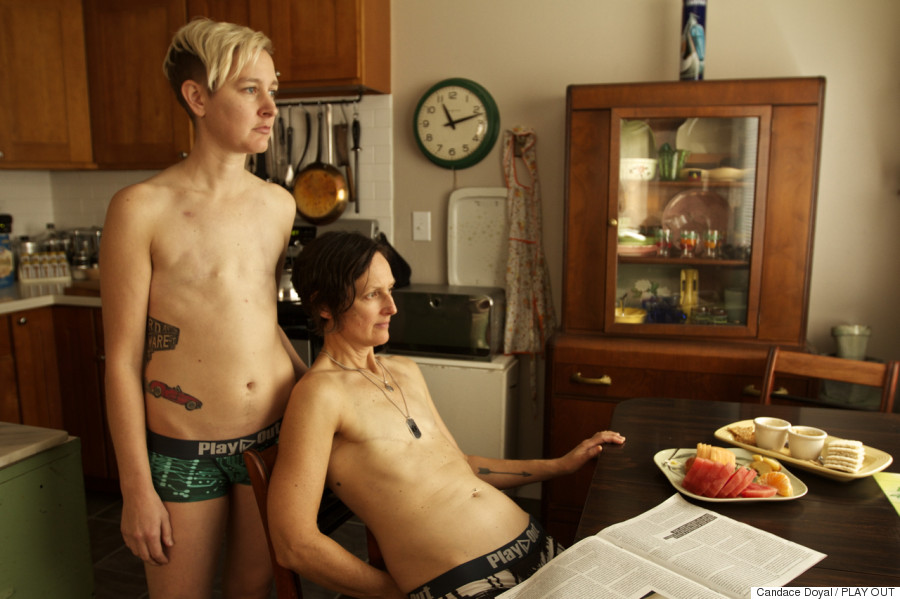
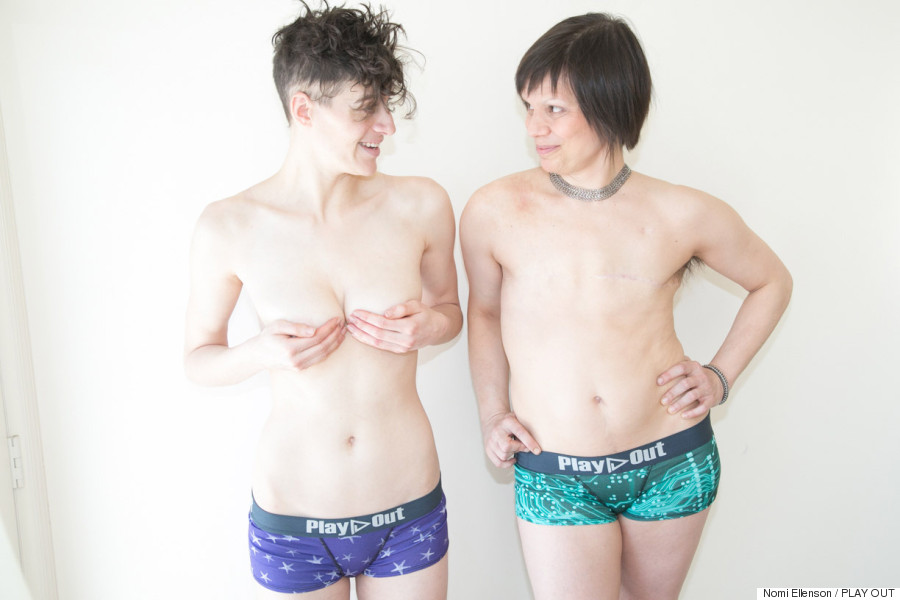
Campaigns like “No Bra Day” have come under fire for being too “pinkwashed.” The result isn’t just glib, it also represents only one gender expression. That’s why gender-inclusive underwear company Play Out is shedding light on the more complicated nuances of the disease through a stunning photo series. The empowering images feature women with double mastectomies who opted out of reconstruction and are bilaterally flat chested.

play out 1
Models Emily Jenson (left) and Jodi Jaecks (right).

Emily Jenson, Jodi Jaecks and Melanie Testa, three breast cancer survivors who underwent double mastectomies, modeled for the campaign, which also features androgynous model Rain Dove. Jaecks says she hopes it explains more about the reality of the disease.

“This takes the conversation outside the realm of basic breast cancer awareness. Breast cancer is a fact of the human experience and it is vitally important to place survivorship in the context of empowerment,” she told The Huffington Post in an email. “I think that my natural androgyny and sexual preference have given me the advantage of self-acceptance far outside of cultural gender identification or definitive norms. This self-assurance informed not only my choice to have the double mastectomy, but the certainty that my choice would serve my self-confidence and strength moving forward in my life.”

The Play Out photo series was created in collaboration with FlatTopper Pride, a cancer survivors support group for LGBTQ individuals who chose not to undergo reconstruction. Testa says the photos importantly call out a underrepresented group of people who may be stigmatized in the dominant culture.

“Living in a society that does not reflect the image of my body [type] — breast-less, scarred, affected by cancer — has great consequence and influence to those who are newly diagnosed,” she told HuffPost. “Not all women choose reconstruction or feel that it will make them whole again; some feel quite whole without breasts and without the need to wear breast forms. I choose to embrace my body as is and blithely proceed with grace and dignity. My hope is that other women will see these images in their time of need and that they will feel empowered and informed about flat reconstruction as one option among many.”

play out 3
Models Rain Dove (left) and Melanie Testa (right).

Ultimately, Jaecks wants the body-positive images and her personal story to inspire strength in others who may be experiencing similar challenges with breast cancer.

“This is a disease, not just a woman’s disease. Therefore, it [shouldn’t] be an assault on a woman’s gender identity, sexuality, femininity, body acceptance or self-confidence,” she said. “Most people do not realize that over half of post-mastectomy women do not have reconstruction. If we can extend the comfort zones of women who make this choice — who long to live openly and freely — without prosthetics, we will evolve well beyond the cancer shame of the past.”

To see more photos from the campaign, check out the slideshow below:

— This feed and its contents are the property of The Huffington Post, and use is subject to our terms. It may be used for personal consumption, but may not be distributed on a website.

www.huffingtonpost.com/2015/05/22/play-out-double-mastectomy-campaign_n_7354038.html?utm_hp_ref=gay-voices&ir=Gay+Voices

PHOTOS: Gorgeous Middle Eastern Guys Get Their Dance On In Tel Aviv

PHOTOS: Gorgeous Middle Eastern Guys Get Their Dance On In Tel Aviv

11063710_487117894779515_7933198111219071644_n

Lima Day is a weekly after party that happens every Sunday-into-Monday in Tel Aviv. It’s a popular club for 20- and 30-something artists, misfits, dancers, and rebel hearts. Drinks flow freely all night long as resident DJs spin dance, hip hop, and pop music well into the early hours of the morning.

Check out a few photos from the party below and see the full gallery over at GayCities…

11231750_487116291446342_707049128240281057_n

11266707_487123264778978_8077496215014900095_n

11102645_487128514778453_2621029307780452653_n

Photo credit: Tom Zvily

Graham Gremore

feedproxy.google.com/~r/queerty2/~3/bG_0-3wRttw/photos-gorgeous-middle-eastern-guys-get-their-party-on-in-tel-aviv-20150522

Chris Pratt Gets Frisky With Some Prehistoric Beasts By the Pool: VIDEO

Chris Pratt Gets Frisky With Some Prehistoric Beasts By the Pool: VIDEO

Pratt1

In case the warm weather wasn’t proof enough, the latest round of editorial thirst traps are here to prove that summer is upon us. Earlier today we shared Matthew Lewis’s racy Attitude cover photos that caught J.K. Rowling’s eye and prompted the author to chastise the actor in a cheeky Twitter exchange. If you’re anything like us then your thirst is unquenchable. Thankfully Chris Pratt, by way of Entertainment Weekly is here to assist.

By now you’ve probably seen Pratt’s cover photo for ET’s upcoming “summer must list” issue that was clearly influenced by a few different factors. Pratt’s starring role undoubtedly landed him the cover spot, but the theme of the photoshoot bears the editorial touch of one Henry Goldblatt, EW’s openly gay, recently reinstated editor. Check out the similarities between this year’s cover (overseen by Goldblatt) and last year’s featuring Jessica Alba (overseen by EW’s former editor Matt Bean, a straight guy.)

Coincidence? Perhaps. In any case check out some behind the scene’s footage of Chris Pratt frolicking in a pool with inflatable dinosaurs AFTER THE JUMP

Pratt


Charles Pulliam-Moore

www.towleroad.com/2015/05/chris-pratt-frolicks-by-the-pool-with-dinosaurs-watch.html

Here Are A Few The Things The LGBT Community Will Still Be Fighting For After Marriage

Here Are A Few The Things The LGBT Community Will Still Be Fighting For After Marriage
WASHINGTON — The Supreme Court may make history this summer if it rules same-sex marriage bans unconstitutional.

Such a decision would be a huge win for gay marriage advocates, but it doesn’t mean the fight for LGBT rights will be close to being over. The LGBT community will still be fighting legal battles for decades — while facing continued discrimination.

“We can pass all of the laws we want and talk about public policy until we run out of air, but until our society stops thinking of queer people as deviant or corrupt or sinful or in any way less than non-queer people, nothing is going to change,” said Noah Michelson, editorial director of The Huffington Post Voices and founding editor of HuffPost Gay Voices.

“It’s probably the most difficult thing we face,” Michelson continued. “And the only way to do it is to come out as queer whenever we can. And once we’re out, we need to talk openly and honestly about our lives and who we love and how we have sex. It’s only after we’ve challenged and changed the most basic and fundamental viewpoints about who we are that we can really begin to think about true liberation and true equality.”

Here are some of the battles LGBT advocates will continue to face, even if the Supreme Court legalizes gay marriage:

1. Workplace discrimination

There’s still no federal law protecting LGBT employees from discrimination. Twenty-one states and Washington, D.C., have passed employee non-discrimination laws, but it’s still legal in many places — even the U.S. Congress — for employers to fire workers based on sexual orientation or gender identity.

Critics also have said religious freedom laws, which allow individuals or corporations to cite “religious beliefs” in a legal defense if they refuse to serve LGBT customers, are discriminatory. Indiana Gov. Mike Pence (R) signed a religious freedom bill into law this year, but asked that the law be revised after backlash from LGBT supporters.

Arkansas Gov. Asa Hutchinson (R) followed suit, asking his state legislature to revise a bill similar to Indiana’s.

But not all governors are changing their minds. Louisiana Gov. Bobby Jindal (R) issued an executive order in May protecting businesses that refuse to serve customers planning same-sex weddings.

2. Lack of gender-neutral restrooms in public places

3. Gay conversion therapy

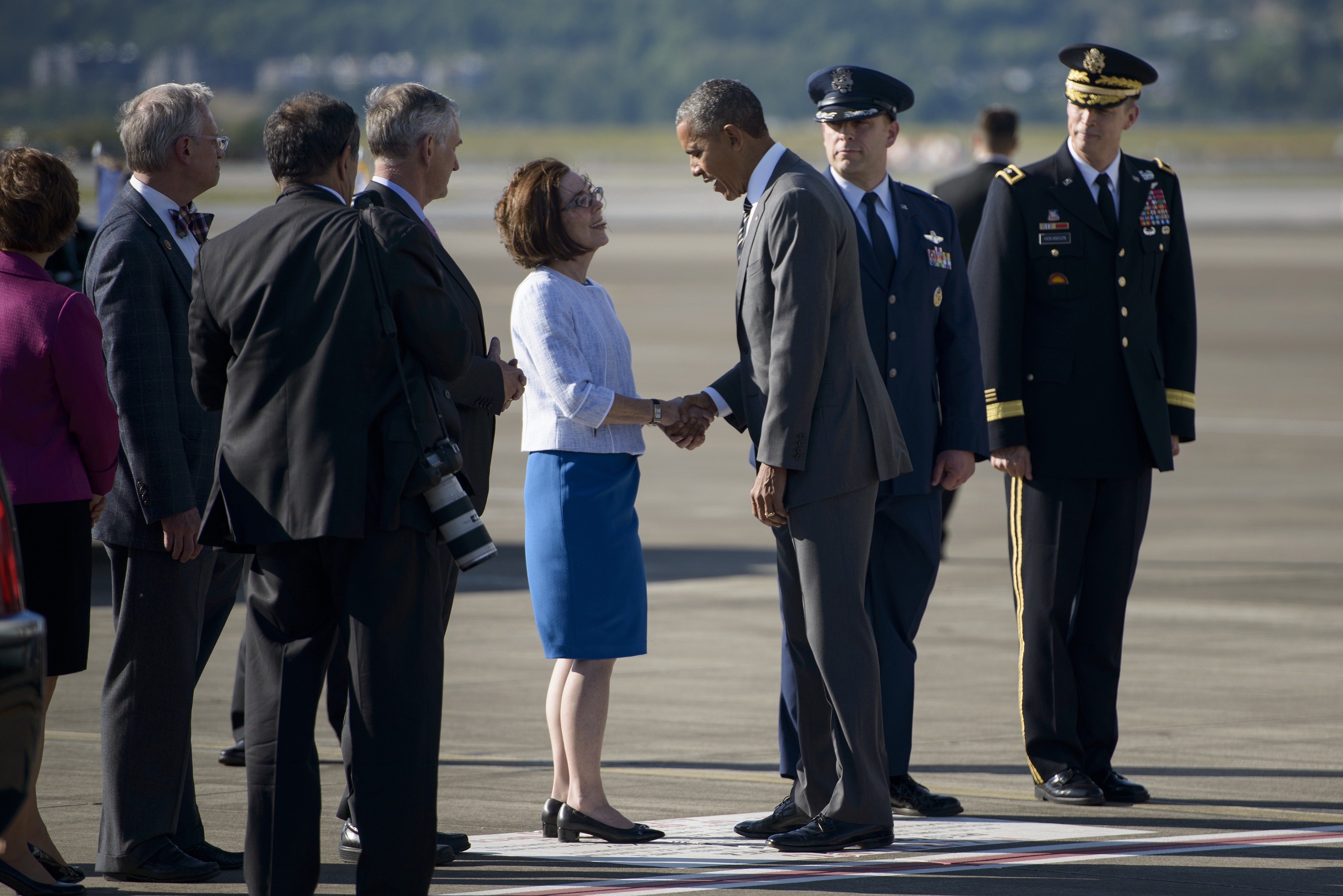
Only three states prohibit so-called gay conversion therapy, despite opposition from the American Psychological Association. The most recent governor to prohibit the practice was Oregon Gov. Kate Brown (D), the nation’s first openly bisexual governor.
governor kate brown

President Barack Obama is greeted by Oregon Gov. Kate Brown (D) at the Oregon Air National Guard Base May 7, 2015, in Portland, Oregon. Brown is the nation’s first openly bisexual governor. (BRENDAN SMIALOWSKI/AFP/Getty Images)

4. Housing discrimination

5. Acceptance in sports, politics, entertainment, business and more

6. Health risks, and education about how to lower them

A 2011 report by the Centers for Disease Control and Prevention analyzing data from the Youth Risk Behavior Survey found that LGBT students were more likely to face health risks because of factors like tobacco use, weight management and drug use. The report suggested school health policies should be developed to help sexual minority youths.

7. Restrictions on gay men giving blood

In May, the Food and Drug Administration finally recommended lifting the lifetime ban on gay and bisexual men donating blood, which has been in place since 1985. But the new proposed policy says men will have to wait at least one year after engaging in gay sex before being able to donate.

Dr. Eli Adashi, professor of medical science at Brown University’s Warren Alpert Medical School, told The Huffington Post in December that the one-year waiting period “is not any more warranted than a lifetime ban.” According to research by The Williams Institute at the University of California, Los Angeles, a 12-month deferral excludes thousands of potential donations from the nation’s blood supply.

8. Jury selection

In January 2014, the U.S. 9th Circuit Court of Appeals ruled that gay people can’t be excluded from a jury based on sexual orientation. The ruling mirrored a 1986 Supreme Court ruling that found jurors couldn’t be dismissed based on race, and another that declared the same for female jurors.

But a Supreme Court challenge could occur future. As Slate points out, the Supreme Court has never declared gays a protected class. Also, the 9th Circuit’s ruling clashes with an earlier decision from the 8th Circuit.

9. Transgender military service

10. Youth homelessness

According to a 2012 study by The Williams Institute, 40 percent of homeless youth identify as LGBT. The most frequently cited factor contributing to that group’s homelessness was rejection by family members based on sexual identity.

According to the National Coalition for the Homeless, homeless LGBT youth are at a heightened risk of violence, abuse and exploitation, and can experience both physical and mental strains because of discrimination and the stigma of being LGBT.

11. Adoption, custody, surrogacy and other parenting issues

12. Discrimination of youth in foster care

13. Violence

A report released in 2013 by the National Coalition of Anti-Violence Programs revealed the transgender community was more likely to experience physical violence, police violence and discrimination than cisgender people.

14. Placement and treatment of trans people in prisons and immigrant detention centers

15. Discrimination in jails and prisons

16. Suicide

The Williams Institute report from 2014 showed the prevalence of suicide attempts among trans and gender non-confirming adults who responded to the National Transgender Discrimination Survey was 41 percent. Of lesbian, gay and bisexual adults, 10 percent to 20 percent report attempting suicide. That’s compared with the 4.6 percent rate of the overall U.S. population that reports attempting suicide.

Need help? In the U.S., call 1-800-273-8255 for the National Suicide Prevention Lifeline.

— This feed and its contents are the property of The Huffington Post, and use is subject to our terms. It may be used for personal consumption, but may not be distributed on a website.

www.huffingtonpost.com/2015/05/22/lgbt-rights_n_7351004.html?utm_hp_ref=gay-voices&ir=Gay+Voices