Marriage at the Supreme Court 2.0: Part 1 of Oral Argument – LEGAL ANALYSIS

Marriage at the Supreme Court 2.0: Part 1 of Oral Argument – LEGAL ANALYSIS

Scotus

BY ARI EZRA WALDMAN

The Supreme Court is still hearing argument in a consolidated case, Obergefell v. Hodges, about whether the Fourteenth Amendment guarantees the freedom to marry for gay persons. The first part of the audio of that argument has been made available. Although Towleroad will be analyzing the oral argument more comprehensively in the days to come, here are some initial reflections.

  • BonautoMany of the questions focused on the fact that gays marrying is a new thing, especially with respect to the thousands of years during which marriage was an exclusively opposite-sex institution. The questions to Mary Bonauto (right) came predominantly from Justices Ginsburg, Kennedy, and Alito.

    Justice Kennedy asked several questions in which he admitted that, in his head, when thinking about this issue, he kept going back to the word “millennia.” Marriage has been for a man and a woman for a long time. Justice Alito spoke about how gays marrying was a totally new thing. They wanted to know how it is okay for the Court to make such a swift change.

    Ms. Bonauto let the first 15 minutes of her argument get away from her. She failed to answer the question directly, a reality that forced Justice Breyer, a likely vote in favor of marriage equality, to jump in and demand that she answer the question directly. Sometimes that happens; he was helping.

    Ultimately, Ms. Bonauto noted that there is nothing wrong with the Court making a decision now. The Fourteenth Amendment says all “persons,” and it doesn’t matter how long some state of affairs has existed. If, per our understanding of equality demands today, discrimination exists, the Fourteenth Amendment demands it be erased. What’s more, any suggestion that the states should be allowed to decide for themselves and “wait and see” how same-sex marriage in some states affects the institution of marriage, Ms. Bonauto noted that the desire to “wait and see” has never been a legitimate justification for continued discrimination.

    This first part of the argument seemed rough for Ms. Bonauto. She was peppered with questions from a hot bench, and received only two softballs from Justice Ginsburg. Don’t be disheartened. Justice Breyer often chimes in to force oralists to stick to the questions, and Ms. Bonauto was just getting started.

  • AlitoJustice Alito brought up the polygamy argument: if the Court decides for marriage equality, what prevents polygamists from demanding a similar right?

    Ms. Bonauto said that states can always jump in to say that polygamists are different. There are a host of social, health policy, and other reasons why more than two people in a union might be detrimental to one or several persons in that union, none of which are at issue here and none of which exist between two committed, loving persons of the same sex.

    This argument is a canard. This case is not about polygamy or polyamorous relationships. The case before the Court is whether there is any justification for what is obvious discrimination. But these arguments keep popping up because they are ways to scare the population who has less exposure to gay persons.

  • A_scaliaJustice Scalia had an exchange with Justice Kagan that barely allowed Ms. Bonauto to speak. 

    Justice Scalia disliked the idea of constitutionalizing the issue because, for example, if the Court says the Constitution guarantees a right for gays to marry, how could that not force a minister to marry two men? Justice Kagan said that nondiscrimination laws have never forced that to happen, but Justice Scalia was concerned about saying that once the Constitution weighs in, there couldn’t be exceptions. We can always make exceptions to state laws, not to constitutional requirements.

    Justice Kagan stepped in again. She noted that many rabbis refuse to marry a Jew marrying a non-Jew and yet the Constitution bans discrimination on the basis of religion. Justice Scalia sat silently after that.

A protester started screaming at this point. He was quickly escorted out. Mr. Doug Hallward-Driemeier, a Washington lawyer who has argued 15 cases before the court, comes next for the plaintiffs.

***

Follow me on Twitter.

Ari Ezra Waldman is Associate Professor of Law and the Director of the Institute for Information Law and Policy at New York Law School. He holds a Ph.D. from Columbia University, a J.D. from Harvard Law School, and a B.A. from Harvard College. Ari writes regular posts on law and various LGBT issues.


Ari Ezra Waldman

www.towleroad.com/2015/04/marriage-at-the-supreme-court-20-part-1-of-oral-argument.html

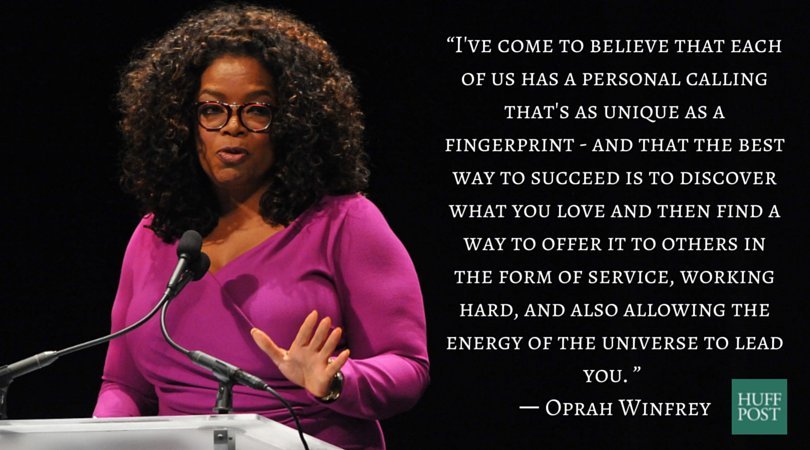
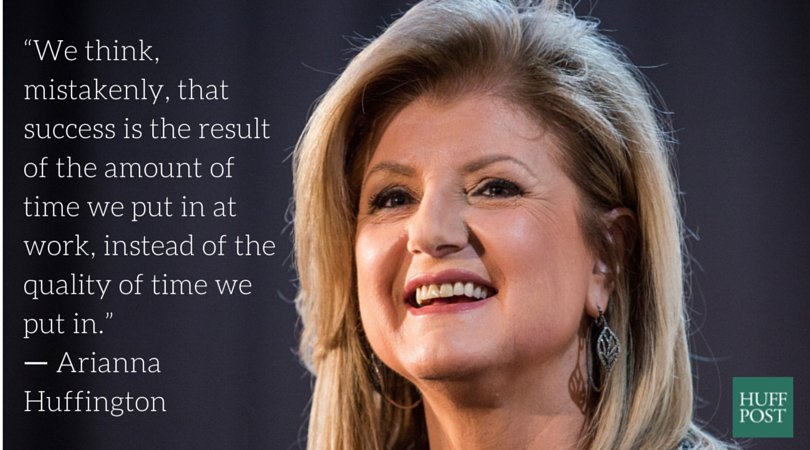
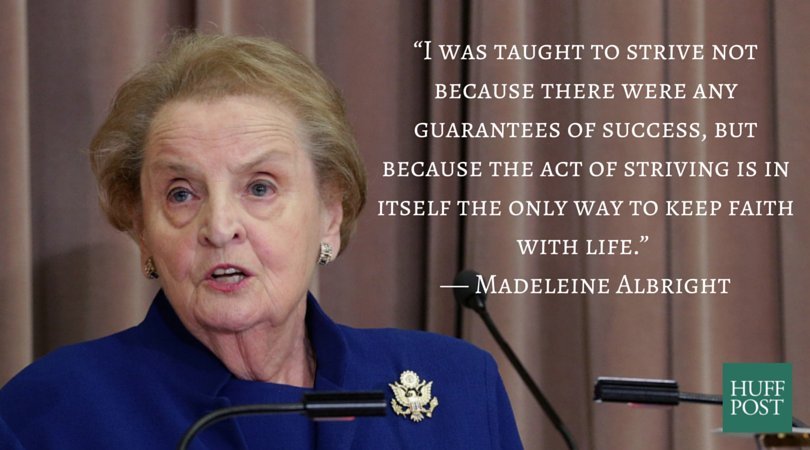
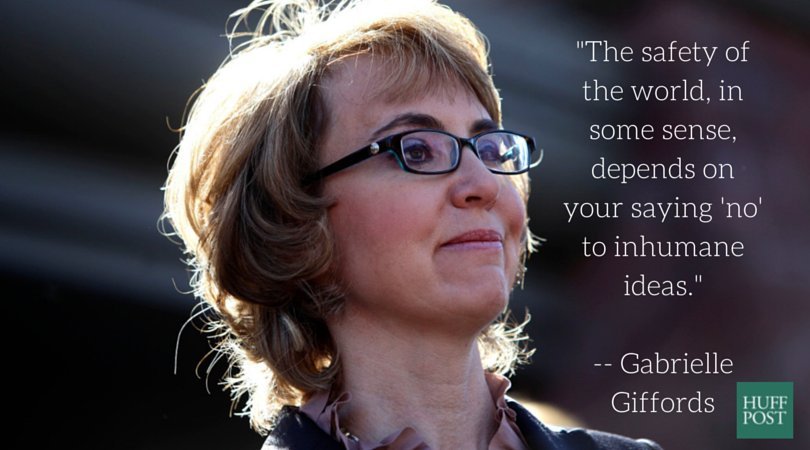
11 Successful Women Who Know Life Is So Much More Than Your Work

11 Successful Women Who Know Life Is So Much More Than Your Work
Life doesn’t have to be all about your 9 to 5 — just ask some of the world’s most driven women.

We rounded up advice from the interviews, commencement speeches and social media accounts of insanely successful women. And whether they started out as assistants or failed before they ever succeeded, they all have stressed the same overarching question: Resumé aside, what’s the story that your life is going to tell?

Here are 11 amazing pieces of life advice from women we love.

1. oprah

2. arianna huffington

3. madeleine albright

4. gabby giffords

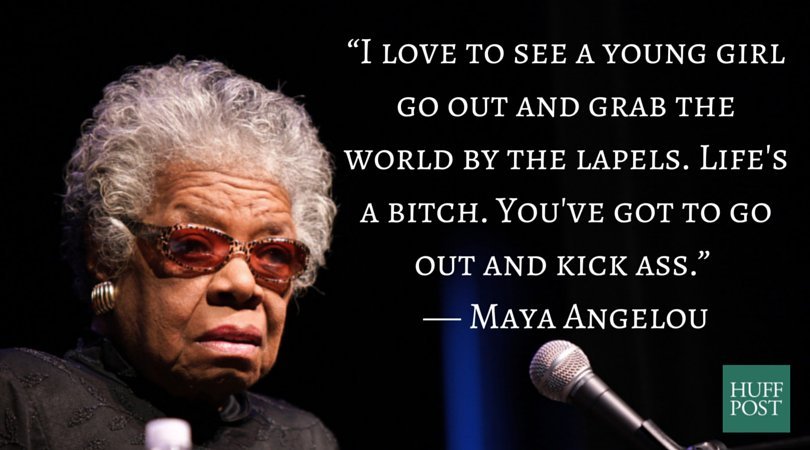
5. maya angelou

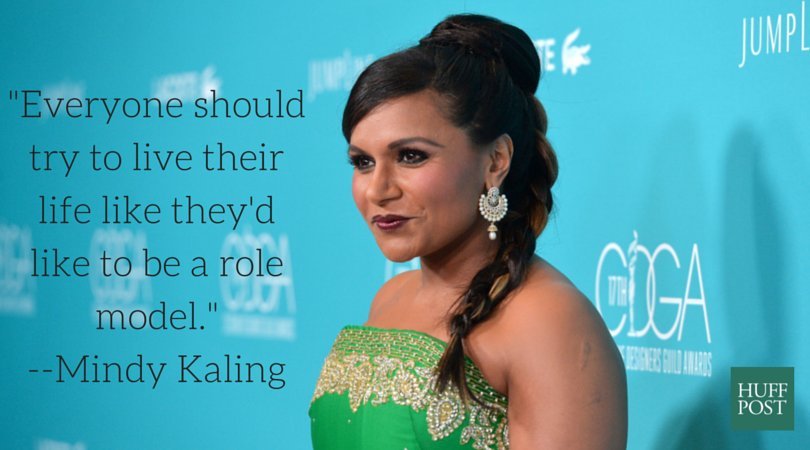
6. mindy kaling

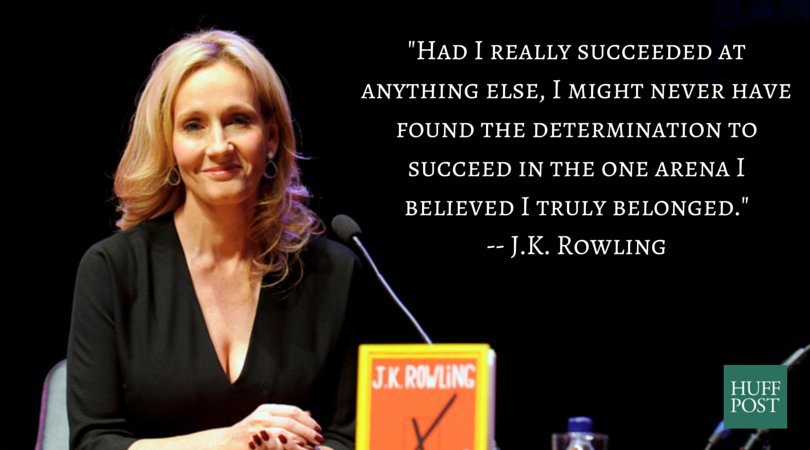
7. jk rowling

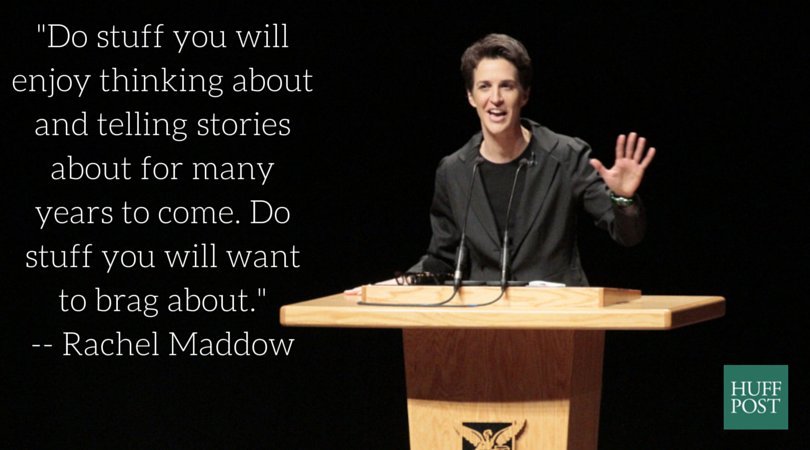
8. rachel maddow

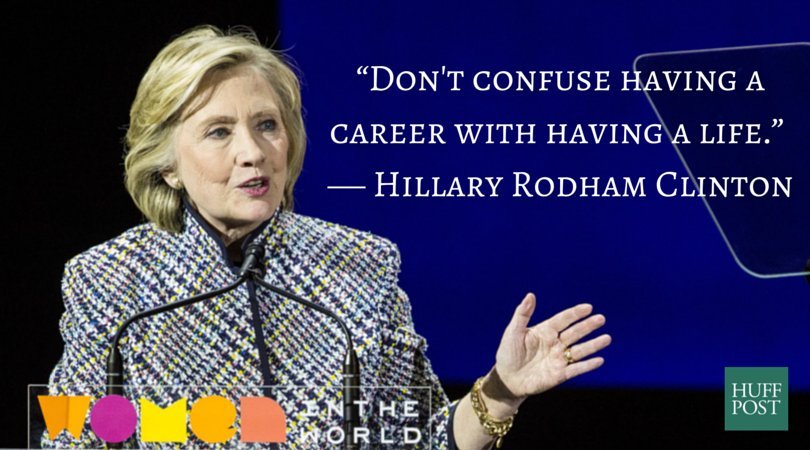
9. hillary clinton

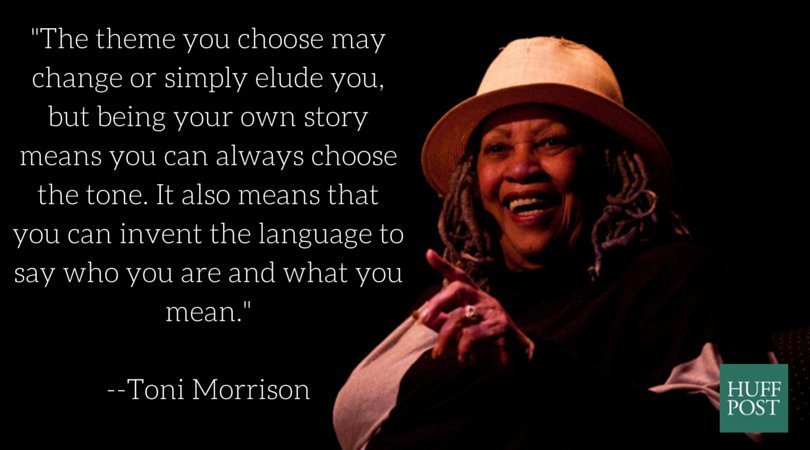
10. toni morrison

11. kerry washington

— This feed and its contents are the property of The Huffington Post, and use is subject to our terms. It may be used for personal consumption, but may not be distributed on a website.

www.huffingtonpost.com/2015/04/28/life-is-so-much-more-than-work-and-you-know-it_n_7153434.html?utm_hp_ref=gay-voices&ir=Gay+Voices

Will The Supreme Court Make Us A Protected Class?

Will The Supreme Court Make Us A Protected Class?

supreme courtBy all accounts, the Supreme Court will be getting ready to hand down a big win for marriage equality after hearing arguments from both sides today. With the preponderance of lower court rulings in favor of marriage equality and no reason to think that the five judges who struck down DOMA two years ago have changed their mind, it would be a monumental upset if the court did not move to make marriage a national right.

However, how they do so will make a big difference legally. The final ruling may look sweeping, but it could be more limiting than it appears at first glance. That’s why Mary Bonauto and her fellow legal advocates for equality will not just be pressing the court for a majority but a sweeping decision as well.

It all depends on whether the justices think that being LGBT is a characteristic that deserves the government’s highest level of interest, or whether it’s just important enough for the government to step in.

Legally, that’s a huge difference. If being gay or lesbian is a characteristic like race, then the courts have to apply something called “strict scrutiny.” In plain English, that means the other side had damn well better have a brilliant case because it’s going to lose in any case.

The courts haven’t gone there yet. In so far that lower courts have done so at all, they’ve used a lower standard called “heightened scrutiny.” That means the government has a compelling interest in the outcome, but under some circumstances, discrimination may be acceptable.

Not to diminish any of Anthony Kennedy’s contributions to advancing LGBT rights, but he has explicitly refused to apply the strict scrutiny standard. In fact, in Romer v. Evans, Kennedy refused to tell lower courts how they should approach LGBT discrimination cases. They could take each case on its own or apply another standard. Kennedy wasn’t about to tell them.

And it seems unlikely that he’ll do so now. Strict scrutiny may be the bridge-too-far for Kennedy to cross. In fact, any classification at all seems too far.

Which means that religious liberty cases can’t be tossed out of court for being laughably unconstitutional. If Bobby Jindal wants to defend his odious religious liberty law (assuming it passes) in court, he will probably get a hearing. He can even appeal all the way to the Supreme Court. And the Court will have to consider if there are unsettled constitutional questions to answer.

Because there are. If we aren’t protected as a class, we may get all the right decisions, but without the legal reasoning that can be broadly applied to other cases. Instead, it’s a case-by-case slog. That’s not to say that we’re any less likely to prevail, but it does mean we haven’t heard the last challenge to marriage equality. Nor has the Supreme Court.

JohnGallagher

feedproxy.google.com/~r/queerty2/~3/32cEoL5NKyY/will-the-supreme-court-make-us-a-protected-class-20150428

Brad Gooch Reads From His New Memoir 'Smash Cut': LISTEN

Brad Gooch Reads From His New Memoir 'Smash Cut': LISTEN

Brad Gooch’s new memoir Smash Cut chronicles 12 years in New York City as one of its brightest cultural eras becomes one of its darkest with the arrival of AIDS, taking an entire generation of gay men with it.

Gooch“There is no way for me to separate out the story of the fabulousness and horror of the years from 1978 to 1989, and a little before and a little after, from Howard—my lover, or my boyfriend, or Friend, or whatever we were to each other,” Gooch writes in the memoir, referring to Howard Brookner, the film director he met at the West Village gay bar the Ninth Circle and began.

The memoir includes his early years as a model and struggling writer during which he came into contact with NYC icons like Robert Mapplethorpe, William Burroughs, and Madonna, as well as Tina Brown, Keith Haring, Virgil Thompson, and Anna Wintour.

Gooch  spoke of looking back at that decade in an interview recently with HuffPost Live: “It was colorful and it was our youth, but then there was a point in the middle where Howard becomes HIV positive, we’re moving into the ’80s, where I realize, ‘Oh, I’ve gotten myself into the situation of going back into these memories which I haven’t really dealt with in decades.'”

Gooch has recorded two excerpts from the book for our TowleREAD series.

In the first excerpt, Gooch offers a “smash cut” of reminiscences about meeting Howard at the gay bar in the late ’70s, an observation of Howard’s nephew as he makes a documentary about their life together, and the reflection of the Chelsea Hotel in his current apartment as it jogs his memories about how his life was 30 years ago.

The second excerpt concerns a moment at the doctor’s office as Howard’s diagnosis worsens, and an encounter with  Mapplethorpe in the waiting room.

Listen to Gooch read two excerpts from the memoir, below:


RECENTLY IN OUR TOWLEROAD SERIES:
Kevin Sessums reads from his new memoir I Left It On the Mountain [tlrd]


Andy Towle

www.towleroad.com/2015/04/gooch.html

Dear Supreme Court Justices: You're On Deck

Dear Supreme Court Justices: You're On Deck
Dear Supreme Court Justices,

You are on deck, and it’s me again. I’m writing both to thank you for taking up a case that might finally grant security to millions of families like mine and to beg you to think about the chaos you are rendering if you fail to do so. Here you are up to bat again. Please make this one count.

My sweet family is but one example of the ways the current situation is demoralizing and, frankly, bizarrely complicated. I doubt that any of you can even imagine the contortions to which LGBT families are subjected in the current landscape. I keep trying to think of the perfect analogy to offer so that you can understand, but, instead of an analogy, I’m left with the stories of my own small family. You remember us. My partner and I have a seven-year-old son, and I want you to hurry up before I have to explain to him how you have failed to protect his mothers and his future. As I told you before, he is growing quickly, and your time is running out.

But there’s more to it for us than just not wanting our son’s outlook to be compromised. Just last week, we encountered another horrific way in which the inconsistency of state to state laws can harm us. This one is ridiculous — so, ridiculous, in fact, that I wouldn’t even believe it myself if I weren’t living it. A little over a year ago, my partner was a pedestrian hit by a car. We have been struggling with medical bills for major back injury and post-concussive syndrome. But we have supportive employers, and family, and we are well-insured. Or so we thought.

Well, that driver was underinsured, so we looked to our own insurance to see about our underinsured policy. Apparently I made the original call to get both cars insured eight years ago when we moved here. And, although I was explicit that the coverage was for both of us, our insurance now claims that, because it was not legal for us to be married in our state fourteen months ago when the accident happened, the policy really only covers me. Luckily, we have other avenues to pursue, so we will let attorneys fight that one out.

Because we are now legally married and are free to be so both in our state and federally, I wanted to make sure that our current coverage — with a different carrier — fully includes us both, as it would any other married couple. When I explained to our agent exactly why I was so frustrated by this, she actually posed another complicating question. If such an accident happened again, and we are eligible for coverage in our home state and federally, would our insurance still be required to pay if the accident actually occurred in a state that does not allow same-sex marriage? I, of course, could not provide an answer.

Surely you recognize the absurdity of what I am telling you. After a couple of years of having to do our taxes together federally and then redo them separately for our state, I thought the absurdity was coming to an end. Now I’m not quite sure how to be certain my partner and I are fully covered with car insurance unless we take out completely separate policies because, although in our state and federally we are married, we still aren’t married in some states and that could be used against us if an accident happened there.

It’s not enough that the hospital where she was first seen treated me horribly when I arrived at the ER to be with her. It’s not enough that she, who stayed home with our son for the first years of his life, still isn’t quite legally his mother because a judge in our state has put up obstacles solely because he doesn’t believe in two-mother families, despite supportive laws in our state. It’s not enough that we had to pay taxes on the part of her insurance my employer paid because that was treated as taxable income when my straight colleagues received that benefit tax-free. We keep these insults at bay merely by clinging to the love we share and the delight of being family to one another. But, honestly, could any family, including yours, be expected to endure with such chronic insult?

In the end, many of us in LGBT families may need to thank you. The marriages many of us have formed are melded in ways few straight couples can understand simply because we have walked through fire together. But enough is enough. We have gone the extra mile. But we are tired of doing so. We are tired of the sometimes small but all too often enormous barriers to our pursuit of happiness that you have allowed.

So when you hear this case, and when you debate it, trying to decide if you should just leave it to states to sort it out, please think about my sweet, small family and the ways the current inconsistencies can and do hurt us. We have so many more important things to be working on, like our son’s spelling homework or his swing for his next little league game. For his sake and ours, please knock this one out of the park.

— This feed and its contents are the property of The Huffington Post, and use is subject to our terms. It may be used for personal consumption, but may not be distributed on a website.

www.huffingtonpost.com/paula-k-garrett/dear-supreme-court-justic_1_b_7157804.html?utm_hp_ref=gay-voices&ir=Gay+Voices

DVD: “Boy Meets Girl,” “Mommy,” “First Period,” “Appropriate Behavior,” & More!

DVD: “Boy Meets Girl,” “Mommy,” “First Period,” “Appropriate Behavior,” & More!

dm-6

It’s a super-queer week in home entertainment, from a drag queen comedy to a bent vampire flick (Drink Me; above) to a Cannes hit by one of cinema’s youngest gay talents.

We’ve got five to rundown, so let’s get on with it!


First Period

($24.98 DVD; Screen Media)

Likened to John Waters meets John Hughes, director John Vaughn’s cross-dressed retro comedy sees a pair of unpopular high school girls clash with the popular ones when a talent contest threatens to tip the balance. Features supporting turns from Cassandra Peterson aka Elvira Queen of the Dark, Jack Plotnick, and Eating Out’s Rebekah Kochan. Extras include a commentary, deleted scenes, making-of featurette, and deleted song.


Appropriate Behavior

($29.95 DVD; Kino Lorber)

After making a splash at the 2014 Sundance Film Festival, this Brooklyn-set first feature from director/writer/star Desiree Akhavan sees a bisexual Persian-American woman go off the rails a bit while coping with an ex-girlfriend and her conservative family. Both funny and poignant stuff.


Drink Me

($24.99 DVD; TLA)

In this nudity-filled British import, a gay couple, Andy and James, find themselves at a dangerous crossroads when mysterious stranger Sebastian enters their lives. Is it possible he’s a… vampire? (spoiler alert: yes)


Boy Meets Girl

($24.95 DVD; Wolfe)

Transgender actress Michelle Hendley provides a nuanced star turn in this romantic dramedy about a pre-operative trans female, Ricky, who juggles friendships and crushes of fellow Kentucky locals including a bi-curious Republican girl and good ol’ boy best bud.


Mommy

($19.99 DVD; Lionsgate)

The latest feature from young, gay Quebecois filmmaker Xavier Dolan snagged a Grand Jury prize at the 2014 Cannes Film Festival. Mostly shot in a narrow 5:4 aspect ratio – as if on a cellphone – it involves the relationship between a teenager suffering from ADHD and violent impulses and his widowed mother.


ALSO OUT:

Im-a-Stripper-4-Vudu-PosterI’m A Stripper: America’s Most Wanted


The Barber


There’s Always Woodstock

Lawrence Ferber

feedproxy.google.com/~r/queerty2/~3/4yxHkRCVSJ8/dvd-boy-meets-girl-mommy-first-period-appropriate-behavior-more-20150428