

Monthly Archives: February 2015
【41】憲法の「両性」の捉え方 LGBT
【41】憲法の「両性」の捉え方 LGBT
I Never Asked His Name
I Never Asked His Name
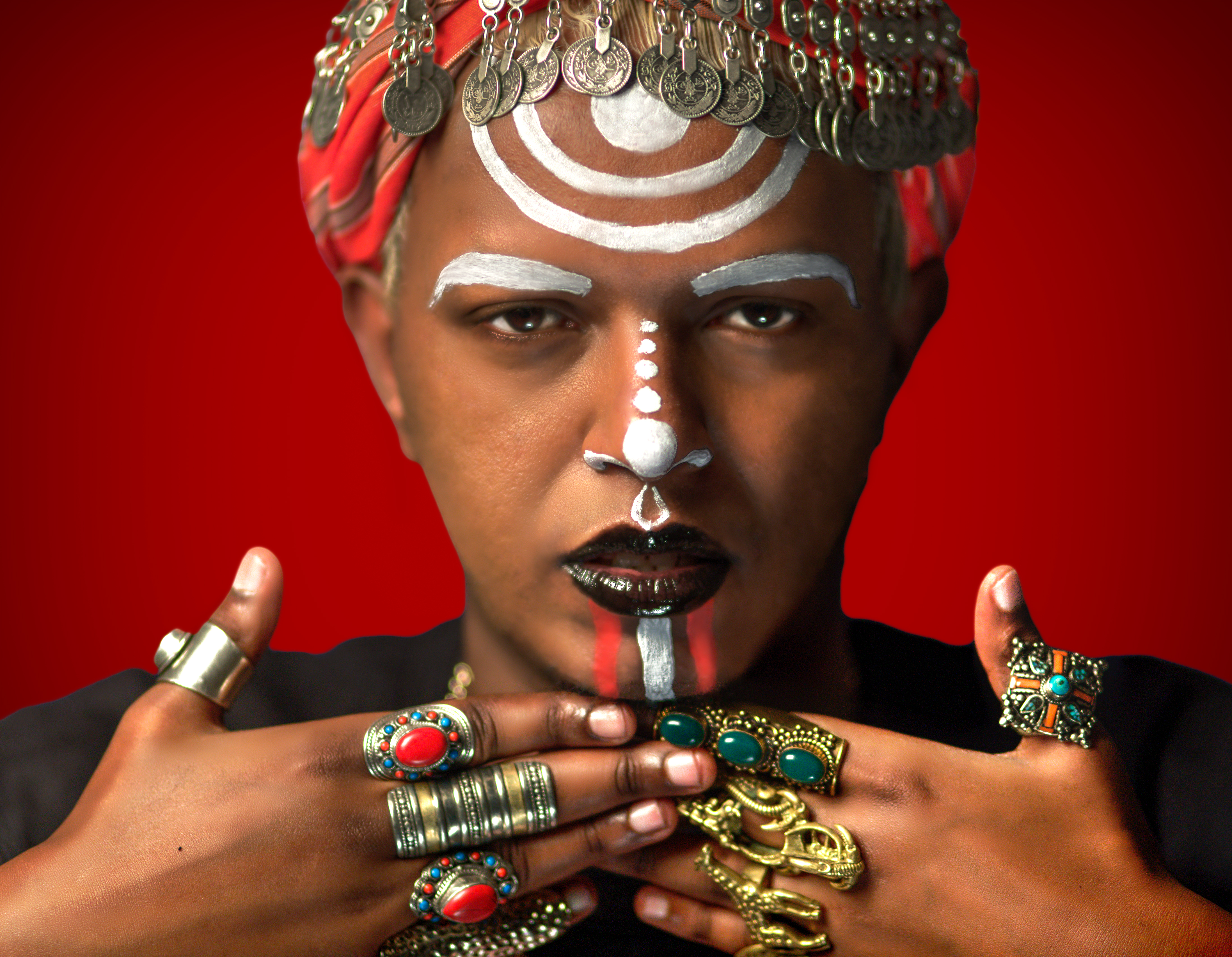
(Diriye Osman is photographed by Bahareh Hosseini)
I spent the summer of 2004 in a secure psychiatric institution in London. I had experienced a horrific psychotic episode and as a result I stopped my studies and embarked on a leave of absence from university. Traumatized by the aural and visual hallucinations I was experiencing, I stopped speaking altogether. There were no beds at my local, low-security mental hospital so I was shipped off to an institution that was reserved for men who had committed horrendous crimes, many of whom had to wear handcuffs when in the communal areas. Isolated and in a state of over-medicated stupefaction, I wandered up and down my assigned ward as though it were a desolate dreamscape, a subterranean enclave within my muddled mind. I watched in disengaged silence as grown men were tackled to the ground, stripped and injected with tranquilizers as they howled for God. I watched in disengaged silence as poverty-stricken patients picked up cigarette butts from the ground and tried to light them up. I watched in disengaged silence as starving patients sprinted to join the daily lunch queue, desperate for food. I carefully parceled up my humanity and locked it up in the attic inside my head, hoping to be able to retrieve it in the future.
I spent six months in that mental hospital, and during those six months I considered the fact that I might not survive this experience. For the first time in my life, I faced up to the fact that this was a fight I might not win. Up until then, I was so used to winning in the face of extraordinary circumstances that the realization that I might lose on this occasion turned me to stone.
There were three men sharing my hospital room with me and one of them was a teenager. At night this young man made disturbing sounds: a sonic halfway-house between choking, drawing up phlegm and howling. Unable to sleep, I would sometimes go over to his bed to see if he was OK only to realize that he was dreaming and was not, as I feared, dying. In the morning I would see him eating his breakfast in the dining-room, quietly going about his day, his tinny stereo playing Adina Howard’s “Freak like Me” on loop.
The only time this young man would speak to me was when we were in the smoking room together and he needed to borrow a cigarette. I would always oblige but I did not want to make conversation. I didn’t ask him what his name was. I didn’t ask him what his life was like outside of the hospital. I didn’t ask him about his night terrors. I was afraid, in that callous way that ignorant people are afraid of difference, that his madness was contagious and incurable. I still harbored hopes that I would recover, and this young, vulnerable boy whose mental illness manifested in giveaway physical markers, tics, was simply a minor signpost on the map of my journey to well-being.
Many years later I was waiting for the bus, my completed dissertation in my bag. I was heading to university to hand it in and at the bus-stop decided to spark up a cigarette. A young man with a familiar face walked up to me and shyly asked me for a cigarette. It was my former roommate from the mental hospital. He now walked with a lurch to his gait and his hands trembled. He was making the same feral sounds he used to make in his sleep but he was no longer asleep. I handed him four cigarettes to assuage my guilt. He smiled and thanked me. I asked if he remembered me. He shook his head.
“We were in the same room in the hospital,” I said.
“You were in the hospital?” he said, sizing me up. “Rah, you’re doing well. Where are you off to now?”
“I have to go to uni to hand in my dissertation,” I said.
“Congrats, man. Boy done good. Rah!”
My bus came into view and I said goodbye. As I got on the bus and sat down, the young man smiled and waved at me. I waved back and wondered what his life would have been like if he had received the kind of support and opportunities I was lucky enough to have obtained. I wondered what would have happened if I had lost the will to survive my time in the mental hospital. I wondered if I too would have been standing on the street begging for cigarettes. I wondered if the young man had a family. I wondered if he was happy.
As I contemplated these things and secretly congratulated myself on a successful life, I realized that I didn’t even ask the young man the most basic question: his name.
Diriye Osman is the Polari Prize-winning author of ‘Fairytales for Lost Children (Team Angelica), a collection of acclaimed short stories about the LGBT Somali experience. You can purchase Fairytales for Lost Children here. You can connect with Diriye Osman via Tumblr. He will be performing at The Huddersfield Literature Festival, The Polari Salon and The London Short Story Festival.
Indie Film 'Out Here' Explores The Lives of Queer Farmers: WATCH
Indie Film 'Out Here' Explores The Lives of Queer Farmers: WATCH
The idea of the strong, strapping, knowledgeable farmer providing for his family is almost as American as apple pie. In reality, however, farmers are a much more diverse set of people than traditional ideas would have you think. In its new film Out Here, The Queer Farmer Film Project explores what it means to be a modern-day queer farmer here in America.
The film, which is now touring throughout the midwest and along the west coast, explores the relationship between the growing community of queer farmers and the larger modern food production industry that sustains our country.
Check out the trailer for Out Here AFTER THE JUMP…
Charles Pulliam-Moore
Lauren Bedford Russell

Alabama Is Resisting The Civil Rights Movement All Over Again
Alabama Is Resisting The Civil Rights Movement All Over Again
 So is Alabama settled now with marriage, or what? Well, that kinda depends how you look at it.
Last week was probably the single messiest implementation of marriage equality the country’s ever seen. In other states, the first few days of marriage were all smiles and celebrations, but Alabama was all lawsuits and homophobia.
It was 50 years ago this week that Alabama police beat civil rights marchers. In a way, last week’s marriage equality dustup was fitting for the state that violently resisted the civil rights movement back in the ’60s. Of course, being denied a marriage license isn’t quite as bad as being hit with a firehose, tear gassed, and shot, but clearly the south still hasn’t quite come to terms with “all men are created equal.”
The good news is that most of the state seems to have learned its lesson from history, and even if they don’t like the ideas of gays marrying, they understand that it’s probably best to just let it happen. Only a few officials, like Supreme Court Chief Justice Roy Moore, are still trying to relive the worst days of resisting equal rights. But he’s a relic, and his stand won’t last long. Nor will his career.
matt baume
Arkansas Governor Receives Anti-Gay Bill He Plans to Let Become Law Without His Signature
Arkansas Governor Receives Anti-Gay Bill He Plans to Let Become Law Without His Signature
Arkansas Governor Asa Hutchinson has taken receipt of SB202, a bill passed by the state legislature last week which prohibits Arkansas municipalities from passing non-discrimination laws protecting people based on sexual orientation or gender identity.
Hutchinson’s office told Buzzfeed this afternoon: “As the Governor stated Friday regarding SB202, he will allow the bill to go into law without his signature.”
The bill would go into law if Hutchinson refuses to sign or veto it within five days (excluding Sunday).
HRC Arkansas has called for the bill’s veto.
Said HRC Arkansas State Director Kendra R. Johnson in a press release:
“The Governor has the power to tell the nation that Arkansas welcomes all people, regardless of sexual orientation or gender identity. Senate Bill 202 destroys local control and denies municipal governments the ability to pass civil rights protections for people in their cities. Discrimination is not an Arkansas value, and the Governor should take swift, immediate action to veto SB202. Governor Hutchinson has said he will not sign the bill and will allow it to become law. That is an indication that even he has pause for concern on this anti-LGBT bill.”
National HRC President Chad Griffin, an Arkansas native, has not yet commented on the bill and there are no signs the organization plans to address it.
The WaPo adds:
It’s called the “Intrastate Commerce Improvement Act,” and it’s written in the key of dog-whistle. The bill contends that, in order for the state to attract businesses, each of its cities and counties must follow the same rules about who they permit discrimination against…
…There is some question about whether the Arkansas legislation is even constitutional. Rep. Clarke Tucker (D ) argued on the House floor on Friday that SB 202 violates the Equal Protection Act.
Earlier today, we reported on an open letter written by Donald Collins, the gay brother of Arkansas Rep. Charlie Collins, who voted to approve the bill, scolding his brother for supporting discrimination. The letter was posted on VetoSB202, a ‘take action’ site which appeared over the weekend which provides phone numbers and contact information to Hutchinson’s office.
Andy Towle
LGBT Is Homosexuaity A Sin
LGBT Is Homosexuaity A Sin
My Blog – www.seekinghistruthblog.wordpress.com Testament of Naphtali – www.sacred-texts.com/bib/fbe/fbe287.htm Book of Jasher – www.scriptural-truth.com/PDF_Apocrypha/Jasher.pdf…
Jose Antonio Vargas Partners With L.A. Times
Jose Antonio Vargas Partners With L.A. Times
The gay, undocumented journalist plans to lend the Times a new perspective on race and immigration.
Dawn Ennis
www.advocate.com/politics/media/2015/02/17/jose-antonio-vargas-partners-la-times
Living Your True Life: What Everyone Can Learn From the LGBT Community
Living Your True Life: What Everyone Can Learn From the LGBT Community
I always loved their uniforms.
The tall black furry hats; the bright red jackets; the red pinstripe down the legs of the black trousers. Most of all, I loved that no one, no matter how hard they tried could change the expression on their faces. I am sure that you have seen them so many times. These are the guards at Buckingham Palace.
There were parts of me that acted just like them, guarding the palace that was me! They were on duty 24 hours a day, 365 days a year and would do anything to protect me and my secrets. No one, could make them budge, make them smile or make them laugh. They knew what their job was and they did it well. They kept people away from me. They never complained, and for over sixty years they never let me know how tired they were of doing this job. They were very good at their job that they thought was protecting me.
Although, deep inside I knew what they were protecting me from, but it took many decades before I accepted that they were protecting me not from others, but really from my own truth.
The truth that I am transgender.
Once I accepted this — my truth, and decided to do something about it, my palace guards were allowed to step down, and find other jobs. The details of my story and how it might help you can be found in my memoir, No! Maybe? Yes! Living My Truth.
I have this sense that everyone has some form of their own palace guards — protecting some aspect of their own truth that they hope others never ever will discover. It is a basic truth of being human to be attached to the herd — to be a member and conform to one group or another. Yet, another facet is that each and every one of us is an individual and has our own unique thoughts and desires, that we “think” that if we expressed or acted on them, we would be banished from the herd.
In our culture, when our uniqueness touches the areas of sexual orientation or gender identity, these seem to be such great triggers for the society at large to say, “NO! You are not like us, and we will send you out of the herd, the tribe. We do not like, do not accept your difference, your uniqueness. You threaten us, and our way of living. We cannot tell you why, but you do!”
I am astonished that in the past few days we have seen a vivid example of this in the public arena. The governor of Kansas, Sam Brownback recently rescinded a 7-year-old executive order that provided protection of jobs for LGBT state employees. In a country founded on the principles of all men are created equal and entitled to life, liberty and the pursuit of happiness, how can such an event occur? A governor makes a statement that a specific group of people who were once protected is no longer protected. Your rights have been taken away. Effectively, the message is you are no longer equal to the rest of us — we are afraid of you and do not like you and perhaps do not want you in our herd. I am not sure that astonishment is even the right word!
A few quotes come immediately to my mind. The first is from George Santayana, “Those who cannot remember the past are condemned to repeat it.”
And then, the famous message from Martin Niemoeller, a Lutheran pastor regarding living in WWII Germany;
“They first came for the Communists,
and I didn’t speak up because I wasn’t a Communist
They then came for the Jews.
and I didn’t speak up because I wasn’t a Jew
They then came for the trade unionists,
and I didn’t speak up because I wasn’t a trade unionist
Then they came for the Catholics,
and I didn’t speak up because I was a Protestant
Then they came for me,
and by that time no one was left to speak up.”
When will we all recognize that we, as human beings are all part of the same herd? Our challenge is to find the balance to be who we are and also be part of the greater community — the herd. It is time that we move from a place of fear of those who are different to recognize that those who may be different may have something to teach us all.
We in the LGBT community know that our inner lives have improved when our own guards have retired, and wonder what it might take for others to stop living in fear of not only our truth, but also their own truth. We wonder!
The freedom of being yourself and following your inner voice, your inner truth is personal freedom and priceless. For people in the LGBT community, the journeys to live their truth is often filled with both internal and external “battles” to achieve personal freedom. How can this be wrong? How can this harm others? Isn’t the freedom to be yourself what we all strive for — even if our own guards are blocking it?
I believe that everyone should be able to live their own true life. When we talk about “people like us,” let’s stop looking as to whether they are black or white, red or yellow, gay or straight, or transgender. Why don’t we look for, and make “people who express their truth” the most important criteria of the herd we wish to belong to?
Within the LGBT community, so many of us have come through the battles to live our truth. We have let our palace guard retire, even if we loved the uniforms. Perhaps we can be the teachers to so many others that it is OK to live your authentic lives. Are you ready to let your guards retire too? Every one can learn a lesson from us.
###
Grace Stevens is a transgender woman who transitioned at the age of 64. She is a father of three, grandparent of two, athlete, advocate and author of No! Maybe! Yes! Living My Truth, an intimate memoir of her personal struggle to transition and live her true life authentically as a woman. Grace is an author, speaker, trainer and counselor. For more information about Grace and her work and writings, visit her website at www.graceannestevens.com
