
It Doesn't Get Better: Number of Homeless LGBT Youth On the Rise
It Doesn’t Get Better: Number of Homeless LGBT Youth On the Rise.
www.youtube.com/watch?v=uJ1pH-tgsQ8&feature=youtube_gdata
Monthly Archives: September 2014
DSCN5741_edited-1

A Conversation on Lesbian Marriage
A Conversation on Lesbian Marriage
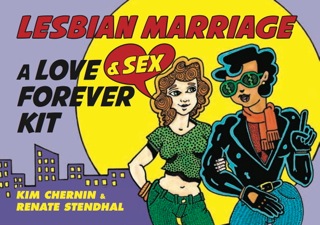
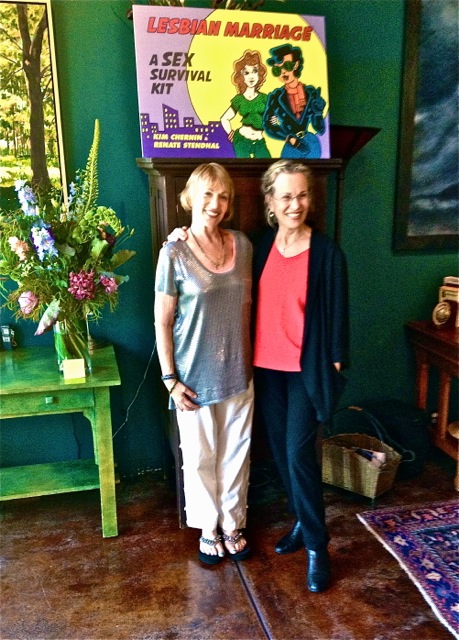 Kim Chernin and Renate Stendhal are the authors of the new book Lesbian Marriage: A Love and Sex Forever Kit. In addition to being seasoned authors and relationship consultants, they have also experienced the walk of a long-term lesbian relationship and marriage first-hand.
After 28 years together Kim and Renate celebrated their legal marriage in the fall of 2013 and remain passionately thoughtful and engaged in questions of coming out, falling in love and helping couples move from the first blush, butterflies and excitement of a new relationship to the mutual respect, understanding and intimacy that grows after years of togetherness. It all comes together, they believe, if you build from honest and brave places.
Over the past few weeks, I’ve had the pleasure of a dynamic Q-and-A with Kim and Renate to learn more about their path and their trailblazing experience in the feminist movement. Here’s what they had to say:
Kathryn: Kim and Renate, thanks so much for agreeing to talk with me and our readers about your lives, your love and your new book.
Renate: Kathryn, thank you. We are delighted to be here with you.
Kathryn: The pleasure is all mine. I am incredibly humbled to have the opportunity to speak with you both about your new book and, hopefully, a few general musings about love, relationships and coming out. We spoke prior to this interview about how much things have changed for the LGBTQ community in the past 50 years. I myself came out almost 25 years ago and can’t believe how much things have changed. Tell us a bit about what you’ve experienced.
Renate: I was very lucky coming out when I was 25, living in Paris, and it was the ’70s, when the women’s movement had just started. I had been in a bohemian marriage that was a total failure, and I had always been in love with women, so it felt like a complete homecoming when I finally met the first lesbian of my life and we fell for each other. In the big hub of the movement, loving women was the greatest high, a perpetual celebration. The personal was political then in a similar way I feel about it now: Gay weddings feel like a most welcome wave of a new movement of liberation.
Kathryn: Ironic, though, don’t you think, Renate, that our community’s embracing of marriage — and traditionally so, in many cases — is an about-face from much of what the larger LGBT community stood for as outsiders in the earliest days of the movement?
Renate: Yes, it is such an irony. We’ve come along way, baby! When we started throwing pebbles into the big lake of social change, we knew we were making waves, big waves, but we had no idea how theses waves would alter the shore over time — and that some of them will greatly surprise us. I do not remember that I or my revolutionary European sisters, who openly declared our love for each other and stormed the patriarchal citadel, thought of marriage. Marriage was a patriarchal institution — the worst instrument of oppression for women throughout history. … [T]he strongest impulse of our revolution was to break those chains that kept us dependent on men and what we used to call the “marriage cage.” We wanted to create new forms of love, new kinds of relationships between equals. We did not predict that our empowerment, egalitarian independence and woman loving would one day come to be fully recognized by society in a way that would allow us to see marriage in such a different light.
Kathryn: And, Kim, what about you? How have you experienced the evolution of acceptance of the LGBTQ community?
Kim: Until 1978 I believed that loving women was an illness. I was in psychoanalysis to get “cured” from it. During most of that time, homosexuality was listed as an illness by the American Psychological Association, so it wasn’t really far-fetched that I thought this way. I don’t know how the “cure” was supposed to work. I guess by analyzing my childhood circumstances I would discover why I loved women more than men. It didn’t work: I never stopped loving women, and by the late ’70s I managed not to think of it as a sign that I was mentally ill. It was the feminist movement, and especially the women’s spirituality movement, that helped me leave my second marriage and recognize myself as an exuberant, spiritually inclined lesbian.
Kathryn: Kim, that’s amazing. What a difficult path you’ve walked toward self-acceptance! Incredible to think that you’ve walked through the days of the bleakness described in The Well of Loneliness to exuberant crowds celebrating marriage equality and Edie Windsor’s court victory. How do you see the marriage movement impacting the experience that today’s young LGBTQ people are having as they grow up?
Kim: I am trying to imagine what that must be like, to have the often-deepest part of your identity be welcomed in society, to have the shame and conflict about it erased. What indeed must that be like? I’ve recently reviewed a report that found that the children of “planned” lesbian households are better-adjusted and more accomplished than their peers from conventional families. Were these lesbian families in which a whole lot of hypocrisy and denial and hiding were much less prevalent than in the culture generally? Does it feel good to know that one is a pioneer? Is it a source of self-esteem? That possibility is simply mind-boggling, that this identity about which I myself felt so much shame and conflict may have become for others who carry it a source of self-esteem.
Renate: This shame and conflict Kim and so many other gay and lesbian people felt is something I never knew. It seems I was born, so to speak, with gay pride! At 14 I read Jean Genet’s extremist gay novels and fell in love with this world, instantly becoming a vocal advocate for homosexuality. I sensed that gay relationships were between equals, free from heteronormative dictates and pressures. They seemed the most natural expression of free love to me. I didn’t know yet that women could be part of this longed-for world, or that women could be lesbians, but at 16 my dreams revealed it to me. When I finally began living my dream, I felt exalted — and even more so because I knew I was an outsider and pioneer!
Kathryn: Renate, it’s amazing to hear you speak of your strong core understanding of yourself — and the pride! This is something special, and something that might not even be experienced in the same way for today’s young people, who are much more likely to be accepted if they come out as LGBTQ. It is truly a gift for any young person to trust in their internal voice with such confidence, and that’s certainly what my wife and I hope to teach our son.
It really sounds to me that the two of you both bring complementary strengths to your relationship, and that it is, in fact, your differences — perhaps more than you have in common — that makes your relationship so special. You talk a bit about your personal journey as life-long partners in your book Lesbian Marriage. Can you tell us a bit more about how your professional backgrounds and personal love story informed this “how-to” book? Is this the same book you might have written for lesbian couples, say, 15 years ago, in advance of marriage equality?
Renate: Good question, Kathryn! Fifteen years ago we were just past the biggest crisis of our relationship: the challenge of an affair. We go into that in a chapter in our book, “The Other Woman,” and share how deep understanding and honesty got us past the hurt and wounding. We would have said already then: Every long-term relationship meets hurdles and profound challenges, and they usually arise from profound differences between even extremely compatible partners. That they can be weathered and worked through (instead of being swished under the rug) has always given us hope and confidence. By now we know our differences of temperament and inclination so well that we can joke about them. We come up with funny names for our nutty sides, making them characters, like “Martha Nuttree,” and laugh about Martha’s antics. There are many ways to tame the “monsters” we sometimes are, no matter our best intentions! I hope Kim will say more about the compatibilities that inspired us from the start, and still do.
Kathryn: This reminds me of that saying: What does not break us makes us stronger. What do you think, Kim?
Kim: I’ve always believed in rough times in any relationship. To get through them, all you need is to have both parties willing to hang in there and talk or fight until the crisis is resolved. I say this repeatedly to my clients as well, when we run into a difficulty. Just stay put, don’t leave, we’ll manage this. If you storm out of the room, just come back in. In my experience, everyone agrees that once we get through these crises, we’re closer and understand each other and ourselves better. I think a relationship that doesn’t go through crises is missing an important opportunity for growth. I thought this 15 years ago as well. The problem arises when one of the parties to the crisis leaves the relationship, as many people do. Renate never has, and neither have I. In this way we are very much alike. I think of our relationship as taking place on two dimensions. In one we are practically a Romeo and Juliet in our different backgrounds and the qualities that derive from them: Renate from a conventional German family, I from an extremely left-wing Jewish family; Renate more reserved, I more expansive; Renate attentive to fine detail, I overlooking them in favor of the bigger picture. I always want more; Renate is inclined to say, “Enough already.” But at the deeper, soul level we meet as kin, in our love for music, our shared spiritual orientation, our fanatical interest in culture, our fascination with psychology. And of course we are both writers and consultants, editors and translators. People see us as very different; I am more inclined to see us as very much alike, with our differences storming about on the surface.
Kathryn: Clearly you know each other well and trust each other deeply. And it’s clear to me, after reading your book, that you pull from your professional and personal experience to offer a bit of wisdom to navigating the road after the wedding is over and the marriage has begun. What audience do you think might most benefit from Lesbian Marriage, and — I can’t help but add — do you think this is the book you would have written on the topic had you approached it 20 years ago?
Kim: We couldn’t have written this book 20 years ago. We hadn’t yet developed our sense of humor about ourselves, or about most other things in life. We had no idea if a relationship could last for a long time or continue to be full of life and sex and enthusiasm. The book we’ve written, lighthearted though it often is, bears traces of the hard struggles we’ve passed through; I attribute to these hard struggles whatever wisdom we’ve managed to gain. And I also attribute our sense of humor to these struggles. There’s a wonderful alchemy in the work of transforming suffering into laughter; we have learned how to do it and are often able to teach it to other people. Renate and I laugh so often it’s as if we’re living in a comedy; we are happy to let it be known that the fools we laugh at are ourselves.
Kathryn: And how do you see your book as different from, say, the book that could be written on gay marriage by your gay male cohorts, or on straight marriage? Is a niche book, or could this book be appreciated by any couple, LGBTQ or otherwise?
Renate: It’s funny, Kathryn: About half of the 30-some readers’ comments we received on Amazon say this book is for every marriage, gay or straight! Some are written by men, some by gay men, and some by straight women! I think long-term committed relationships demand similar qualities, efforts and compromises from everyone involved. Many of the challenges we address are universal — for example, the gradual cooling of sexual passion over time. What comedian Kate Clinton has humorously called “lesbian bed death” is of course really “everyone’s bed death,” but not everyone is able to joke about it. However, there are also differences. Gender division has long shadows in our culture and society. Even in our post-feminist time straight marriage still has to contend with the general imbalance of power between men and women that permeates everything and creates specific problems for both bride and groom. In a gay-marriage guide more focus would of course be on testosterone-driven sex and affairs. Male readers may find more challenge in what we discuss at length in Lesbian Marriage: the capacity to evolve from the first “hot burn” of passion to the erotic, sensual “slow burn” of all-over-the-body love making. We talk a lot about lesbian women’s capacity of redefining and refining sex — even after menopause — so, yes, there are topics that are both universal and women-together-specific.
Kathryn: I hate to bring this conversation to an end, but I’m afraid it’s time. I’d love to close with a thought from each of you on the following question: What do you think is the biggest challenge and/or the biggest opportunity ahead for the LGBTQ community?
Renate: I think the answer to both is: Recreate marriage, LGBTQ marriage, in our own image; make marriage fit our visions like a splendid gown or tux or anything in between! When I say “in our own image,” I know you and we have been addressing precisely this vision and ideal in our work, in our books and community outreach, and in our own marriages as well, of course. We are on the way! Thank you, Kathryn, for your amazing inspiration.
Kim: We’re so excited by all the individual possibilities in this moment; yesterday, for the first time, at the doctor’s office, filling in the form for new patient, I got to check “married.” I could have spent the rest of the day telling everyone about this excitement (and in fact I did) and might have missed the really enormous social and political meaning of that simple act. Our challenge? Let’s not lose sight of the way we are making history every time we do the smallest thing that has to do with our public declaration of being LGBTQ and married. Oh, one more thing: The form had a box for “male,” “female” and “transgender.” How about that?
Kathryn: Even if it’s ridiculously dated and ironic to say this, the old Virginia Slims slogan “You’ve” — we’ve! — “come a long way, baby!” seems fitting. Congratulations to you both on your marriage, your years together, your book and, of course, for that small act of opting in to a new classification on a tiny little box on a big, long form! I am grateful to you both, Renate and Kim, for taking a few minutes to chat with me about your lives, your love and your new book. I wish you the very best of luck and look forward to our next conversation!
New Research on LGBT Employment Discrimination
New Research on LGBT Employment Discrimination
There is no federal law that consistently protects LGBT individuals from employment discrimination. Join a distinguished panelists as they present findings from the cutting edge of research…
www.youtube.com/watch?v=Q24IJFBrPDo&feature=youtube_gdata
DSCN5384_edited-1
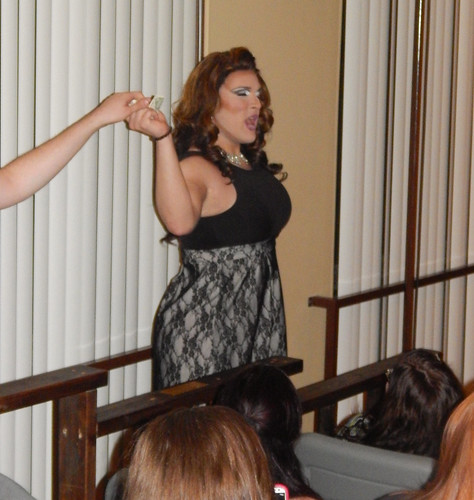
Cerebral Palsy and a Wheelchair: Two Things That Won't Stop Andrew From Going to a Gay Club (VIDEO)
Cerebral Palsy and a Wheelchair: Two Things That Won't Stop Andrew From Going to a Gay Club (VIDEO)

I’m From Driftwood is a 501(c)(3) nonprofit archive for lesbian, gay, bisexual, transgender, and queer stories. New stories are posted on the site every Wednesday.
When Andrew Morrison-Gurza, 19 at the time, was preparing to go to a gay bar for the first time, he did what most young gay men do: He had a friend over, talked about what to wear, and put on some pre-party music. Andrew recalls:
[W]e made a bunch of mix CDs with a bunch of early-2000s pop songs on it, like Christina Aguilera and all those things, and I just thought, “OK, well, I really have to hype it up and get really excited and really do it, because this is my first thing, and I want to ‘be gay.'” So I had a pink shirt on. I had some glow sticks that we had gotten from somewhere. And we were like, “Yeah! We’re gonna go!”
What makes Andrew’s experience different from most others is that he has cerebral palsy and uses a wheelchair. After an awkward conversation with the driver of the special wheelchair-accessible bus about where he was going, and then entering the club through the freight elevator, Andrew had an experience that reminded him that he’s different from an already-different group:
I remember going up to a couple of guys, trying to dance, and having them look at my chair and not being sure what to do but back away from me. So it was almost like parting the sea, because they would see me coming and all move out of the way, thinking they were being polite, thinking they were moving for me to get through, when all I wanted to do was dance. I knew right at that moment that I was different from them.
Reflecting on the experience, Andrew realized that sharing his story provides a face to an issue that is often overlooked in the LGBTQ community:
It showed me right away, whether people were saying it or not, or whether I was believing it or not, that this — my chair, my disability — was not something this community had really, really, truly understood yet, and so every time I went to a bar like that, or every time I went to a gay function, I would have to deal with people not knowing how to process this, not knowing what to say, and not knowing how to process me.
WATCH:
Andrew Morrison-Gurza also happens to blog on The Huffington Post. Read his posts here.
For more stories, visit I’m From Driftwood, the LGBTQ Story Archive.
Lgbt literature
Lgbt literature
COELHOS TUBARÕES E MARIDOS APOCALÍPTICOS

Buyer and Cellar in Dallas: Urie Back Home, Heading to TV After
Buyer and Cellar in Dallas: Urie Back Home, Heading to TV After
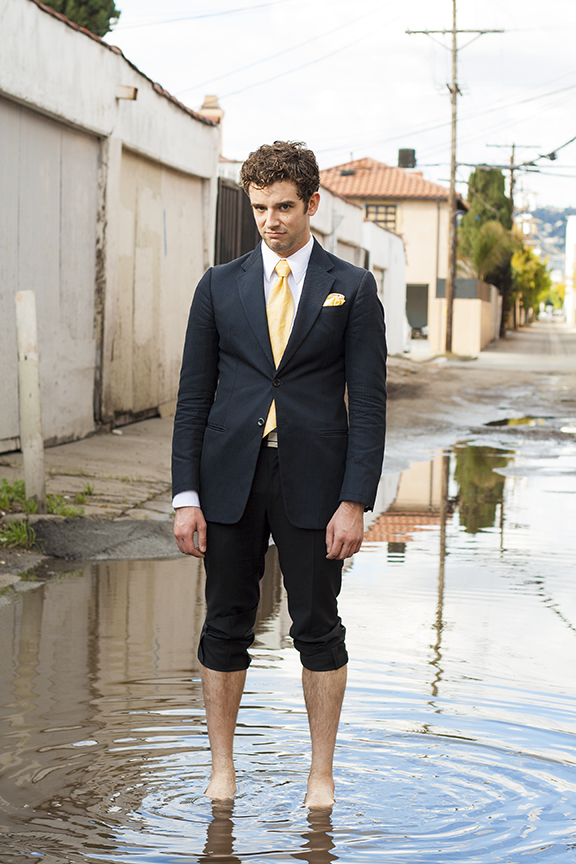
Ugly Betty predates Glee as one of the shows that made mainstream gay OK in TV-land. The now iconic ABC one hour dramedy stayed on top of the ratings for years, and launched the career of America Ferrera in to overdrive while giving Vanessa Williams another star turn. It also brought Michael Urie to fame as Marc St. James, the bitchy gay friend that everybody wanted; one with a golden heart under it all.

Urie played St. James from 2006 to 2010 and received a SAG Award nomination for Outstanding Performance by an Ensemble in Comedy Series.
Along the way, in 2009, he went back to the theatre (having trained at Juliard) in The Tempermentals and in 2012 played Bud Frump in How To Succeed In Business Without Really Trying. But it’s 2013’s Buyer and Cellar which is creating a stir, and which has kept him extremely busy. It just finished a sold-out run in San Francisco Aug. 31st. It moves to Urie’s hometown of Dallas Sept. 3 through Sept. 6 and then Nov. 11 through Nov. 30th to Toronto. Tour details are at Buyer and Celler’s official website.
The play is a hilarious look at an out of work actor finding a job in the most unlikely of places: Barbra Streisand’s basement mall. Yes, her basement mall. How on Earth did he come up with this?
“I did it the smartest way an actor can, which is by letting a writer come up with it,” he laughed on my international Karel Cast recently. “Jonathan Tolins told a joke at a party about a guy working in Barbra Streisand’s basement mall. That developed in to a blog about a guy that worked down there, Alex Moore, gets hired to work down in the her basement. And of course, the basement is real!” he exclaimed.

What? The Diva of all divas has a mall in her Malibu cliff home basement that she shares with Mr. Brolin? The one she wrote a book about decorating and renovating?
“Oh my dear yes,” he laughed. “She has a mall in her basement! It’s where she keeps her collectibles, old dresses from movies, antiques, there’s a gift shop with a wrapping station with bows and boxes. There’s a root cellar, although I”m not sure what one does in those,” he laughed.
Streisand is an enigmatic figure for sure; a diva who has been famous for over five decades and one whose place in gay culture, until recently seemed solidified. However, a recent poll of users of the app Jack’d put her, Garland and Minnelli as three icons to be retired. When Urie heard that the icon he actually portrays at one point in the show was up for retirement his reaction was sudden.
“Gasp! Oh my, I don’t agree at all. I mean, I’m only 34, I”m a younger gay with an old soul but I don’t think an icon ever retires,” he stated emphatically, “An icon never stops being one. They may become less relevant, but they remain iconic. Judy you can never remove from the GLBT movement as an icon for Stonewall alone,” he continued.
“Young people need someone to identify with, it’s why icons are important,” he added. “And yes, we need to have new ones, like GaGa and others, Beyonce in some ways, and even Katy Perry, I love her and she seems very supportive. We need the new ones for sure, but we must never, ever forget the ones that helped make it all possible. Streisand has been a huge GLBT advocate and remains one, as well as a good citizen in general. She is someone to be admired, even if she does have a mall in her basement, ESPECIALLY because she has a mall in her basement!” he laughed.
As for whether or not the diva has seen the play?
“She hasn’t seen it but she has said she’s looking forward to seeing it,” he said. She’s amused that between our show and Bette’s show about Sue Mengers she finds it amusing to be on Broadway without ever going on a stage. Even though ours was technically off Broadway,” he chuckled.
Urie has toured with the play almost since its initial run, something an actor seldom does. And while his late scheduled date is November, he definitely wants to do more.
“I love this work. I’d love for it to be even bigger, on Broadway, not just near it!” he joked. “And who knows where it could go, but it’s so much fun to do, exhausting, but fun.”
And, at the recent television up-fronts in Pasadena, CA USA announced it’s 2015 schedule with a Michael Urie sitcom tentatively titled Majordomo on the schedule, so it’s back to TV for him.
“TV is an iffy game, I’ve found,” he added. “It’s hit and miss. You never know why shows make it. So, you get a great team and give it all you got and see. So, obviously, we have high hopes. But it’s a long way from here to a finished and aired show, but the journey really is the best part,” he concluded.
For more on Urie go to his website.
To hear Karel and Michael Urie get the Karel Cast App, subscribe in iTunes to the Podcast or simply go to the most incredible website on all the planet, save this one, iamkarel.com. He appears in the August 8th Karel Cast.
Scruff Unveils New “Philanthropic Endeavor”
Scruff Unveils New “Philanthropic Endeavor”
 Charitable endeavors are to be admired and applauded, don’t get us wrong. But there’s a difference between doing good for the sake of doing good, and doing good to increase their fan base/market share.
That’s the dilemma facing folks who both want to do good but also gain audience for it at the same time.
Scruff, the anti-Grindr smartphone hookup app, just announced that they’ll donate ad space to nonprofits to help get the word out to horny guys everywhere that there’s more to life than your next “date.” Great. We love the plan, guys. Honestly.
But when you call the program “BenevolAds (trademark)” and release a self-congratulatory video with a certain “yay, me” sort of tone it does raise questions about your motive.
As Scruff puts it:
- “…Scruff has come forward with an incredible solution for the smaller, local efforts.”
- “We’re looking for partners around the world who want to help take advantage of this philanthropic endeavor.”
- “Join us and the rest of the Scruff community in making a difference today.”
On the one hand, Scruff is doing a great thing here and don’t want to minimize anyone’s effort to positively affect local communities. There are too few people who give a damn in the first place.
There’s just a slight whiff of “brand management” — you can almost hear the conversation that took place when they came up with “BenevolAds.”
Here’s the video of founder Johnny Skandros & “activist and fundraiser” Jake Mackenroth introducing the exciting, philanthropic, groundbreaking program:
But this is not just Scruff’s problem. Another example is the ice bucket challenge. Donating money and spreading the word about a debilitating disease? Great. Stripping completely naked so the world can ogle you yet again and blasting it across social media? Not as great.
When Dan Osborn stripped to his birthday suit to take the ice bucket challenge, he says, “I’m going to do it naked just to do something different.” No, Dan. You did it naked so that the maximum level of public attention would go to you, your package, and your charitable spirit. He runs from the chair after being doused in chilly water, baring his ass in what was surely a planned maneuver, exposing his narcissism along with it.
Dan Tracer
feedproxy.google.com/~r/queerty2/~3/L5AbsXU7sS8/scruff-unveils-new-philanthropic-endeavor-20140904
