Category Archives: NEWS

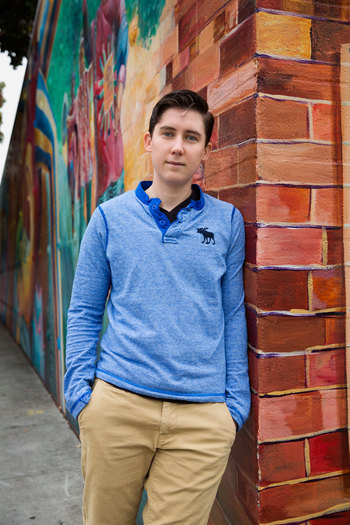
An Interview With Queer Activist and Artist Ryan Wilks
An Interview With Queer Activist and Artist Ryan Wilks

2015-09-17-1442515324-5745452-Painting1.jpg

www.wilkspainting.com

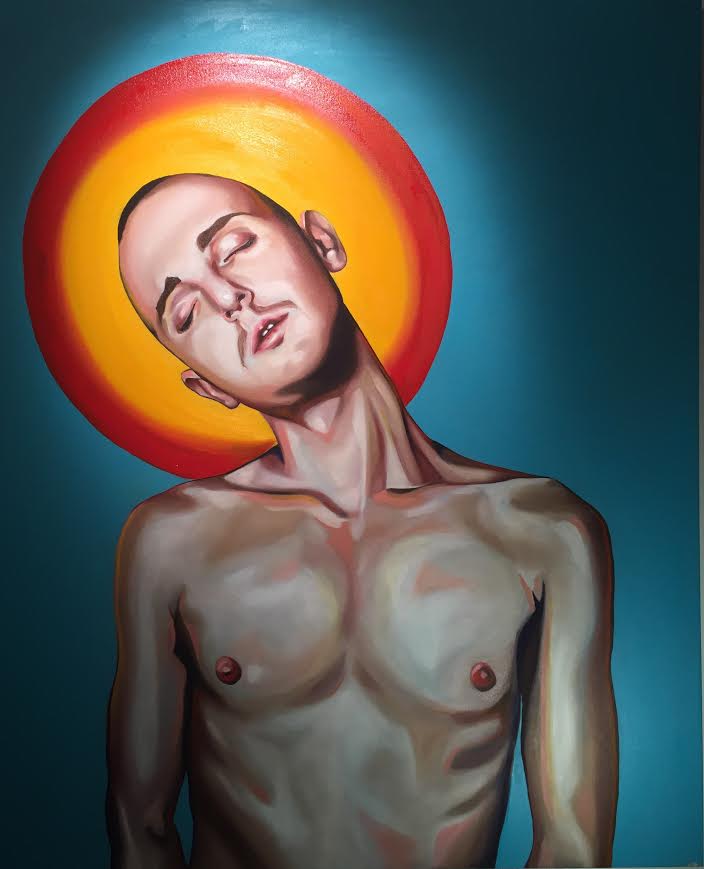
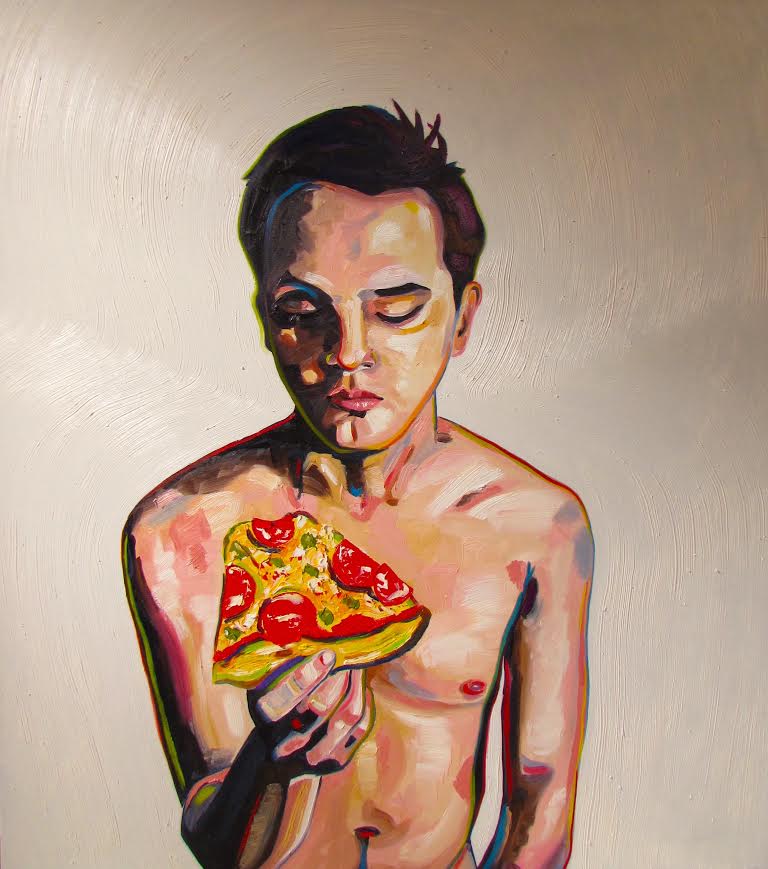
Kansas City, like many cities in the Midwest, is in the midst of a blossoming of queer art and culture. Ryan Wilks, a painter born and raised in the region, is focusing on this evolution with his newest project, a series of portraits and interviews called “Gender Treason.” When I came across Ryan’s story, I knew it was something I had to share. While it’s wonderful that a lot of queer media focuses on the great things going on in big cities, there is far too little attention paid to the smaller communities, many of which are still experiencing serious growing pains.

Take a look at why Ryan had to say about “Gender Treason,” his experiences a part of the queer community of Kansas City, and how his circumstances have contributed to him growing as an artist.

When you first started making art, what kind of pieces were you making?

I was painting my female friends, because I was always really fascinated with femininity and I was surrounded by beautiful women. I started with that, and then as time went on I started painting other women, Vogue images, and stuff like that. It didn’t really have any context to it at all; it took a long time to find my voice in my painting.

What is the most surprising commonality between the queer community in Kansas City and the queer community in other cities you’ve lived like Chicago and San Francisco?

I think there are a lot of similarities in the queer culture of Kansas City to both of those places, in that there’s a lot of partying. Generally what I’ve experienced in gay culture has been partying. Especially in the Midwest, bars are one of the few places we as queer people can gather, so a lot of social interactions as gay men take place at a bar. The pride is similar too — the self loathing I experienced as a young man is definitely lifting, especially in San Francisco.

When you first began to envision how you were going to put together “Gender Treason,” did you know that you wanted to include interviews along with your portraits?

I did. I wanted to have a narrative with the paiting, so that I could allow people to stare into the eyes of a subject, and then couple that with their story to create a more intimate interaction with the piece. However, I didn’t know how I was going to go about framing the interviews. Something I’ve learned at this point in the project is that I cant have any premeditated questions. It has to being with simply stating, “Tell me about your queer experience in Kansas City.” From there I’m able to navigate and ask questions that I think are not typically asked questions. I think a lot of times people ask questions, especially to trans people, that centralize around their sexuality and genitalia, which is not a great way to learn about a people. I like to talk to them about what it’s like to transition, how they feel, what that process has been like for them and how liberating it has been. I like to focus on the positives, because queer people have been demonized and sexualized in the media to a degree that there isn’t really any normalized perception of queer people. This project, more than anything, is allowing that normality to be shown.
2015-09-17-1442515386-4652493-Painting2.jpg

www.wilkspainting.com

Do you think you would have had the drive to put together a project like “Gender Treason” in any other place you’ve lived?

Kansas City is part of the core idea. I don’t think I would have done this project had I still been living in San Francisco, because there wasn’t really a need for it. People there are pretty open minded, and they don’t really care what other people do. When I moved back to Kansas City, I felt small again. I felt like I was put back into that box that I tried so hard to get out of by moving to San Francisco and moving to Chicago. I was put back in a culture where holding hands with a partner might be dangerous, or a hate crime might happen outside a bar again. These are very real fears living in this area, and in a lot of the Midwest. Kansas City is relatively progressive, it’s the 30 miles outside of Kansas City that can be almost threatening to queer people.

What’s something you don’t think that many queer people from bigger cities understand about being queer in a smaller, more “bible belt” community?

I think people in larger cities probably have the opinion of queer people in the Midwest that they are surrounded by narrow-mindedness or having a bigger struggle. That’s true, but there are beautiful things happening in a lot of cities, like St. Louis and Kansas City — even Denver. There is a cultivation of acceptance happening. We have a lot of really positive representation within the queer communities, and it’s just starting to trickle out to the outer areas. There’s a lot of progress being made, but in the Midwest we are largely playing catch-up.

Back in 2014 you were involved in planning a protest of the Kansas State House Bill 2453, which was a bill that essentially allowed legal discrimination based on perceived sexual orientation. What was it like protesting on the side of queer rights in Topeka?

It was terrifying and exhilarating and liberating. We had a couple hundred people show up, and they all had signs and were voicing their opposition to this bill. It was really important — we did it on the stoop of City Hall, and it was important to have visibility in front of the people making the decision so that they could see that there really were people that were affected by that bill in a frightening and negative way. We had people come down from DC to help organize the protest, and we wound up on tons of news channels — it was great to be a part of something that became bigger than just a Facebook post, and it was wonderful to be able to really use our voices.

You’ve said in previous interviews that you moved back to Kansas City because you felt like it was something you needed to do. How did the move affect your art? Did you already have the kernel of the idea of “Gender Treason” before you moved back?

I had no idea where my art was headed when I made the decision to move back to Kansas City. I decided to move back because I felt a deep calling to create in a city where the arts scene was booming, and it seemed like a soft place to start. Because the arts community in Kansas City is accelerating at such a quick rate, I knew I didn’t have to leave the Midwest to make a name for myself and create art that has substance and meaning, and really made a difference. I didn’t know what kind of art that would be, so for a while I was creating art and having shows that benefited charities. I wasn’t quite at a point where I could make a statement with my art, but I wanted to do something good with my art so many of my shows since I’ve been back have had portions of their proceeds go to charities. I had a show at LIKEME Lighthouse, a really great queer resource center, and was able to donate a good amount of money to them which felt really good. It wasn’t until I started working on “Gender Treason” that I realized that my art could be the gift, too.

2015-09-17-1442515430-2048754-Paiting3.jpg

www.wilkspainting.com

What’s your favorite part of the queer community in Kansas City?

I love that literally every kind of queer person on the spectrum that could possibly exist does within Kansas City’s walls. It’s a really diverse, amazing community. Along with that there is a lot of separation, just like there is in the bigger cities, but the sense of community is different. I’ve seen a lot of people move to Kansas City seeking refuge from small towns or suburban life, and they find it. It really is a good place to live, it just still has work to be done. In the state of Missouri, there is no legal protection against employee discrimination for queer people, no protection against discrimination in public accommodations, no laws protecting against anti-gay bullying in our school systems and no protections for trans residents from insurance exclusion. Missouri as a whole has a lot of work to do in creating a safe space for queer people. You can legitimately be fired from a job in Missouri because your boss doesn’t like that you’re gay, and that’s it. I’ve met people at some of the jobs I’ve had who knew our boss had issues with gay people, and kept their sexuality secret to avoid being fired.

How do you envision “Gender Treason” impacting its viewers?

I’d like people to come away from it with an understanding of the normality of queer existence, and the relatability of our human experience. We are normal people, and we go through different avenues for self realization, and that something every human being has to go through — we just channel it differently.

For more about Ryan, check out his website , and to learn more about how you can contribute to”Gender Treason,” click here.

— This feed and its contents are the property of The Huffington Post, and use is subject to our terms. It may be used for personal consumption, but may not be distributed on a website.


feeds.huffingtonpost.com/c/35496/f/677065/s/49fb59c5/sc/38/l/0L0Shuffingtonpost0N0Cmichael0Epodell0Can0Einterview0Ewith0Equeer0Ea0Ib0I815280A40Bhtml0Dutm0Ihp0Iref0Fgay0Evoices0Gir0FGay0KVoices/story01.htm

REVIEW: L’Ecusson – Beaune, Burgundy

REVIEW: L’Ecusson – Beaune, Burgundy

Beaune is one of the main towns within the iconic French wine region of Burgundy.

Burgundy is truly a gastronomic destination and the attractive town of Beaune has an impressive range of restaurants to choose from.

One of the best is L’Ecusson.

This was modern, impressive food.

We started with an amuse bouche of fresh cantaloupe gazpacho; followed by black tiger prawns for entree; Sea Bream for main; a cheese course of course; and finishing with a dessert of macaron, citron cream, a tuile biscuit, and a lemon sorbet. Spectacular.

Service was professional and friendly – our basic restaurant French was thankfully received with a smile, although our waitress helpfully also spoke English if required.

Highly recommended.

Gay Star News reviews L’Ecusson – Beaune, Burgundy

Read more from Gareth Johnson

Read more restaurant reviews

The post REVIEW: L’Ecusson – Beaune, Burgundy appeared first on Gay Star News.

Gareth Johnson

www.gaystarnews.com/article/review-lecusson-beaune-burgundy/

Anchorage Non-Discrimination Ordinance Public Hearing Concludes

Anchorage Non-Discrimination Ordinance Public Hearing Concludes

After two days of powerful and emotional testimony on several proposed non-discrimination ordinances here in Anchorage, Alaska, the public hearing process has concluded. It now moves towards a potential vote on September 29.
HRC.org

www.hrc.org/blog/entry/anchorage-non-discrimination-ordinance-public-hearing-concludes?utm_source=rss&utm_medium=rss-feed

Rainbow Doritos Accused Of Being “Gay Gateway Snack” And Akin To ISIS

Rainbow Doritos Accused Of Being “Gay Gateway Snack” And Akin To ISIS

ece1e441e73806c987dc8444c014cc793cfe5ba7Two of our most favorite things are joining forces to become one: Doritos and rainbows. But not everyone’s pleased about it.

Related: Burger King Serves “Proud Whopper” In Colorful Wrapper, Tells Customers It’s “All The Same Inside”

Popular chipmaker Frito-Lay announced this week that its teaming up with the It Gets Better Project to launch a limited-edition version of its Cool Ranch-flavored Doritos. The chips come in Pride colors: green, blue, purple, red, and orange and are branded Doritos Rainbows.

“Doritos Rainbows chips are a first-of-its-kind product supporting the LGBT community,” Ram Krishnan, Frito-Lay’s chief marketing officer, said in a press release. “Doritos the brand has stood ‘for the bold,’ and we believe there is nothing bolder than being yourself.”

Related: Daily News Columnist “Furious” Over Gay Pride Oreo Cookie

The chips are only available online when you donate $10 or more to the It Gets Better project. After making a donation, Doritos will send you the chips, free of charge, within two weeks.

Predictably, not everyone is happy with the Pride-inspired snack food. Some folks have taken to Twitter to voice their disappointment with Frito-Lay, calling the chips “sick,” “disappointing,” “ISIS,” a threat to Christianity, while urging people not to make the contribution or buy any Frito-Lay product, anywhere. Here’s what these folks have been saying:

Boycott Doritos and all the stand for. Who needs rainbow Doritos? We Christians have rights. We are being persecuted.

— Miriah (@miriahcex) September 18, 2015

Sick! Doritos Aligns with Anti-Christian Bully Dan Savage – Breitbart t.co/SoaJg8jHT1 via @BreitbartNews — Justin Mitchell (@justinbmitchell) September 17, 2015

#Boycott #FritoLay #OFFENDED #Protest #Doritos Don’t Buy! #TCOT #CCOT #PJNET #USA ?? #LGBT pic.twitter.com/WrOH3kDHIM — LindaPJ (@PJStrikeForce) September 18, 2015

@Doritos so disappointed that you would choose a group associated with Savage. Nasty, disgusting man filled with hate. #boycottdoritos — HighHorse (@ConservativeLeo) September 17, 2015

Well I won’t be buying @Doritos anymore. Anything who partners with Dan Savage is something I avoid. — Joshua Banks (@joshuabanks94) September 18, 2015

Hey @FritoLay how insufferably stupid are you? Gay chips? I send my kids to school with your products. Am I going to have to cease now? — Ric the Magnificent (@NASCARNAC) September 18, 2015

Think about it @Fritolay -Pandering to the 3.8% is not a good business strategy @CampOfSaints1 @molita128 #tcot #ccot pic.twitter.com/z26aIubpe3 — Savannah Maddox (@SavannahL817) September 18, 2015

@Doritos By promoting sex orientation Rainbow Doritos food products, as of yet with the kosher seal. Your brands are banned from purchase — Richard Rafail (@czar1213) September 18, 2015

I always enjoyed @Doritos. I’ve purchased my last bag. There’s a difference between marketing and advocacy #sadploy t.co/rW5i8uQcvz

— Bryan Ferrell (@Bryan_Ferrell) September 18, 2015

Time to boycott @Doritos for their “rainbow” chips. Oh puhleez Doritos! Are you going to make black ones next in support of ISIS? — Give me Liberty (@jwd828) September 17, 2015

Graham Gremore

feedproxy.google.com/~r/queerty2/~3/HOMLilJ6_Z8/rainbow-doritos-accused-of-being-gay-gateway-snack-and-akin-to-isis-20150918

Nepal Lawmakers Enshrine LGBT Protections in New Constitution

Nepal Lawmakers Enshrine LGBT Protections in New Constitution

nepal

The Constituent Assembly of Nepal has overwhelmingly approved a groundbreaking new constitution that explicitly mentions the human rights of LGBT people. It is the first constitution in Asia to do so.

Under the new constitution:

  • Citizens will be allowed to choose their preferred gender identity on citizenship documents
  • Gender and sexual minorities (GSM) will not be discriminated against by the state.
  • GSM have a right to participate in state mechanisms and public services to promote inclusion.

HRC notes there is “no direct mention of same-sex marriage in the new constitution, but all issues related to marriage in general will be handled in the civil code, which will be revised in the future.”

pant“It feels that we, the GSM, are proud citizen of Nepal, we also have dignity and we are also the right holder,” said Sunil Babu Pant, the country’s first openly gay lawmaker. “But we are not in an illusion to the fact that this is just the beginning of the long road ahead towards full equality, dignity, rights and mainstreaming of GSM communities in Nepal.”

Pant continued, “We will be working together with the rest of the Nepalese to build our nation, the ‘new, inclusive and prosperous Nepal’”

The post Nepal Lawmakers Enshrine LGBT Protections in New Constitution appeared first on Towleroad.


Kyler Geoffroy

Nepal Lawmakers Enshrine LGBT Protections in New Constitution

Helping Queer Youth Affected by the School-to-Prison Pipeline

Helping Queer Youth Affected by the School-to-Prison Pipeline

In the current age of marriage equality and open military service, it has become all too easy to forget that the Stonewall riots were in fact a violent uprising against years of police brutality and harassment, led by gender-nonconforming activists of color. Despite attempts to rewrite the history, the fact remains that in the early years of the LGBT movement, police violence was arguably our most central concern, and LGBT people of color were often the ones on the front lines of the resistance.

Though much has changed, much has stayed the same.

Those hit hardest by police brutality are still LGBT people of color. According to data from 2014, transgender people of color were 6.2 times more likely to experience physical violence from police than their white, cisgender counterparts. LGBT people of color remain on the front lines of resistance as well. Two of the three founders of #BlackLivesMatter, for example, are queer women of color. Indeed, Black Lives Matter has transformed the narrative around police brutality to make central the ways in which intersecting identities and gender play a role in the dehumanization and devaluation of black lives. 

Despite the long-standing leadership of queer and trans people of color and our shared history and current struggles, most national LGBT and racial justice organizations often have difficulty moving beyond single-issue silos. The prioritization of single-issue organizations over those that adopt broader frameworks has made it difficult to build strong alliances between our movements. Indeed, we need alliances now more than ever.

As with policing, the movement to dismantle the school-to-prison pipeline provides an opportunity to collaborate, and to do so in a way that builds alliances across race, sexuality, gender, and generation. This week, Advancement Project, the Equality Federation, and Gay-Straight Alliance Network came together to release Power in Partnerships: Building Connections at the Intersections to End the School-to-Prison Pipeline, a report we hope will help organizations take steps to build collaborative relationships that can increase our power.

In just over a decade, the school-to-prison pipeline has transformed from an unknown education issue into a national movement. Communities across the country have organized to advocate for commonsense discipline solutions that keep students in the classroom, and have drawn attention to stark racial disparities that make black students three times more likely to be suspended than their white counterparts. More recently, the movement has highlighted increased use of exclusionary discipline on LGBT and gender-nonconforming students, particularly LGBT students of color. Today, LGBT youth make up only 6 percent of the general population but represent 15 percent of people currently in juvenile detention.

We are in the midst of a school discipline crisis that is driving LGBT youth, youth of color, and especially LGBT youth of color out of schools and into the juvenile justice system. This crisis presents another important opportunity for us to break down the barriers between our movements and build on collaborative partnerships. Driven by our shared interest in the decriminalization of youth, we can work together to push back against the punitive policies that deny our youth the opportunity to succeed.

It is our hope that this report inspires our movements to take a step back and think more generally about who and what we are targeting in our work. When we do, it is likely that we will find that we often encounter the same discriminatory individuals, underresourced institutions, biased courts and policy-making bodies, broken systems, unfair social structures, and undereducated hearts and minds. The more we think of our work broadly as pushing back against these same targets and the more we realize our similarities, the easier it will be to close the gap between our movements.

Following the Stonewall riots, a variety of LGBT organizations emerged that emphasized the importance of racial justice and the power of a movement built on the shared interests of LGBT people and people of color to push back against police brutality. In 1970, the Gay Liberation Front and the Black Panther movement pledged support to each other, recognizing the value of their shared experiences with police brutality and harassment. As Huey P. Newton himself explained, “[the] gay liberation front are our friends, they are our potential allies, and we need as many allies as possible.”

The LGBT movement and the movement for racial justice haven’t always been divided. In order to dismantle the school-to-prison pipeline and create brighter futures for LGBT youth and youth of color, we need to look beyond the traditional boundaries of our organizations. Our young people need as many allies as possible.

THENA ROBINSON-MOCK is the project director for the Ending the Schoolhouse to Jailhouse Track Campaign at Advancement Project. IAN PALMQUIST is the director of leadership programs for Equality Federation.

Ian Palmquist & Thena Robinson-Mock

www.advocate.com/commentary/2015/9/18/helping-queer-youth-affected-school-prison-pipeline

Don't Dismiss Me for Being Genderqueer

Don't Dismiss Me for Being Genderqueer
‘Genderqueer is a trend.’ ‘Genderqueer people are just playing dress up.’

These myths are commonplace, perpetuated by misinformation in mainstream media, whispers in support groups, rants in online forums and jerks in the comments. They are the norm of what genderqueer represents in people’s minds. I’ve read one too many articles — especially by transgender people — claiming that those who are genderqueer do not experience the same troubles as trans men and trans women.

So I want to set the record straight.

Some genderqueer people are playing dress up. Some genderqueer people are young, young enough to be swayed by their peers, by what they think is cool. And right now, genderqueer is kind of cool. Some genderqueer people claim this label purely as a means to rebel against gender roles, gender stereotypes, gender expectations. Some genderqueer people do not experience discrimination, or rejection or violence.

But not all.

In fact, I’d argue that most genderqueer people do not fall into this more vocal, more visible group. The majority of genderqueer people are not doing it because it’s cool. They are not teenagers. They are not playing dress up. They are not a trend. They are simply genderqueer because they feel that the two options offered – male and female – are not enough for them to truly live.

Photo Credit: Chloe Aftel, Genderqueer series

They are simply trying to figure out how to be themselves in a world that does not acknowledge anything outside of these two rigid categories.

They experience social dysphoria from hearing a heavily gendered name, or a pronoun that essentially announces their genitals to everyone within earshot. They battle pasts fraught with fighting against what was expected of them, without words to proclaim otherwise.

They experience physical dysphoria about their body parts. They undergo expensive medical treatments to align the image in the mirror with the one in their minds. They jump through legal hoops to correct what they feel is a marker that doesn’t represent them. Even if the result still doesn’t reflect who they are, it’s better than doing nothing.

Doctors tell them they aren’t trans enough to transition. Family tells them they aren’t trans enough to call them by a different pronoun. Trans brothers and sisters tell them they aren’t trans enough to warrant support, services, acknowledgement, a community of solidarity within the transgender umbrella.

Genderqueer people are transgender. Genderqueer people experience discrimination, rejection, violence. Genderqueer people are not playing dress up.

Yet, even the slice of young folk who are crossing gender lines solely in the way they dress, in their haircuts and make up and accessories, are an integral part of the genderqueer community. For the first time in modern history, people feel a sense of freedom; we’ve created a space safe enough where they can explore gender. By being visible in their exploration and vocal in their pushing, they expand that freedom to others. This type of scrutiny over gender axioms is the sort of shakedown society needs.

All of us are helping tear down notions of what gender looks like, what gender should be, what gender really is. Some genderqueer people may just be having a good time, being the cool kids for once; or, they may not yet fully understand their gender identity — trans or not — and the freedom to explore gender outwardly is a critical step towards that discovery.

Our communities have developed in such a way that genderqueer exists simultaneously as an expression and as an identity, except only one of these representations evokes a dictionary lookup in people’s minds. Once genderqueer is pigeon-holed as simply outward appearance, genderqueer the identity is being dismissed for everyone.

Both concepts are important, yet present intersecting challenges based on the singular needs of each: free expression, support for transition, the validity of self-identity. The difficulty in trying to nail down a specific vocabulary lies in that most of these terms have different meanings depending on who you ask, partly because they are so new, partly because we only have a handful of words to describe infinitely individualized notions of gender. It may take a few years before these words coalesce into a shared definition, before genderqueer refers to a gender identity — a deep-rooted sense of self, on par with man or woman — rather than dismissed as a teenage trend.

In the meantime, I’m careful not to refute someone’s experience based on what they look like on the outside. I’m careful to grant them this freedom to explore and figure things out about themselves, a freedom most us regretfully never received as youth, and many others never will.

My hope in educating trans folk — and their families, their friends, their allies, their doctors, their teachers and dog walkers and hair stylists — about genderqueer identities is to expand the framework with which everyone thinks about Gender.

— This feed and its contents are the property of The Huffington Post, and use is subject to our terms. It may be used for personal consumption, but may not be distributed on a website.


feeds.huffingtonpost.com/c/35496/f/677065/s/49fa85bb/sc/38/l/0L0Shuffingtonpost0N0Cmicah0Cdont0Edismiss0Eme0Efor0Ebeing0I10Ib0I81555180Bhtml0Dutm0Ihp0Iref0Fgay0Evoices0Gir0FGay0KVoices/story01.htm

Hospital Encourages Men To Sell Their Sperm, NOT Their Kidneys, For An iPhone 6s

Hospital Encourages Men To Sell Their Sperm, NOT Their Kidneys, For An iPhone 6s

XAW101_China_Apple_New_iPhonesIf you thought those absurd lines that form around an Apple store in the days preceding a big product launch were bad, wait until you learn the lengths some Chinese men are going to secure a soon-to-be released iPhone 6s.

China Daily reports that in at least two cases, men have attempted to sell their kidneys to raise funds for the new tech.

They went so far as to contact a potential black market buyer and arranged medical tests in a nearby hospital in Nanjing.

Luckily for them, the buyer didn’t show, and the men have held on to their internal organs. Maybe they can hold our for the 7?

Apple fanboy fervor is well-documented in China. In 2012, the release of an earlier iPhone model was stopped on safety grounds after a near-riot broke out in Beijing.

As is to be expected, Chinese medical institutions aren’t so fond of this disturbing kidney story, and one hospital has responded with one of the strangest campaigns imaginable.

Renji Hospital in China is encouraging men to donate sperm and use the money to pay for a new iPhone 6s using the tagline, “No need to sell your kidneys, you can easily have a 6s.”

Still sounds like a sticky situation if you ask us.

Dan Tracer

feedproxy.google.com/~r/queerty2/~3/QdIUY6z9BcY/hospital-encourages-men-to-sell-their-sperm-not-their-kidneys-for-an-iphone-6s-20150918

Australian Bobsled Stud Simon Dunn Talks Singlehood, Sex Positions, and Losing His Virginity: VIDEO

Australian Bobsled Stud Simon Dunn Talks Singlehood, Sex Positions, and Losing His Virginity: VIDEO

Simon Dunn

Everyone’s favorite beefcake bobsledder Simon Dunn is back with another video, this time featuring the out athlete engaging in some pillow talk and answering fan mail about his private life.

Questions Dunn is asked include: Are you single? Top, bottom, or versatile? What are you into in the bedroom? When did you lose your virginity? Ideal man? What would you tell your 16-year-old self?

Check out his answers in the revealing bedroom video below:

This isn’t the first time Dunn has talked about his personal life. In a July interview with Attitude magazine, Dunn shared what’s keeping him back from tying the knot:

“One day I would like to meet the right guy, settle down and have kids. But I will only do this when I can get married in front of friends and family in my home country. If I can represent that country in sport I should be able to marry the person I love. I can’t believe that now the US has passed same-sex marriage, my country still hasn’t caught up with the rest of the world, which makes me angry. The law needs to be changed as soon as possible, otherwise we’ll look as bad as other countries who treat gay people like second class citizens.”

Related, Gay Bobsledder Simon Dunn Bulks Up and Bulges Out of His Spandex in New Video: WATCH

The post Australian Bobsled Stud Simon Dunn Talks Singlehood, Sex Positions, and Losing His Virginity: VIDEO appeared first on Towleroad.


Kyler Geoffroy

Australian Bobsled Stud Simon Dunn Talks Singlehood, Sex Positions, and Losing His Virginity: VIDEO