The Difference Between Love and Lust – How to Identify the Two
When it comes to love and lust, things are simple (well not really, but we’ll pretend they are for a second and try to simplify both by carefully inspecting their aspects). Lust is the animal instinct we feel towards someone, the feeling focused on the physical attraction and love is the sum of all your partner’s qualities that you adore, even when you don’t. Okay, let’s elaborate.
The misconception of what being in love, loving and lustingover someone means is what gets us confused. The movies we watch and the series we binge, lead us to believe that“being in love” is the ultimate condition to “loving” someone when the truth is quite different. Often interchangeably used, these three terms are oftentimes three different stages in a relationship, each with an individual significance and meaning, which should gradually evolve Here’s how:
LUST
Lust is often the first stage in a relationship when two people feel immediate sexual attraction towards each other. When in its beginning stages, lust has the same effect on the brain as a drug. The seeminglynever-ending debate on lust vs love should end (or at least get a bit clearer) when we say that lust is a state of consciousness that is entirely altered by hormones, idealization and projection, which is why this stage in a relationship shouldn’t be taken as a measurement of the relationship’s quality.
Oh the beauty of being in love! Similar to lust in some aspects, being in love is the rush and excitement we get when we’re around the person we are dating. Still hopped up on feel good endorphins, this stage can sometimes fall under an idealization: instead of objectively looking at the person before us, we are projecting and seeing someone we want to see in them.Wearing rose-colored glasses, the couple does have some insight into the other person’s qualities, and personality traits but we can be very forgiving, lust-driven and would rather focus on what they believe is true than seeing what actually is. As idealization is a very strong weapon with long-lasting effects, once the “real person” surfaces, we sometimes still refuse to see.
Being the right fit for each other and finding that true love, is the holy grail of relationships. Although this type of love doesn’t exclude lust and being in love; it doesn’t necessarily depend on them. You build an intellectual connection with your partner based on shared values; mutual understanding, mutual support and emotional honesty. You love everything about your partner; their strongest qualities and areas of weakness. And, most importantly, real love is having someone love you for you, with the same impulse, always – even when the rose-colored glasses are off. When you start caring for your partner’s well-being, success and health (almost) as much as you care for your own – you’ll understand this type of love.
Having a best friend for life doesn’t sound too shabby, does it? You’ll have a support system, a hand to hold, a caring soul to bring you soup when you are sick, a partner who shares your values, and someone you appreciate (and who appreciates you) from the bottom of your heart.
She pulls onto the freeway, and within seconds we’re going 90 mph. Kendall goes on: “I don’t think I have a bisexual or gay bone in my body, but I don’t know! Who knows?! I’m all down for experience—not against it whatsoever—but I’ve never been there before.” She ponders it for a moment. “Also, I know I have kind of a . . . male energy? But I don’t want to say that wrong, because I’m not transgender or anything. But I have a tough energy. I move differently. But to answer your question: I’m not gay. I have literally nothing to hide.” She lets out a mordant chuckle. “I would never hide something like that.”
The Resistance Reclaims Its Time at the HRC Los Angeles Dinner
The HRC Los Angeles Dinner brought together more than 1,000 of HRC’s most active members and supporters in California to raise crucial funds in the fight for LGBTQ equality. On March 10, the greater Los Angeles area re-committed itself to the fight for equality with a night of incredible guests at the JW Marriott L.A. LIVE.
Congresswoman Maxine Waters (D-California) delivered a fiery speech just hours after Donald Trump launched a fusillade of disgusting attacks during a Saturday campaign rally, proving why she is a fierce leader of the resistance.
Waters is considered by many to be one of the most powerful women in American politics today. She has gained a reputation as a fearless and outspoken advocate for women, children, people of color, and the poor. Elected in November 2016 to her fourteenth term in the U.S. House of Representatives with more than 76 percent of the vote in the 43rd Congressional District of California, Congresswoman Waters represents a large part of South Central Los Angeles.
“We are counting on all of you to show up during the 2018 midterms and vote for people who will restore this democracy and uphold everything that we have fought for to advance #LGBTQ equality,” Waters said.
2017 HRC Visibility Award recipient Gus Kenworthy passed the torch to fellow out gay Olympian Adam Rippon, honored by HRC for his trailblazing visibility at the 2018 Winter Olympics.
Adam Rippon made history as the first openly gay U.S. American male figure skater to compete in the Olympic games. Rippon publicly sparred with Mike Pence in the press and on social media, bringing a new focus on Pence’s long anti-LGBTQ record. Rippon publicly voiced his concern over Pence leading the diverse U.S. delegation to the Olympics.
“To all the young kids out there: You are smarter than you think. You hold more strength than you may ever know. You are powerful,” Rippon said.
Other special guests at the event included Teri Polo and Sherri Saum from ABC Family’s “The Fosters,” Josh Duhamel from “Love, Simon” and many more. HRC-backed U.S. Senate candidate Kyrsten Sinema of Arizona also spoke and Grammy Award-winning rock band Portugal. The Man performed.
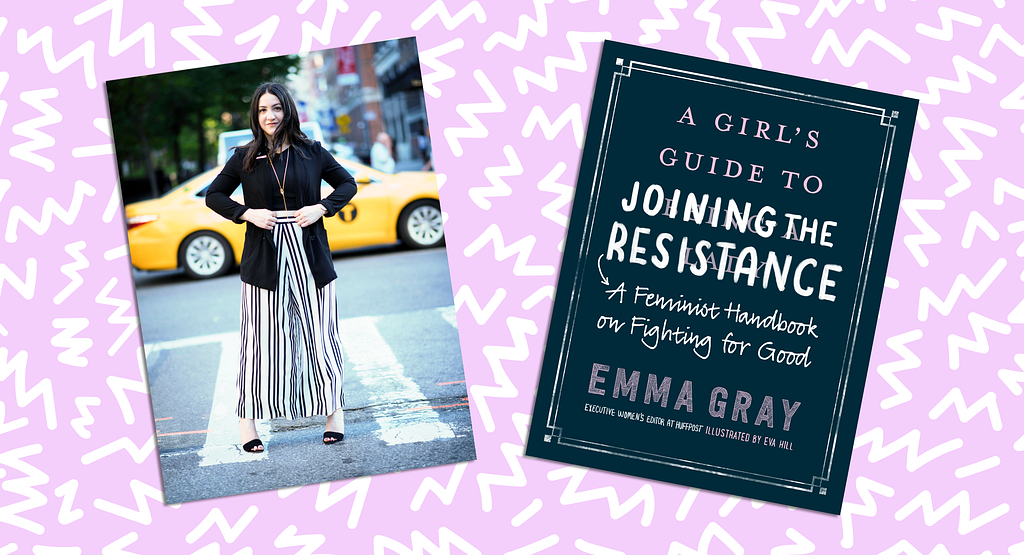
Our conversation with Emma Gray, author of “A Girl’s Guide to Joining the Resistance”
We sat down with Gray to chat how dating is different now in the age of Trump and #metoo
Emma Gray‘s ’“A Girl’s Guide to Joining the Resistance: A Feminist Handbook on Fighting for Good” is a handy guide that illuminates why the time is now to get involved in helping to ensure women’s rights are protected for current and future generations of women.
It goes without saying that the 2016 election stirred the pot — politically, socially, and mentally. The night Trump was elected, in fact, prompted Huffington Post senior reporter Emma Gray to embark on writing A Girl’s Guide to Joining the Resistance: A Feminist Handbook on Fighting for Good. Released last month, this handbook includes tips on how to get (and stay) politically active, background information on key issues, and interviews with activists and politicians such as Senator Elizabeth Warren, actress and activist Ashley Judd, actress and activist Marlo Thomas, and Women’s March Co-Chair Carmen Perez.
At OkCupid, we’re always improving our product to be focused on the female experience, and we do that by talking to lots of interesting, smart, creative women. So we were super excited to chat with Gray about her book, and how joining the resistance, or at the very least listening to a voice other than your own, can make for a better atmosphere — not just in politics, but in dating, too. We caught up with Gray after she’d just done a live version of her podcast Here to Make Friends (a Bachelor recap show) at SXSW.
OkCupid: You mention in your book that the 2016 election inspired you to write it. How did it prompt you to write the book, and were there any other factors in your decision?
I cover the intersection of gender and politics for HuffPost, so I covered the 2016 presidential election and election night — and I thought I’d be writing a story about our nation’s first woman President.
Instead I wrote a very different story. I ended up being outside the Javits center [in New York City] and interviewed a lot of very angry and grief-stricken people; and then I went on to cover the 2016 Women’s March and saw what happens when you take that anger and grief and turn it into action.
That inspired me to write that book, and I wanted to approach covering this renewed resistance from a journalistic perspective — which meant going out and chatting with women’s leaders about what it means to be involved in the resistance, and what it meant particularly for young women.
OkCupid: Did your plans for the book shift as you researched and interviewed?
There was a new chapter on the importance of storytelling, and that wasn’t something I had in the original outline: as I started interviewing women, the more storytelling came up, and the more relevant it felt. And this was all before #metoo — now we’re really seeing how important storytelling is in creating social change.
In that specific chapter on storytelling, you discussed how writing an article for HuffPost about women and anxiety opened the doors for dialogue. How can sharing our own stories of struggle help us find deeper connections?
Storytelling is a form of intimacy. If you’re trying to build true intimacy, it needs to involve personal storytelling; it’s how you get ot know someone, whether it’s romantic or platonic or professional. Any relationship that’s going to be authentic needs storytelling.
When it comes to hetereosexual dating, there’s an element of understanding that you need to build. For me personally, as a woman dating straight men in this moment, there are a lot of conversations that are prompted given the fact that we’re in this #metoo moment. I think storytelling is the best way to bridge the gap between those experiences, whether it’s between a white person and a person of color or someone who’s dating someone with a different gender identity. You need to stop and hear their stories and understand that your stories are not going to be the same as theirs.
OkCupid: The #metoo movement has certainly changed the social landscape, particularly in dating and relationships. What advice do you have for daters when it comes to dating in the age of #metoo?
It sounds simple, but view the people you’re trying to date as human beings. Rather than saying “I need to pick up this women at a bar,” just think, “I want to approach this person and see if we get along, and see if we’re into each other.”
Most men are socialized to believe that they need to be the aggressors or in control of relationships, and I think that harms women and harms men, because it puts pressure on them both. But if we widen our views of what it means to be a woman or man or any gender identity, it helps everyone.
OkCupid: Another touching story from the book was about how trans activist Sarah McBride fell in love with trans activist Andy Cray, and how they connected over their shared passion for LGBTQI rights. How can sharing our political beliefs and passions bring us closer?
It depends who you are and what place these causes hold in your personal life, but I do think being involved in a community of some sort — whether that’s your relationship or your friends — that’s invested in creating change can be fantastic.
Also, engagement in political and social issues can be fun! If you’re a couple, you can designate your partner as a buddy to remind you to call congress one to two times a week. You can gather a group of friends to canvas for a local candidate who you support. And I personally have found some of the best romantic connections in my life have of course been built on attraction and all of the things we picture when we think of love and romance and sex, yet they’ve involved an intellectual component that includes debates and talking about current issues and what’s in the news. To me, it’s important to have a partner who cares about the world around them, and a partner who wants to engage in conversations as an equal.
OkCupid: A lot of activists, scholars and politicians in your book defined what intersectionality means to them. How can we practice intersectionality in our relationships?
Intersectionality is primarily a lens for groups that are advocating on behalf of a group. I think the way that that would apply to dating is just in the very basic sense of working against our tendencies to universalize our own experiences and identities.
When you’re walking into a romantic or sexual experience with someone, they might have different experiences and interpret interactions differently. So stressing openness and conversation is key. Keeping openness and listening in mind rather than projecting your needs and world views onto that other person can be really beneficial.
OkCupid: What do you hope people will walk away with after reading?
I would hope that anyone who reads the book will walk away with a renewed energy, regardless of politics, and understand that their experiences matter, and that a healthy political system is one that all citizens engage with — and that sitting on the sidelines is not an option. The personal has always been political, and the political will always be personal.
OkCupid lets you meet people based on what you care about. Sign up today.
Stephen Hawking, the visionary physicist who wrote A Brief History of Time and dedicated his life to exploring and explaining the mysteries of the universe, has died at 76.
Hawking suffered from ALS (amyotrophic lateral sclerosis), a neurodegenerative disease commonly known as Lou Gehrig’s Disease, which is usually fatal within a few years. He was diagnosed in 1963, when he was 21, and doctors initially only gave him a few years to live.
The disease left Hawking wheelchair-bound and paralyzed. He was able to move only a few fingers on one hand and was completely dependent on others or on technology for virtually everything — bathing, dressing, eating, even speech.
Hawking used a speech synthesizer that allowed him to speak in a computerized voice with an American accent.
He and the physicist Roger Penrose described singularities, mind-bending physical concepts where relativity and quantum mechanics collapse inward on each other—as at the heart of a black hole. It’s the sort of place that no human will ever see first-hand; the event horizon of a black hole smears matter across time and space like cosmic paste. But Hawking’s mind was singular enough to see it, or at least imagine it.
His calculations helped show that as the young universe expanded and grew through inflation, fluctuations at the quantum scale—the smallest possible gradation of matter—became the galaxies we see around us. No human will ever visit another galaxy, and the quantum realm barely waves at us in our technology, but Hawking envisioned them both. And he calculated that black holes could sometimes explode, an image that would vex even the best visual effects wizard.
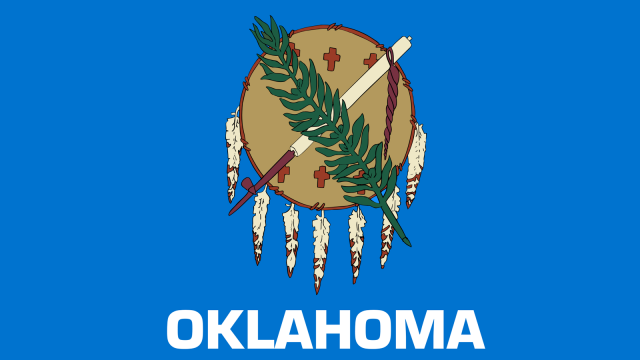
Oklahoma Senate passes bill targeting LGBTQ families and youth
Oklahoma SB 1140 would allow adoption and foster care agencies turn away qualified LGBTQ couples
NEW YORK – GLAAD, the world’s largest LGBTQ media advocacy organization, released the following statement after lawmakers in the Oklahoma Senate passed Senate Bill 1140. This anti-LGBTQ bill would allow adoption and foster care agencies to cite religion as a reason to discriminate and turn away qualified LGBTQ couples as well as Jewish, Muslim, or single Americans, or interfaith couples.
“This heartless attempt by Oklahoma State Senators to write anti-LGBTQ discrimination into law puts young people who need to find a loving home in jeopardy,” said Sarah Kate Ellis, President and CEO of GLAAD. “All of the leading medical and psychological authorities know that LGBTQ people are deserving parents who foster strong families. This law and other religious exemptions like it are not about the best interest of the state or children, but hiding anti-LGBTQ discrimination behind personal religious beliefs.”
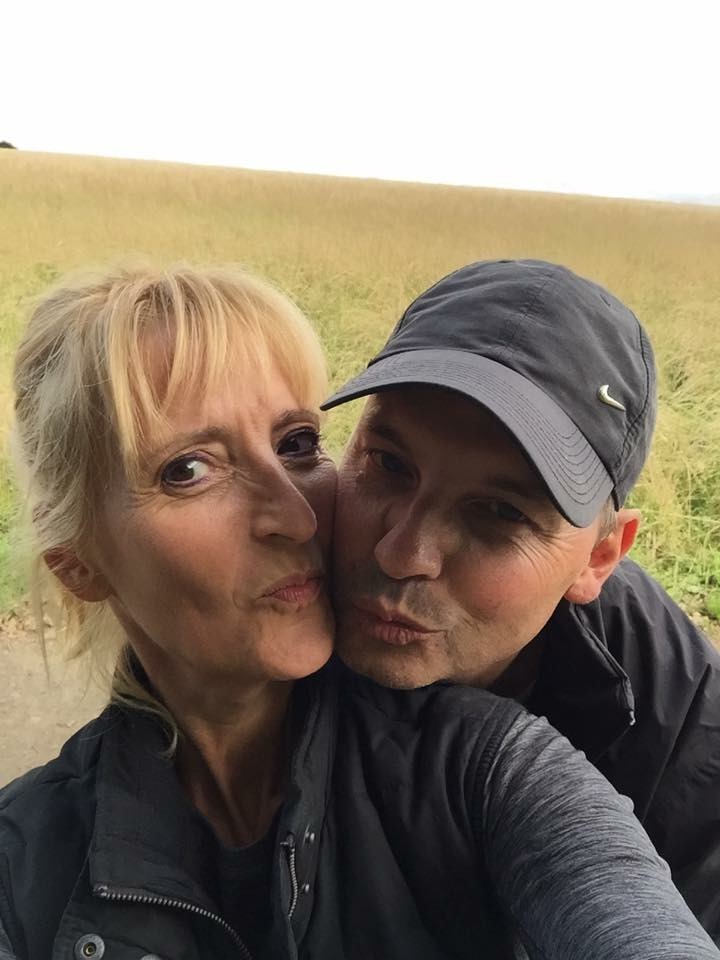
Jane:Andy messaged me first “Hi how are you? My name is Andy been single a while now. I’ve got 3 children, all independent. Time for me now!! It would be great to hear from you x”
Andy: Our very first conversation was about the dates we had been on and the lessons we had learned. We decided to meet at the Red Lion Pub for our very first date.
Jane: It wasn’t until date two that I saw there was a lot more to Andy than met the eye which turned out to be true and on date three, we had been to see the show Motown and happened to get lost in the rain. We laughed a lot. We both chatted about what we loved, including a mutual love of Greek food and low and behold, we looked up and we happened to be standing outside a Greek restaurant!
Andy: It was at the Motown show where I knew Jane was the one. I spent more time watching her than the show!
Jane: After the show we decided to go for a stroll. Andy told me more about his life and how unhappy he had been until he made some big changes and so far hadn’t looked back. His story confirmed what I already knew, that he was an absolute hidden gem.
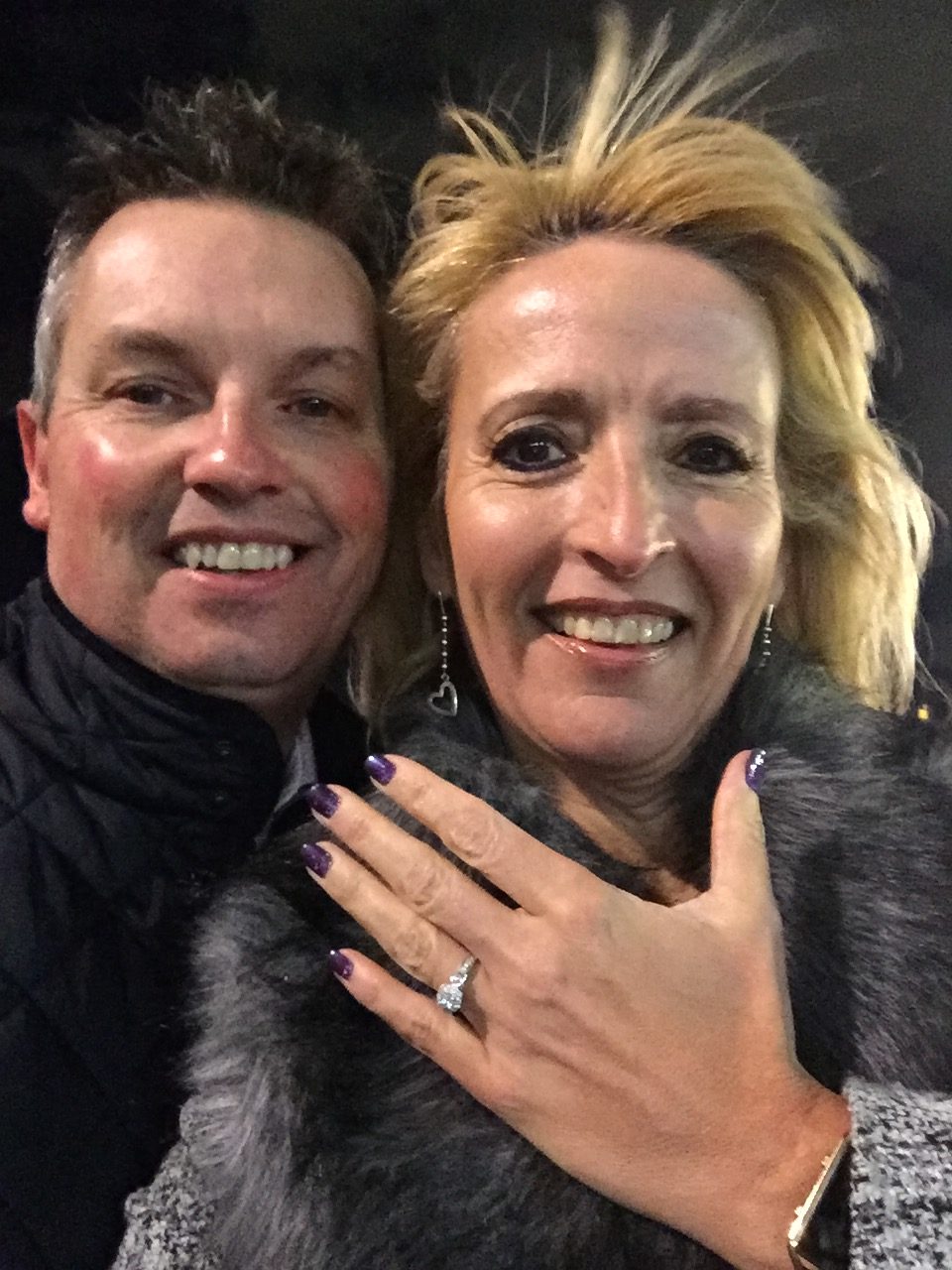
I knew that night I would marry him.
The day after Motown we booked a trip to Spain together and it was the best thing we could have done as we got on magically on that vacation.
It’s Andy’s calmness and steadiness which compliments my impulsiveness and impatience perfectly. We just naturally bring out the best in each other. We have the most brilliant chemistry and became really good mates very quickly which was really important for both of us.
Andy:Jane makes me think about myself and is helping me to become a better person without forcing anything. She has an infectious personality and I absolutely love her positive attitude about everything.
Jane: I love it that Andy is so kind, calm and makes me feel so secure. He’s a lot of fun and is the most loving, caring and genuine man I have ever met. He really has no idea how lovely he truly is.
Congrats Jane + Andy! These two will be tying the knot December 2018.
Oklahoma Senate Passes Anti-LGBTQ Bill; HRC Calls on House to Reject It
Today, HRC called out the Oklahoma Senate for passing SB 1140, a bill that would allow child welfare organizations — including adoption and foster care agencies — to turn away qualified Oklahomans seeking to care for a child in need, including LGBTQ couples, interfaith couples, single parents, married couples in which one prospective parent has previously been divorced, or other parents to whom the agency has a religious objection. A similar bill recently passed the Georgia Senate and is awaiting a hearing in the Georgia House Judiciary Committee.
“Bills such as SB 1140 are a clear attempt to solve a ‘problem’ that simply doesn’t exist while enshrining anti-LGBTQ discrimination into law,” said Marty Rouse, national field director for HRC. “If lawmakers in Oklahoma truly wanted to help find permanent homes for the children in the child welfare system, they wouldn’t be focusing on narrowing the pool of potential parents, which only hurts those kids. HRC calls on the Oklahoma House to reject this needless, harmful bill.”
“We will continue to fight SB 1140 in the House, we will fight it in the court of public opinion, and we will fight it all the way to the Supreme Court, if we have to,” said Troy Stevenson, executive director of Freedom Oklahoma. “Discrimination is not the Oklahoma Standard, and we will not let it become so.”
Child welfare organizations such as the American Academy of Pediatrics, the Child Welfare League of America and the North American Council on Adoptable Children have condemned similar bills. This most harms children in the system who are awaiting placement in qualified, loving homes and are instead forced to remain in care. Child welfare services should be guided by the overarching principle that guides all family law: all determinations should be in the “best interest of the child.” It isn’t in the best interest of a child to deny them a qualified, loving family simply because that family doesn’t share all of the tenets of the placing agency’s faith.
HRC recently released a report, titled Disregarding the Best Interest of the Child: License to Discriminate In Child Welfare Services, detailing the harms of efforts to write anti-LGBTQ discrimination by child welfare agencies into law. Statistics suggest that an estimated two million LGBTQ adults in the U.S. are interested in adoption, but the LGBTQ community often remains an untapped resource when it comes to finding families for children and youth in foster care.
Research consistently shows that LGBTQ youth are overrepresented in the foster care system, as many have been rejected by their families of origin because of their LGBTQ status, and are especially vulnerable to discrimination and mistreatment while in foster care. SB 1140 will only exacerbate the challenges faced by LGBTQ young people.
Care provider uses Skype to foster sense of belonging and wellbeing
Award-winning not-for-profit Somerset Care recognizes that people have basic needs: to feel safe, accepted, loved, and a sense of belonging. They also see that the use of technology in care can help support these needs—as well as improve health and wellbeing. With a vision to enhance care with technology, the organization has been using Skype in their care homes for over 10 years.
Somerset Care provides residential, nursing, and specialist dementia care—as well as support for adults with complex needs—in homes across England’s Somerset county and the Isle of Wight. They understand how to assist with basic needs—and beyond.
So, in 2013, Somerset Care sought even more insight into the use of technology in care. They took part in a social experiment to learn how to bolster social inclusion and wellbeing in older people. One-hundred-twenty people over the age of 65 took part in this project, which brought social media platforms—including Skype, email, and Facebook—to participants who had never before used social media or a computer. “Skype was the most used and enjoyed platform, closely followed by Facebook and then email,” says Jason Shaw of Somerset Care. Sixty of the participants continued with no use of technology, but the other participants were ready to incorporate social media and computers into their lives.
“Each of our care homes has computers for the residents to use as they please, and we’ve since invested in hand-held tablets. Our residents use these in a variety of ways, including Skype, playing games, and emailing relatives,” says Jason. “Two of our care homes have recently started to make Skype calls with each other, meaning that residents from the care homes can chat together and form new friendships.”
And Somerset Care is fully on board with this enterprise. Thanks to the findings of that 2013 social experiment and research project, they have since employed a full-time “Care Technologist,” a role that provides support to their care homes and residents using a variety of technologies. Technology in Care Workshops have been crafted, too, and rolled out to the homes, including one dedicated specifically to the use of Skype in care.
Residents especially enjoy the ability to contact their friends and family members. “It’s particularly useful when a resident has first moved into a care home,” says Jason, “as this can be unsettling for the resident and their family.” Many of the success stories speak for themselves.
“We encourage our residents to experiment with technology to find out what works best for them,” Jason continues. “One of our residents wanted to use Skype to connect with her daughter on a more regular basis. She’s hard of hearing and relies on lip reading and body language. … The issue was solved using the instant message function. During Skype videocalls, her daughter will type instead of talking, and the resident then verbally responds.”
We love hearing how you use Skype to enhance the experiences of those around you. To share your story, just tag us @Skype on social media, and we might feature you.