
Category Archives: MISC

Senators Introduce Bill to Ensure RFRA Can’t Be Used to Harm Others
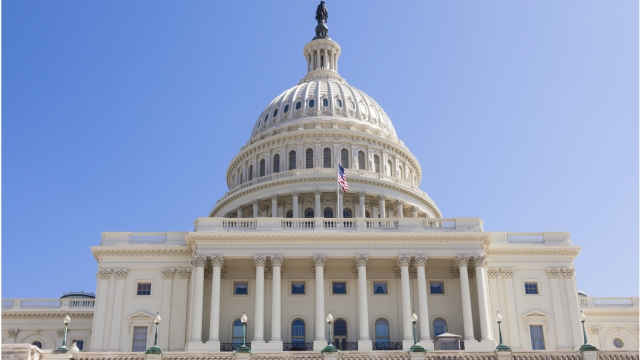
Senators Introduce Bill to Ensure RFRA Can’t Be Used to Harm Others

Today, Sens. Kamala Harris (D-Calif.), Patrick Leahy (D-Vt.), and Mazie Hirono (D-Hawaii) introduced the Do No Harm Act, which would clarify that the Religious Freedom Restoration Act (RFRA) is intended to protect religious freedom without allowing the infliction of harm on other people.

“The freedom to worship is a founding principle of this nation as well as the right to live free of discrimination or fear that one’s civils rights will be undermined because of race, gender, sexual orientation, or gender identity,” said Harris in a statement. “The Do No Harm Act will ensure we protect both these rights for all.”

When RFRA was passed into law more than two decades ago, it was designed to protect minority religious groups’ constitutional right to freely exercise their religious beliefs. RFRA prohibits the federal government from “substantially burden[ing]” a person’s religious practice unless doing so is the least restrictive means of furthering a compelling governmental interest. RFRA was supported by a broad coalition of organizations including many in the civil rights community, who welcomed the law as an important shield from the tyranny of majority rule.

Despite this focused, straightforward intent, individuals and businesses have worked to distort RFRA into a blanket license to discriminate or to impose their religious beliefs on others. In the 2014 Supreme Court case Burwell v. Hobby Lobby Stores, the Court ruled that closely held for-profit corporations are exempt from complying with the Affordable Care Act’s contraception mandate based on the company’s religious belief under RFRA.

In her dissent, Justice Ginsburg expressed her concern that Hobby Lobby could lead to RFRA being used to permit discrimination against minority groups. In August 2016, this concern materialized in EEOC v. R.G. & G.R. Harris Funeral Homes, where a federal judge ruled in favor of a Detroit-based funeral home who fired a transgender employee due to her gender identity, stating that RFRA could be used as a defense in a sex discrimination claim under Title VII—exempting the employer from Title VII’s non-discrimination requirements. The Judge specifically relied upon Hobby Lobby in his decision.

Although the 6th Circuit overturned the district court decision in favor of the transgender employee, the case may be appealed to the Supreme Court. Both Harris Funeral Homes and Hobby Lobby illustrate how individuals and businesses are attempting to use RFRA to refuse to comply with federal non-discrimination protections and other federal laws.

That is why today’s introduction of the Do No Harm Act is so important. The Do No Harm Act clarifies that the Religious Freedom Restoration Act is intended to protect religious freedom without allowing the infliction of harm on other people. It would amend RFRA in order to restore the legislation’s original intent by specifically exempting areas of law where RFRA has been used to bypass federal protections.

HRC applauds Sens. Harris, Leahy and Hirono for their leadership and for introducing this important bill for the first time in the Senate. HRC is committed to working with Sens. Harris, Leahy and Hirono, as well as Reps. Joe Kennedy (D-Mass.) and Bobby Scott (D-Va.) who reintroduced the bill in the House of Representatives last year, to advance the Do No Harm Act.
www.hrc.org/blog/senators-introduce-bill-to-ensure-rfra-cant-be-used-to-harm-others?utm_source=rss&utm_medium=rss-feed

Lesley Stahl: Trump Told Me He Attacks Media ‘So When You Write Negative Stories About Me, No One Will Believe You’

Lesley Stahl: Trump Told Me He Attacks Media ‘So When You Write Negative Stories About Me, No One Will Believe You’
lesley stahl trump

60 Minutes‘ Lesley Stahl appeared at the annual Deadline Club Awards Dinner in New York City on Monday night, and said that before she interviewed Donald Trump in Trump Tower shortly after the election, she asked him why he attacks the press so much, The Intercept reports.

Said Stahl: “Before the interview I met with him in Trump Tower. And he really is the same off camera that he is on camera, exactly the same. And at one point he started to attack the press. And it’s just me and my boss and him – he has a huge office – and he’s attacking the press. And there were no cameras, there was nothing going on. And I said, ‘You know, that is getting tired, why are you doing this? You’re doing it over and over and it’s boring, it’s time to end that, you’ve won the nomination [sic], and why do you keep hammering at this?’ And he said: ‘You know why I do it? I do it to discredit you all and demean you all so when you write negative stories about me no one will believe you.’ He said that. So put that in your head for a minute.”

Full report here.

The post Lesley Stahl: Trump Told Me He Attacks Media ‘So When You Write Negative Stories About Me, No One Will Believe You’ appeared first on Towleroad.


Lesley Stahl: Trump Told Me He Attacks Media ‘So When You Write Negative Stories About Me, No One Will Believe You’

HRC Responds to Victory for Transgender Students in Gavin Grimm Federal Court Case

HRC Responds to Victory for Transgender Students in Gavin Grimm Federal Court Case

HRC responded to a federal court decision reaffirming that Title IX of the Education Amendments of 1972 protects transgender students from discrimination including being forced to use separate bathroom facilities.

“No student should feel unsafe at school, regardless of gender identity. Transgender students are covered by Title IX and are entitled to the same rights and protections as every other student,” said Sarah Warbelow, HRC Legal Director. “With the Trump-Pence administration’s barrage of attacks on LGBTQ people in this country, including children, we are pleased that yet another federal court has reaffirmed legal rights and dignity of transgender people.”

In 2014, the Gloucester County School Board in Virginia voted 6-1 in favor of a discriminatory bathroom policy that segregates transgender students from their peers after Gavin Grimm, a transgender student, began using the boys restroom, with permission of school officials, that correspond with his gender identity.

In 2017, the Supreme Court sent the Grimm case back to the Fourth Circuit Court of Appeals following the Trump Administration’s decision to rescind protective school guidance for transgender students. Because the Fourth Circuit’s original ruling was heavily based on the Obama Administration’s guidance, the Supreme Court asked the lower court to revisit the case and rule on the underlying statutory question regarding the scope of Title IX. Many federal courts, including the court today, have affirmed that Title IX and other federal nondiscrimination laws prohibit discrimination against transgender people including with respect to restroom access.

This decision reaffirms a 2016 ruling by the Seventh Circuit Court of Appeals in Whitaker v. Kenosha Unified School District that held “a policy that requires an individual to use a bathroom that does not conform with his or her gender identity punishes that individual for his or her gender non‐conformance, which in turn violates Title IX.”

www.hrc.org/blog/hrc-responds-to-victory-for-transgender-students-in-gavin-grimm-federal-cou?utm_source=rss&utm_medium=rss-feed

Tips for Navigating Your Love Life On A Dating App

Tips for Navigating Your Love Life On A Dating App

Love, that ethereal four-letter word.  A word that can invoke lust, dreaminess, and frustration. Most certainly never boring and oftentimes all consuming. We seek it when sometimes we shouldn’t, miss it when it’s gone, and embrace it when we find it. In today’s world of dating apps – swiping left and right to narrow down […]

The post Tips for Navigating Your Love Life On A Dating App appeared first on PlentyOfFish Blog.

Tips for Navigating Your Love Life On A Dating App

LGBT Foundation Appoints Sean Howell Its First CEO

LGBT Foundation Appoints Sean Howell Its First CEO

The LGBT Foundation, the world’s only token and blockchain initiative aimed at empowering the LGBT+ community, has appointed its first CEO, Sean Howell. Howell currently serves as President of Hornet, the premier gay social network, where he has spent the last six years helping the company grow its user base to 25 million and its editorial division to become the largest global LGBT+ newsroom. At Hornet, Howell also oversaw the company’s corporate responsibility efforts under Hornet Impact, organizing thousands of social justice and health related activations annually, all over the world.

The Foundation is a not-for-profit organization with the mission to utilize blockchain technology to achieve equal rights and acceptance for all members of the LGBT+ community worldwide. The Foundation is designed as an economic model to finance causes and organizations that advance the rights of the LGBT+ community; those causes being identified, voted upon, and supported by LGBT+ Foundation members, creating a powerful and autonomous funding mechanism built and controlled by the LGBT+ community itself into perpetuity.

Prior to Hornet, Howell was a fellow of the World Affairs Council, as well as a trustee and President of the Young Professional International Network. He has helped hundreds of organizations leverage technology to expand their impact through his work with the MSM Global Forum along with serving on various nonprofit boards and committees including UNAIDS, E-CDC, PFLAG and Center for Public Health and Human Rights at Johns Hopkins University, and is a founding member of the UN Global Coalition for HIV Prevention and technical advisor to UNDPs and the World Bank LGBTI Index.

Sean_Howell_LGBT_Token_Foundation_WHO.png

“I’m privileged to work with a talented team to execute on the exciting prospect to take cutting edge technology and make sure it benefits and empowers the LGBT+ community globally,” said Howell. “I see tremendous opportunity for blockchain to help solve problems of security and equality for LGBT+, especially in regions where either unjust laws and state sponsored homophobia exist.

“The immense opportunity for blockchain technology to have an impact on the lives of LGBT+ people around the world will get a huge boost from Sean’s appointment,” said Christof Wittig, President of the LGBT Foundation. “With his background building the largest LGBT+ media app in the world, he is uniquely positioned to make blockchain technology available to the LGBT+ community and further projects which will advance LGBT+ equality and acceptance.”

Part of the mission of the LGBT Foundation is to launch the LGBT Token, an LGBT+-specific token that will help protect the identities of its users while showcasing the global power of the pink economy. “Blockchain can help the LGBT community flex its economic muscle and fight rights abuses globally – from Chechnya to Uganda – while safeguarding the identity of members, said the charity behind a new digital initiative,” reported Reuters.  

This idea has been well received by the crypto community looking for solid examples of new tokens working for good. “This kind of thoughtful use of technology, which not only caters to the needs of its community, but includes philanthropy from the ground up, undoubtedly offers a positive role model for other forms of social enterprise to build on,” said Diginomica.

The appointment of Howell as CEO means that Hornet is not just investing capital, but also personnel in its mission to bring equal rights and acceptance to every one of its members, with the help of blockchain.

The Foundation is carefully building technical technical and regulatory requirements before announcing its next steps with respect to implementation and public availability of the token to the 100 million users reached by the LGBT+ ecosystem with Hornet and other key partners. Once the platform is ready to launch, the Foundation will generate tokens that will be seeded to participating users and launch partners — so that they will be able to participate in the tokenized Pink Economy from day one.

LGBT+ and allies can stay informed by signing up to the LGBT Foundation and token newsletter here as well as following on social media:  

Twitter: @LGBT_Token
Telegram: lgbt_token

Facebook: Foundation.LGBT

About The LGBT Foundation

The LGBT Foundation aims to deliver equality for the LGBT community across the world. By harnessing the power and potential of blockchain technology and other technological innovations, the Foundation will foster greater acceptance of the LGBT community, drive positive social change for the community’s benefit, and protect vulnerable community members. By tokenizing the Pink Economy, the Foundation will empower the LGBT community to flex its considerable economic might, provide a safe and secure environment to access cryptocurrencies and other products and services, and enable members to verify and protect their identities as required. foundation.lgbt

love.hornet.com/blog/2018/5/22/lgbt-foundation-appoints-sean-howell-its-first-ceo

GLAAD’s sixth annual Studio Responsibility Index sees alarming drop in LGBTQ characters in major studio films

GLAAD’s sixth annual Studio Responsibility Index sees alarming drop in LGBTQ characters in major studio films

GLAAD

This morning, GLAAD released its sixth annual Studio Responsibility Index (SRI), a report that maps the quantity, quality, and diversity of LGBTQ people in films released by the seven largest motion picture studios and their subsidiaries during the 2017 calendar year.

READ THE FULL 2018 STUDIO RESPONSIBILITY INDEX NOW

GLAAD found that of the 109 releases from major studios in 2017, only 14 (12.8%) of them included characters that are LGBTQ. This represents a significant decrease from the previous year’s report (18.4%, 23 out of 125), and the lowest percentage of LGBTQ-inclusive major studio releases since GLAAD began tracking in 2012. Not one of the 109 releases included a transgender character, a drop from the one transgender character portrayed in 2016, who only served as a punchline.

While the number of LGBTQ characters dropped substantially year over year, there was a welcome increase in racial diversity of LGBTQ characters. In 2017, the majority of LGBTQ characters were people of color (57%, 16 of 28). However, there were no Asian/Pacific Islander LGBTQ characters in major studio releases in 2017.

In this year’s Studio Responsibility Index, GLAAD President and CEO Sarah Kate Ellis called on the seven major film studios to make sure that 20% of annual major studio releases include LGBTQ characters by 2021, and that 50% of films include LGBTQ characters by 2024. The GLAAD Media Institute will unveil a roadmap for Hollywood to grow LGBTQ inclusion in film during an event hosted by global entertainment agency WME and Endeavor Content later today. The event will feature remarks from GLAAD President and CEO Sarah Kate Ellis as well as a panel discussion on LGBTQ images in film. Panelists include Emmy-winning writer, producer, and actor Lena Waithe (“Master of None,” “The Chi,” “Ready Player One”), director and writer Kay Cannon (“Blockers,” “Pitch Perfect”), and actor Nico Santos (“Crazy Rich Asians,” “Superstore”) who will address LGBTQ creators and industry executives.

“With wildly successful films like Wonder Woman and Black Panther proving that audiences want to see diverse stories that haven’t been told before, there is simply no reason for major studios to have such low scores on the Studio Responsibility Index,” said Sarah Kate Ellis, GLAAD President and CEO. “At a time when the entertainment industry is holding much needed discussions about inclusion, now is the time to ensure the industry takes meaningful action and incorporates LGBTQ stories and creators as among priorities areas for growing diversity.”

20th Century Fox and Universal Pictures both received an ‘Insufficient’ rating; Paramount Pictures, Sony Entertainment, and Walt Disney received ‘Poor’ ratings; and Lionsgate Entertainment and Warner Brothers received ‘Failing’ ratings.

GLAAD shared recommendations for the film industry to reach the benchmark of 20% of annual major studio releases including LGBTQ characters by 2021:

  • Studios must do better to include more LGBTQ characters, and construct those stories in a way that is directly tied to the film’s plot. LGBTQ characters in mainstream films are still minor – in both screen time and substance. This has been a consistent problem every year since GLAAD began tracking LGBTQ characters in Hollywood releases six years ago. Of the 14 inclusive films distributed by major studios in 2017, seven (50%) included less than five minutes of screen time for their LGBTQ characters, with the majority of those falling under three minutes.
  • Far too often LGBTQ characters and stories are relegated to subtext, and it is left up to the audience to interpret or read into a character as being LGBTQ. Audiences may not realize they are seeing an LGBTQ character unless they have outside knowledge of a real figure, have consumed source material for an adaptation, or have read external press confirmations. This is not enough. GLAAD updated its report methodology this year to explain our focus in on-screen representation. Our stories deserve to be seen on screen just as much as everyone else’s, not hidden away or left to guess work, but boldly and fully shown.
  • Comic book films must reflect the diversity of their source material. There are so many LGBTQ heroes in comics – enough for GLAAD to up its Outstanding Comic Book award category from five to ten nominees to reflect the quality and quantity of what we are seeing – that it is becoming increasingly more difficult to ignore that LGBTQ people remain almost completely shut out of Hollywood’s big budget comic films. There have been several films in recent years that have erased a character’s queer identity as they moved from page to screen. In 2017, Marvel’s Thor: Ragnarok and DC’s Wonder Woman both included characters who are queer in the source material, but did not include any on screen confirmation of their identities. This must change going forward.

“Though wide release films this year like Love, Simon, Annihilation, Blockers, and Negasonic and Yukio’s relationship in Deadpool 2, have raised the bar for LGBTQ images, studios must still do more to ensure that LGBTQ storylines and characters are included in fair and accurate ways. We hope that these films are the start of an upward trend of sustained progress, and not just a blip in the radar of next year’s SRI,” said Megan Townsend, Director of Entertainment Research and Analysis at GLAAD.

GLAAD’s Studio Responsibility Index reviews films based on GLAAD’s “Vito Russo Test”, a set of criteria analyzing how LGBTQ characters are situated in a narrative. Named after GLAAD co-founder and celebrated film historian Vito Russo, and partly inspired by the “Bechdel Test,” these criteria represent a minimum standard GLAAD would like to see a greater number of mainstream Hollywood films reach in the future.

The Vito Russo Test criteria:

  1. The film contains a character that is identifiably lesbian, gay, bisexual, transgender, or queer (LGBTQ).
  2. That character must not be solely or predominantly defined by their sexual orientation or gender identity (i.e. the character is comprised of the same sort of unique character traits commonly used to differentiate straight/non-transgender characters from one another).
  3. The LGBTQ character must be tied into the plot in such a way that their removal would have a significant effect. Meaning they are not there to simply provide colorful commentary, paint urban authenticity, or (perhaps most commonly) set up a punchline. The character should matter.

Of the 14 LGBTQ-inclusive major studio releases in 2017, only 9 (64%) passed the Vito Russo Test, the same number of passing films as the previous year.

With this annual report, GLAAD will continue to track the industry’s progress. To view and download the full report, click here. 

May 22, 2018
Issues: 

www.glaad.org/blog/glaads-sixth-annual-studio-responsibility-index-sees-alarming-drop-lgbtq-characters-major