Love at First Hike: Rachel and Austin’s Plenty of Fish Success Story
When we picture our perfect partner, oftentimes it’s someone that you feel you’ve known your whole life, even if you’ve only just met. This is exactly what happened for Plenty…
5 Simple Ways to Practice Self-Care on a Daily Basis
Putting yourself out there to start dating is never easy as it takes courage and confidence. But what if you are not as confident as you would like to be…
Quick Tip: How to Block and Report a User on Plenty of Fish
At Plenty of Fish, the safety and security of our users is very important to us and we encourage everyone to utilize the tools built into the platform when it…
John Giorno, Ryan Murphy, Fortnite, Harry Styles Stalker, Tatianna, Grease 2.0, Pete Buttigieg, Ronan Farrow: HOT LINKS
IMPEACHMENT. Democrats are moving fast: “Letters to potential witnesses reveal the breadth and speed at which the inquiry is unfolding, a stark contrast to the Mueller report which stretched over nearly two years.”
RIP. Artist and poet John Giorno. ‘The list of his collaborators, friends and lovers, many of whom made their work at the Bunker, the studio complex Giorno established on the Bowery, which the New York Times described in 1965 as “a vision of Montparnasse replacing Skid Row”, is as numerous: John Cage, Anne Waldman, Mark Rothko, Lynda Benglis, Jasper Johns, Robert Rauschenberg, Trisha Brown and Carolee Schneeman were all contemporaries. In 1963 he appeared in Warhol’s film Sleep, which lasted five hours and 20 minutes and consisted of a static shot of Giorno asleep.’
FIRING BACK. Giuliani hits back at John Bolton: “I am disappointed in John,” Giuliani said in a statement to Fox News. “I’m not sure he realizes I received all this evidence as part of my representation of the president. It was all part of the evidence, and suppression of evidence, involving Ukrainian collusion and the origin of some of the false information against the president.”
SURPRISE, SURPRISE. Russia is moving in to fill U.S. vacuum in Syria: ‘Desperate for a new protector, the Kurdish administration struck a deal with the Russian-backed government of Syrian President Bashar Assad, whose forces began on Sunday deploying in Kurdish-administered areas to shield them against Turkey.’
GREASE 2.0. Grease: Rydell High greenlit at HBO Max: “Inspired by” the 1978 film starring John Travolta and Olivia Newton-John, Grease: Rydell High will also be set in the 1950s, when “the Pink Ladies and the T-Birds still rule the school,” and will feature “some characters you already know, and a whole lot more you will soon meet.”
MEDICARE FOR ALL WHO WANT IT. Buttigieg knocks rival Dems by name in new digital ad: “The ad represents an escalation by the South Bend, Indiana, mayor’s campaign, after he’s mostly kept his Medicare for All critiques nameless and primarily focused on policy.”
RONAN FARROW. National Enquirer shredded Trump-related documents: ‘According to Ronan Farrow’s new book, The National Enquirer’s top editor directed staffers to shred documents when the Wall Street Journal called for comment before publishing the first story about the Enquirer’s “catch and kill” relationship with Donald Trump. Farrow cites editor Dylan Howard as saying he needed to empty the safe and that the editor expressed a need for a shredder.’
SCOTLAND. Gay men convicted under homophobic laws are pardoned: ‘The law will cover anyone convicted for same-sex activity which is no longer illegal, ranging from gaysex to kissing or flirting, and those affected can apply to have their former police record ‘disregarded’ or wiped clean.’
WRONG DIRECTION. Homeless man found guilty of stalking Harry Styles: ‘According to BBC News, Styles, 25, saw 26-year-old Pablo Tarazaga-Orero sleeping “rough” outside his home in northwest London in March. After Styles bought him some vegan sandwiches, salads, and muffins, Tarazaga-Orero asked the singer to go to a restaurant while smirking. While Styles said that he tried to cut contact with the man, he allegedly saw him nearly every day and now checks for “weak spots” in his home. He also said that the man began showing up at his local pub up to four times a week, entering “anywhere between a minute and two minutes after I arrived.”’
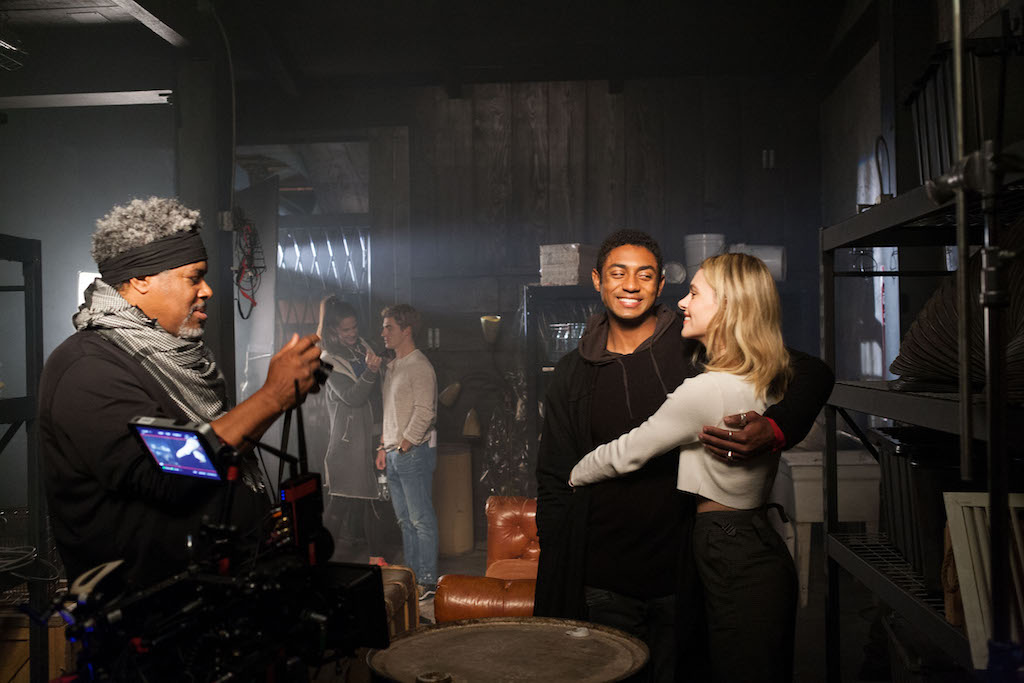
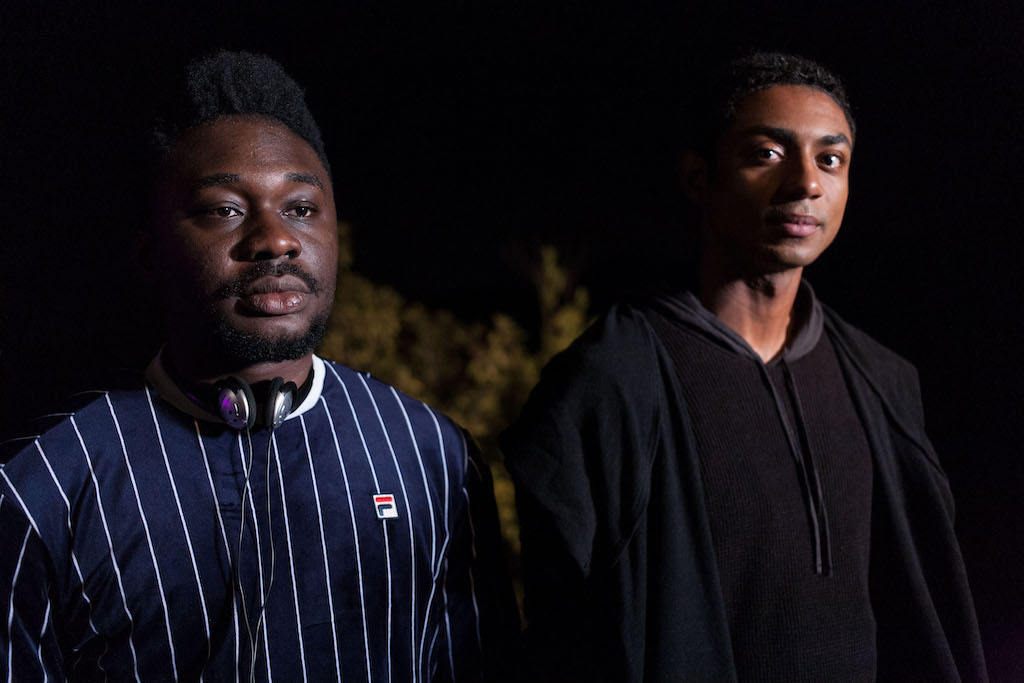
The story behind the film could inspire a movie itself. Producers Zachary Green and Jason Shuman founded The Launch, a screenplay contest by which unknown writers could secure funding for a feature film. Stanley Kalu nabbed the inaugural honors for the script to Tunde Johnson, written while in film school. Talk about a lucky break.
Veteran TV writer/director Ali LeRoi makes his feature debut with The Obituary of Tunde Johnson, the story of a black, gay high schooler haunted by repeated visions of his death at the hands of police. The resultant film plays like a hallucination on queerness, race and police violence: the kind of movie that raises as many questions as it addresses. Actor Steven Silver (13 Reasons Why) proves his leading man talent in the title role, while up-and-comers Nicola Peltz (Bates Motel) and Spencer Neville (Days of Our Lives) show off their own range as Tunde’s best friend Marley, and his secret boyfriend Soren.
Queerty scored time to chat with director LeRoi, writer Kalu and the cast during the Toronto Film Festival, and to discuss the electrifying implications of the film, and how to address the ongoing plight of queer, African-American men. The Obituary of Tunde Johnson is currently seeking distribution.
Stanley, I’ll start with you: where does Tunde come from?
Sanley Kalu: I grew up in Nigeria. I lived all over Africa for the majority of my life, 18 years. When I came to America, it was the first time I was a minority in my life. It was a very dehumanizing thing, because I’d always been “Stanley” my whole life. For the first time, I was black first, and all the associations that come with that. I felt like the system was really eroding my sense of self. I’m a tall, black male with broad shoulders. Watching television, I would always see another black male die. And another, and another. And it felt like a time loop. I kept seeing people that looked like me die every day.
Yeah.
SK: That put me in a real depression because when people who look like you are dying every day, it gives you anxiety. You feel like you could be next, like you’re being hunted. It turns out, on the continents that I’ve lived in, queer people are subject to extreme state violence. We’re talking about being put in jail or being stoned in the streets. So Tunde comes from when we try to piece together these aspects of how that occurs. I was 19 and a sophomore in the screenwriting program at USC. It’s a class where you write a feature. And it just ripped out of me, just trying to process these pieces. I wrote one draft and won the competition.
SK: This is funny. I was in a friend’s apartment and I got this call from Zachary Green and Jason Shuman, creators of The Launch. It was crazy: after they told me, I called my mom. My mom—she’s very religious and I’m calling her shaking. I’m like “Mom, I won.” And I started crying. In a way, all the weight of what I felt I’d experienced started rushing out of my body. And she’s like “I’m in church! Don’t cry or I’ll start crying!”
[Laughter]
SK: So me and my mom were just crying on the phone. I really had a breakdown. There was so much pain I was holding in, and anxiety and fear that it just rushed out completely in that moment.
That’s amazing. So why Ali?
SK: Ali was a judge for The Launch, and he fought for the script. There’s this thing—I think if you’re a person of color, you understand certain nuances and a lot of what I’m doing within the project. If you live outside of that, it becomes a more difficult thing to interact with because there’s a lot of stuff there that isn’t necessarily for you.
Steven Silver & Spencer Nevile
Yeah.
SK: So he fought a lot for it. We met. And for me, if I feel a person truly engage with the material, it lets me know that they’re with it. If you come up to me and say “Great movie,” that’s great. I really appreciate it. But if you come up to me and really engage with the material and talk about the constructions of it, that’s far more fulfilling. Ali was really engaged and had ideas about variations. So we immediately had that back and forth about visuals and story.
What made you choose this project as your debut, Ali?
Ali LeRoi: It chose me. I was a judge in the competition and a real advocate for selecting the script. Then I walked away. I didn’t not know I was going to direct the film. Zach and Jason called me and asked me if I wanted to do it, and I almost felt like I can’t not do it.
Really?
AL: You know, when you speak up for something or someone or extend a level of care about it, the passion is already there. So I figured, I have to do this. I loved the script. I loved the people involved. It was almost like I’m the loudmouth who convinced them to do this. Now I’m going to walk away? I can’t.
It fits well with the rest of your resume in that you’ve written and directed a lot of television centered on African-American men. Now, do you identify as queer as well?
AL: No. Let me see if I can get this straight: I am a cisgender, heterosexual, African-American male.
I think that works. It is a lot of labels. Stanley then, for you as a queer, black–
SK: No, we shouldn’t do that. I don’t want to talk about sexuality.
Ok.
SK: I’m very low key. [Kalu declined to label or discuss his sexuality any further]
Ok, well the narrator is a gayman in the film. So Ali, for you as a straight man, what made you feel you were the right man for the job?
AL: Well the narrator is a kid who is struggling with trying to find his place in the world. I have two sons. I was young. I have been in the company of and had conversations and experiences with issues of identity, be it racial or sexual. Those topics are not new to me. Also, there was an authority in terms of where the material came from. Stanley’s understanding of what it means to identify as other in African society—it’s a threat that exists that doesn’t exist in the States.
When I was in Africa, I was an American. Me being black was, I dare say, meaningless because everybody is black. I was an American. So when he came here and suddenly he was a black person and diminished—to take those two aspects of a person, and marry them into one character, and create a challenge for that, I get all of it. Part of my experience as a writer and just moving through society functionally as an outsider allowed me to embrace aspects of what that experience might be. I’m not talking about sexuality, I’m talking about how to fit in.
Which is something we all experience at times. One of the major themes in the film is anxiety, and we see this through Tunde’s eyes. But it is something that afflicts all the characters—everyone is sort of stuck in their head.
AL: Every character is challenged in some way by every other character. We know we have our own fears, we know we have our own conceptions and misconceptions. What we don’t know is what the other person thinks. Tunde is afraid of what his father might think. Soren is afraid of what his dad might think. Alfred O’Connor is afraid of what people who watch his show might think. Marley is afraid of what Soren thinks. All these people give other people so much power over how they’re supposed to be. And these things exist outside of race and sexuality. Alfred O’Connor has no reason to be apprehensive about his moving through society. Yet he is saying with a straight face “I just want to be heard.” It’s like, you have a TV show!
The most ironic line in the film. So why this cast?
AL: The simple answer is you saw them. They’re great.
Steven Silver and David James Elliot as Alfred O’Connor
Good answer.
AL: Each one of them brought presence, dedication and craft. Presence, for me, is they didn’t deal with this material by rote. They were very open and available to an evolving creative process. We had a limited amount of time, and there was an aggressive approach to storytelling to pull back layers.
[Stanley turns to Steven]
SK: It’s funny, I remember when you were auditioning, my face was completely blank. I always think that a good actor—they walk into a room, and they’re themselves. And when they begin acting, they grow to ten times their size. It’s a crazy thing to watch. Steven began and filled the room. And he understood the nuances of the joy and the fear and the earnestness of Tunde, and then he just sucked back into himself. And I said “There’s no way that’s not him.”
Wow.
SK: He pushed it past where I thought it could go.
So how did you find Tunde, Steven?
Steven Silver: I think that when you’re existing outside the power group—and like [Stanley] was saying, he lived in Africa and so he’d always been in the power group. I’ve never experienced that. So I think everyone who is outside that group has Tunde in some capacity.
You’re working with some very tricky material here, Steven: scenes where you have nobody to play against, scenes where we need to know what you’re thinking just by looking at you. For example, Tunde has a breakdown scene in his room. How did Ali direct you in a scene?
SS: Well he pulled me to the side and told me to release. He made sure I knew everything in the room was up for grabs and, emotionally, made me feel very safe. He scheduled that late into shooting, and by the time we got there, I really trusted him. I think that’s what it was: him gaining my trust and pushing me as far as I could go.
It’s a great scene. All of your actors have at least one great scene which offers so much more insight into who these people are. Nicola, you evoke a young Rose McGowan in this: the same bombshell looks, but with an edge.
Nicola Peltz: Thank you so much!
Nicola Peltz and Spencer Neville
My question about her though: how in love with Soren is she?
NP: She’s really in love with Soren. She does things because she thinks its what he wants. Which is so relatable, not just to a high schooler, but to everyone in life. You know, the final scene between Marley and Soren, it’s so hurtful because she’s so in love with him. This whole time she’s been blaming herself: I’m not pretty enough. I’m not the girl you want? What’s wrong with me? She’s always looking at her self. I think a lot of people can relate to that. It’s not about right or wrong, some situations that are really hurtful when you’re in love with someone.
Now, Soren is so interesting in part because you can see him as bisexual or you can see him as gay. In a way, Tunde and Soren are foils of one another: mirror images separated by a key choice. For you as an actor, how do you view him, and how did that affect your choices and approach to the character?
Spencer Neville: I think that Soren is gay, and what he is presenting to the world is based in fear and a struggle for identity. That’s the way I approach the story: it’s about two guys struggling with identity, that are in love. It doesn’t matter if you’re black or white, straight or gay, queer, whatever—you can connect with that aspect of it.
That’s part of what gives the film its power. The other is that the hallucinatory, time-loop format is almost poetic in the sense that certain dialogue and images repeat like verse, yet it never feels like different takes of the same scene.
AL: You weren’t. You were watching totally different performances.
And that was a conscious choice?
AL: Yes. The minor gradations make a difference.
Absolutely.
AL: It is those shifts, going through the same thing over and over, what Steven is bringing to the table were microexpressions sometimes: little things so that you know it isn’t the same as last time. That was important to the filmmaking and important to the actors.
SN: And we were filming the same scene six or seven different ways in a day. So we’d have to do it one after the next with little things changing each time. That was such a cool thing to try.
Do you improvise?
SN: We did.
AL: There was a lot, not in the traditional sense. We had the scenes, and they had worked the material. So for me, if there’s improvisation, it’s part of the performance. An actor is like a musician. Classical music is you play it this way and if you don’t, it’s wrong. Coltrane said “Here are the chords. Do you.” If you’re not doing you you’re not doing anything. So that was how we tried to expand and interpret Stanley’s material: keeping the foundation, then finding space for them as actors to shine.
SN: My favorite, and I love this, is in [my and Nicola’s] last scene together. We’d done it a couple of times, and then Ali comes up to me and says “You cannot under any circumstance let her know.” And then he said something to her…
NP: He was like “Get it out of him.”
SN: So when she asked me, I had no idea what was coming. None of that was in the script. We knew what was supposed to happen in the scene, but it was all in the micro-moments, which is an actor’s dream.
Writer Stanley Kalu with Steven Silver. Courtesy The Launch
Elements of the story also repeat like poetry, or rhyme with one another. Soren and Tunde both have to make a similar choice. For Tunde, that saves his soul. For Soren, that’s not really true. In that context, how does that affect your choices as an actor?
SS: I think that we’re experiencing the story through Tunde’s eyes, and he knows he’s part of something bigger. Soren doesn’t understand that yet. He believes in preservation of self out of fear for completely selfish reasons. Tunde has gotten to the point where he realizes it’s either death or conquer fear. Tunde realizes he doesn’t want to die. He just wants to stop being in pain.
What happens to him the next day?
SS: I think he starts to investigate what living is instead of surviving.
[Stanley lights up with joy]
Great answer. Let the record show, Stanley digs it. What about for you and Soren, Spencer? He makes a very different choice. Why do you think that is?
SN: Fear. The main thing Soren wants in his life is acceptance from his father. His dad is the #1 person in his life. He would give up anything to feel accepted in that life. That’s where his struggle lays: just trying acceptance from one person in the world.
AL: That’s the tricky thing about the story. Tunde unequivocally states that he thinks Soren is going to save him. Tunde doesn’t even see acceptance by his own parents as the final arbiter of his fate. He needs Soren to accept him.
This is a loaded question, but it’s always interesting to see the art in terms of the life of the artist. How much of you, Ali, is Tunde?
AL: Honestly, not a lot. I relate much more with Soren.
Why is that?
AL: Well, unfortunately, I’m divorced. And a lot of what I experienced in marriage was an unwillingness to face certain things that I was troubled by, afraid of, or didn’t know how to articulate. In the face of a wife and family who needed so desperately to tell them what was actually happening, it wasn’t something I was able to do. And that ultimately would end my marriage. So watching Soren in the arms of his father unable to tell a person he loves what’s really going on with him, was a thing I related to.
Does that make it painful when you have to sort of relive your own frustrations through a scene or a character like that?
AL: It’s difficult in the sense that it’s not necessarily an experience that I enjoy having had. But at the same time, you know, as artists…that is the thing I have to embrace. If I can express this truth and these experiences through art and now be able to recognize and have a conversation about it, and perhaps help someone else pull acceptance for themselves from it, that’s where it is for me.
Steven Silver as Tunde
One reason, as a queer man, that I responded to this film, is that it furthers the conversation about the plight of African-American gaymen. This is something that has come up a lot in other interviews I’ve done: the idea that as far as LGBTQ people have come, specifically for black, gaymen there is still—both in the queer community and the African-American community—this resistance. For you as the writer, Stanley, where does that resistance come from?
SK: I think it’s very interesting because white spaces often look at black spaces and say “Why aren’t you here?” I think that’s a reductive concept because the trauma of being African-American is so deep and hurtful that white progressive culture asking why we haven’t caught up is white progressive culture not understanding its own sense. The African-American community will approach that and will be very, very accepting of queer black men eventually, but you have to understand that there’s a handicap. When you’re dealing with preserving your own body, and dealing with the fear and anxiety of being black, you have more things to deal with before you get to a progressive space. But I do know it’s coming. There’s greater representations and having these conversations with films like Moonlightor men like Billy Porter, I think it’s arriving. But people need to be patient. Change is incremental and very slow, but it does happen.
For those of us who are queer, but not necessarily African-American, how do we help further the conversation?
SK: That’s a really good question. How do we further the conversation?
So many LGBTQ people know this conversation needs to happen, and we want to help our queer brethren, but don’t feel like it’s a conversation we have a right to start or bring up.
SK: It’s about listening. Just like the construct of the film—engaging in with queer, black material, engage with queer black people and not in a way that you’re having them be the voice of it all. Just be friends. Empathize. This entire film is putting you in the subjective brain of a black man in America. So, I really think it’s about engaging with people on a human level. Each experience is so individual.
Sure.
SK: Say “How can I as a white person make you feel more safe in this space?” It’s really that simple. Just approach them. Have a relationship. That’s why that line about listening is so vital. There are all these ideas about taking action. As you see at one point in the film, Soren is trying to help Tunde but gets him killed because he’s not listening. He’s taking action, not listening. It’s just that. Engage people. Then you’ll find the answer. Any answer I would give will be the antithesis of how I view this. I cannot speak for all communities. Does that make sense?
I think so.
SK: It would be best to go to your gay black friends, or your black friends, or any marginalized people and ask them: how can I make you feel more safe? If you do that, you’ll have a multiplicity of answers in which you can find a solid idea of what you as a person can do. That’s complex, but I do think it’s on an individual basis. Blackness is not a monolith. Queerness is not a monolith. I don’t ever want to play the game that it is. The idea that marginalized people exist as a monolith is very destructive.
That’s very true. Queer people are very different from one another and often have different needs.
SK: And that’s the point. Engage on a really personal level. Any grandstanding—that’s why the movie is not dogmatic. I really don’t play at being didactic or with dogma. What I try and do is present an individual story that hopefully, will make space for other individual stories. We’re interested in discourse, not dogma.
Now that’s a great line.
The Obituary of Tunde Johnson is currently seeking distribution.
‘Drag Race UK’ Is a Refreshing Cure for ‘Drag Race’ Fatigue [RECAP and RANKINGS]
At the end of last season of RuPaul’s Drag Race, I bemoaned my growing Drag Race fatigue. With the show’s increased exposure and All Stars in the mix, the show’s perpetual presence made it hard to miss.
So, although the announcement of Drag Race U.K. at first felt a bit overkill, now that I’ve seen the premiere: I can’t get enough.
RuPaul’s Drag Race U.K. is airing on Wow Presents Plus and BBC Three streaming services, but the episodes air eight days later on Logo in the good ol’ U. S. of A. We’ll be recapping the eps after they air on Logo. Blame it on jetlag.
The show itself feels like a blessed return to form for a property that was beginning to feel more like a parody of itself. The production style harkens back to RuPaul’s Drag Race season one’s notoriously blurry camerawork, and the queens themselves feel a bit rougher around the edges. They don’t seem any less talented or seasoned than the U.S. competitors, but it’s not the sort of drag we’ve been accustomed to seeing on the series. There are a few things contributing factors:
The first is the show’s prizing. Unlike stateside, there is no big money prize at the finish line. Because the series is airing on the publicly-funded BBC across the pond, there are strict rules on prizes. (That’s why Great British Bake-Off winners get a platter.) These gals aren’t going to break the bank renting the runway for the competition if they can’t bank on recouping those costs.
The larger factors are cultural. Drag in the U.K. is a bit of a different beast. It lacks the pageant system of the U.S., so you won’t find the same sort of perfect polish. Singing live is more prevalent than lip syncing, and a little hair (facial or bodily) isn’t frowned upon.
The cultural differences are also what make the show absolutely delightful to watch. I’ll admit, I’m no Anglophile. Between the references and the accents, about three-fifths of last night’s premiere went clear over my head. And yet? I was tickled the whole way through. Just when the original Drag Race was becoming an echo chamber of self-reference, we’re dropped into a whole new universe with brand new catchphrases, inside jokes, vernacular and GIF-able moments. It’s thrilling!
Beginning with the iconic entrances, the pace is lightning quick. This is a LIVELY bunch, and the cackling soon fills the room. We can touch on some of the specific choices in our rankings below, but it didn’t feel like anyone produced a particularly memorable fashion, dramatic, comical or WTF “Ornacia” moment. The best look fine, and the worst, Vinegar Strokes, merely looks bad.
Despite oddly shaped hip pads, a less than stellar wig and what appears to be day face, Vinegar has a pretty high profile as an actress, even working previously with Michelle Visage. She assures us this will not affect Michelle’s notoriously tough judge, and we don’t doubt that.
After the entrances, Ru arrives with the new “Brit” Crew, who I assume arrive wearing their turtlenecks. Ahem. Anyway. Ru is there to reveal that the winner will receive their own streaming series in Hollywood, which, way to go, Wow Presents Plus. Ya gotta fill up all that content somehow.
The first photoshoot is a great mini-challenge. It’s a creative premise (the gals take two green-screen photos allowing them to pose with their severed head), and allows each girl a few moments to shine independently and, most importantly, it moves quickly. Without overcomplicating the shoot with returning queens or overly complex props, this ragtag setup is a great backdrop for each gal to flash some personality.
It’s also a great showcase for Ru. Typically the quickest wit in the room, it’s refreshing to see him try to keep up in real time.
I’m surprised to see Ru select Scaredy Kat, a drag newcomer, as the photoshoot winner, given the rather simplistic potty humor. Don’t get me wrong, I know Ru loves toilet humor, but there’s usually a clever spin on it. Scaredy’s defecation joke was bizarre, for sure, but it didn’t seem particularly witty or well conceptualized. If anything, it feels more like Ru picked it more for his “This is BBC” reaction line.
The main challenge unfolds on the runway where the queens are tasked with presenting a look reflecting their hometowns (many of which I’ve never heard of and didn’t understand the explanation and didn’t bother googling), and then they need to show us their take on the Queen.
Again, we’ll note individuals in the rankings, but the judges love Sum Ting Wong’s big, brassy bull and posh postage stamp interpretation. Baga Chipz gets high marks for her Amy Winehouse-inspired local lewk, although her ’70s queen read more septuagenarian than 1970s.
The Vivienne is the clear winner and one to watch going forward. She transform effortlessly from her punky Pete Burns to a queen on the hunt, and her makeup stuns Visage. The toughest judge couldn’t believe the contour Vivienne achieved, especially on her nose. She is selected this week’s winner … and awarded a RuPeter Badge. It’s a take on the Blue Peter badge popularized on a BBC children’s program. I mean, I’m sure they’d rather have a trip courtesy Al & Chuck travel or a lifetime supply of Hamburger Mary’s or a DoorDash driver to keep in their basement or WHATEVER, but this is a cute little way to track wins throughout.
Less lucky on the runway was Crystal. Her Queen lacked a signature purse, and, if Bob taught us anything, it’s that a lady do carry an evening bag. Vinegar’s ill-plotted Thames-themed gown fell flat, and her Queen was a royal bore. Gothy Kendoll didn’t walk the runway as much as she skittered across it emanating a nervous energy.
Kendoll gets a great piece of advice from solid guest judge Andrew Garfield. The handsome actor instructed the young queen, who earlier revealed a deep insecurity about her teeth, to learn to channel that nervous energy. Garfield suggests to stop fighting the nerves, and instead she should learn to ride them. It’s pretty good advice actually!
In the end, it’s Vinegar lip-syncing up against Gothy to Dua Lipa’s “New Rules,” and it’s brutal. Watching Gothy is like watching a children’s dance recital. She’s trying so hard, but you can see her laser focused on hitting the next move. There’s no connection to the performance, no vigor. Not that Vinegar gives us such a slam dunk. It’s a fine, fun performance, but Gothy’s lack of skills make the flogging feel gratuitous.
Vinegar gets to slay another day, while Gothy Kendoll is sent sashaying away.
As per custom around here, I’ll be ranking the girls week to week. Just a friendly reminder, these rankings are purely subjective, based on my personal taste, biases and loose understanding of the metric system. I’m writing these without seeing the following episode on Wow Presents Plus, and I’m doing my best to avoid spoilers.
All that aside, let’s dig in!
If anyone made an impression on episode one, it’s The Vivienne. The towering queen had one of the most memorable entrance ensembles, sporting a red, high-fashion futuristic fantasy. Her runway, while not jaw-dropping glamour, evidenced an incredible eye for detail that will serve her well in this competition.
Divina de Campo certainly thinks she’s one to watch. She got an early shady edit as she rattled off her IMDB credits, which might be an early clue that she’s this year’s big villain. I haven’t decided if I’m charmed or horrified by the DDC’s laugh, but there’s definitely something watchable about her. She didn’t get a ton of focus this episode, but what we saw signals she’s someone to keep an eye on.
It was strange to see Blu Hydrangea miss out on the top three this week. Her coin runway was a more clever take than Sum Ting’s stamp, but I imagine her strange construction hometown getup dragged her down. She’s got a great personality and clear skills, hopefully she has more consistent judgment in the future.
I love the energy Sum Ting Wong brings to her confessional interviews, leaning forward, eyes intense. It’s a small thing, but it feels odd to see! Sum Ting’s entrance had me worried, but she brought it on the runway. The stamp gown was troublingly simple, so we’ll see if there’s a lack of skill waiting to be put on blast.
Baga Chipz feels like she’s going to be this season’s most polarizing queen. She’s proudly “infamous,” and, like last season’s Silky, she loves the spotlight. In the breakneck speed of the opening episode, Baga didn’t overstay her welcome in any scene, so, so far, so good. She put forth a strong showing on the runway, just missing the mark on her Queen makeup.
Runner-up for this season’s villain is Crystal, whose early interviews made her come off as a less smart Sasha Velour. All the talk about how cool her drag is wasn’t cute, even as she tried to play it off as a joke. I wasn’t wowed by her humor in her entrance or photoshoot, but by the end of the episode I started to warm. (And, look, I’m not saying seeing Crystal shirtless out of drag did NOT play a part. Blame it on Instagram! I’m not proud!)
The best part of Cheryl Hole so far is her name. Her intro interview segments were such a pastiche of Drag Race cliches and callbacks, they were practically Pop Art. Her Essex drag displayed a sense of humor, though, so I’m willing to give her a chance over the next few weeks.
Scaredy Kat is already this season’s most controversial contestant. Having only been in drag for 11 months, Scaredy has never performed, never been to a drag show, identifies as bisexual and has a girlfriend, which some people think is noteworthy. I’m happy to see a little of contemporary attitudes toward queerness and fluidity, and I’m already over the Internet questioning Scaredy’s place in the competition. I’m more concerned with Scaredy’s lack of experience, personally.
At first, I thought my aversion to Vinegar Strokes was more about me having to adjust my drag expectations to U.K. styles. But, hearing the judges, it’s clear Vinegar wasn’t even measuring up by those standards either. She’s got the attitude for sure, but I’m not sure she’ll be able to compete visually on the runway.
Oh, Gothy Kendoll, what a short, strange journey. I’m sure Gothy makes some really cool art, but, in this context, the young queen was just not ready for prime time. It’s not an assessment of Gothy’s talent or worth, but this was not the right stage to showcase Kendoll’s best.
Disagree? Probably! Leave your rankings in the comments!
Marie Yovanovich, Jacob Frey, Ben Platt, RuPaul’s Mansion, Steve Sisolak, Brazil, Sam Smith: HOT LINKS
MARIE YOVANOVICH. Former Ukraine ambassador testifies that Trump had her removed on false claims: “In a closed-door deposition that could further fuel calls for Mr. Trump’s impeachment, Ms. Yovanovitch delivered a scathing indictment of his administration’s conduct of foreign policy. She warned that private influence and personal gain have usurped diplomats’ judgment, threatening to undermine the nation’s interests and drive talented professionals out of public service.”
FINANCIAL RECORDS. Trump loses subpoena battle with House Democrats: “The 2-1 ruling from the U.S. Court of Appeals for the D.C. Circuit stems from a case where Trump sued to block Democrats from subpoenaing one of his accounting firms for a vast trove of materials as Congress probes the president over potential conflicts of interest and payments from foreign governments.”
ED BUCK. West Hollywood meth predator pleads not guilty: “Buck’s plea at the downtown Los Angeles federal courthouse was followed by an appearance outside by friends and relatives of Timothy Dean and Gemmel Moore – the men found dead in Buck’s apartment at 1234 N. Laurel Ave. — who described themselves as having come together as a family in their struggle to deal with the deaths and to push for the arrest and prosecution of Buck. LaTisha Nixon, Moore’s mother, carried his ashes.”
LAS VEGAS. Steve Sisolak is first Nevada governor to march in LGBTQ Pride parade. ‘Tod Story, the executive director of the American Civil Liberties Union of Nevada, called Sisolak’s participation “huge.” “To see him walk in the parade here in Southern Nevada as the governor sends a very strong message to where he is philosophically,” he said. Sisolak wants to continue to “work alongside our partners” to continue the work done this year on LGBT equality.’
BRAZIL. Artists fight censorship: “In the end, Brazil’s highest court ruled that banning books over LGBT+ content was illegal and Queiroz was able to sell her book without it being confiscated by officials from the mayor’s office in Rio de Janeiro. But the incident has given impetus to artists, politicians and lawyers to push back against efforts to stop LGBT+ stories being told, which have intensified since self-proclaimed “proud” homophobe, President Jair Bolsonaro came to power in January.” gay-no-24-shirt-and-brazils-homophobia-problem-in-football" target="_blank" rel="noreferrer noopener" aria-label="Avoid the #24 shirt (opens in a new tab)”>Avoid the #24 shirt: “Is it because it is unlucky, or cursed? No, it’s because in Brazil, the No. 24 is traditionally associated with being gay. “
The GLAAD Wrap: New looks at ‘Steven Universe,’ ‘She-Ra,’ and ‘Twenties’; music from Hayley Kiyoko, Halsey, and Mika; and more!
Photo Credit: Hayley Kiyoko/Twitter
Every week, The GLAAD Wrap brings you LGBTQ-related entertainment news highlights, fresh stuff to watch out for, and fun diversions to help you kick off the weekend.
1) Out actress Cherry Jones has been cast in the upcoming The Eyes of Tammy Faye, a Tammy Faye Bakker biopic alongside Jessican Chastain and Andrew Garfield. The film will follow Tammy Faye and Jim Bakker on their journey to and from fame, include Tammy Faye’s work with the LGBTQ community. In other film news, the first trailer has been released for the documentary Moving Parts, which follows the journey of drag queen and musician Trixie Mattel. Watch the trailer below.
3) The first trailer has been released for new Netflix food show Breakfast, Lunch & Dinner, where chef David Chang explores different cultures and cuisines with celebrity guests. Two of the four guests are out lesbians Kate McKinnon and Lena Waithe. Watch the trailer here. Waithe has also released a teaser for her new BET series Twenties. The comedy follows Hattie, a lesbian in her twenties and group of friends. Watch the teaser below!
5) Search Party, the millennial murder mystery comedy from TBS, has announced that its third and fourth season will move to new streaming service HBO Max. The show included several queer characters in the ensemble. Search Party will begin its new season in Spring 2020. A trailer has been released for the upcoming third season of Marvel’s Runaways on Hulu. The look into the season shows a dark presence within bi superhero Nico, as the others, including her girlfriend Karolina try to save her. Runaways premieres December 13 on Hulu; watch the trailer below.
7) Lesbian pop star Hayley Kiyoko has announced her newest project, I’m Too Sensitive for This S**t, where the singer will release a collection of new songs from now until January. She also announced a North American tour in early 2020. Her first single from the collection, “Demons,” is out today, listen here! Bi singer Halsey has released a new video for her single “Graveyard” off her upcoming album Manic. Preorder Manic here and watch the music video below.
9) Queer soul artist Michael Blume has released a new music video for his song “In Between.” Blume uses his music to talk about multiple sides of the queer experience, and this song is no exception. Watch the video here! Out singer Todrick Hall released a music video for his song “Dripeesha” featuring Tiffany Haddish. Watch the video below!
10) Filmmaker Natalie J. Harris is currently fundraising for her short film, Pure, a queer coming-of-age story set in the Black South. The film follows 17-year-old Celeste, who participates in the Cotillion ball, despite thinking it is antiquated and heteronormative, and finds beauty in her pluralities. Learn more and support the project here.
Male Mediocrity Goes to Seed in ‘Linda Vista’: REVIEW
A man is breaking up with a woman over dinner. She’s a life coach, and he is — to use a label he hates but is most accurate — a hot mess. “You don’t listen to me,” he says callously. And yet, up to this point the audience has, for nearly two hours, listened to him say things like, “I’m kind of a snob. I like old Hollywood movies,” and, “I don’t like many modern bands, or old bands… I like jazz,” and let’s not forget, “Where was I when Ali MacGraw was addicted to sex?”
This man is (as you may have guessed) white, middle-aged, and newly divorced. As the protagonist of Linda Vista, which opened on Broadway at the Helen Hayes tonight, he’s difficult to root for, and not just because he embodies so many cliches as to seem like the product of a dude-bro formula (add misanthropy and subtract stable female companion). That he’s also a failed photographer and waxes righteous about objectivity seems an absurd irony for a character whose head is so firmly planted up his own ass.
And maybe that’s the point. A man’s journey to self-realization — through divorce, sex with multiple women, a locker room chat with what seems like his only friend — could be a worthy, if wholly unoriginal plot. Men, particularly those who fit this description, are having a rough time of it lately. But playwright Tracy Letts isn’t offering an indictment of misogyny, nor (thankfully) is he leading some misguided rehabilitation tour. If anything, Linda Vista feels like the play form of a male ego sucking its thumb (or self-pleasuring another appendage). No surprise then, that it’s dramatically DOA.
For this to be a believable story about a man (this one played by Ian Barford) who by the end learns something about himself and the world, the women with whom he interacts would have to be, well… women. Here they are foils, sometimes of questionable self-respect and almost always in distress, who are inexplicable as characters outside of the function they serve along his way. The one he cruelly dumps in public (Cora Vander Broek) begins as a blind date in a karaoke bar, where she responds to his broad denunciation of popular music by saying, “You have a strong point of view. And the ability to express it. That’s impressive.” Is it though?
The women of Linda Vista (named for the San Diego apartment complex in and around which it’s set) have a habit of making pronouncements the playwright suggests are true while his text plainly proves they are not. Take the man’s much younger neighbor (Chantal Thuy) with pink hair and boy problems, who winds up crashing on his couch and, eventually, incredibly, falling into bed with him. “This is not your wet dream. And I’m not a doll, I’m not a sweet Asian flower,” she says afterward, as if hedging on Letts behalf against the fact that all of the above are true. How else to explain why she moves in, decides to keep her ex-boyfriend’s baby, and raise it with a man she clocked as a deadbeat the first time they met?
Linda Vista, originally produced at the Steppenwolf in Chicago, Letts’ creative home, is difficult to square. His Tony and Pulitzer-winning play August: Osage County teems with indomitable, broken-down, fiery female characters. His most recent, Mary Page Marlowe, follows one woman through decades of her life in attempting to see her from every angle. (As an actor, he even played Lady Bird’s dad!) “Vista” is defined as, “a view or prospect, especially one seen through a long, narrow avenue or passage.” Masculine myopia certainly seems like a fair diagnosis, but it doesn’t just afflict the protagonist. As director Dexter Bullard’s production continues to rotate on itself, the feeling that both play and playwright are running in place is hard to escape.
It’s Never Too Late to Make a Change, Here’s How to Start Where You Are and Improve Your Well-being
I am not good with change. Lets start there. While I have experienced some life altering journeys like the loss of a dear friend to cancer, a car accident, and…





 10) Filmmaker Natalie J. Harris is currently fundraising for her short film, Pure, a queer coming-of-age story set in the Black South. The film follows 17-year-old Celeste, who participates in the Cotillion ball, despite thinking it is antiquated and heteronormative, and finds beauty in her pluralities. Learn more and