
New Research on LGBT Employment Discrimination
There is no federal law that consistently protects LGBT individuals from employment discrimination. Join a distinguished panelists as they present findings from the cutting edge of research…
www.youtube.com/watch?v=Q24IJFBrPDo&feature=youtube_gdata
Category Archives: MISC
DSCN5384_edited-1
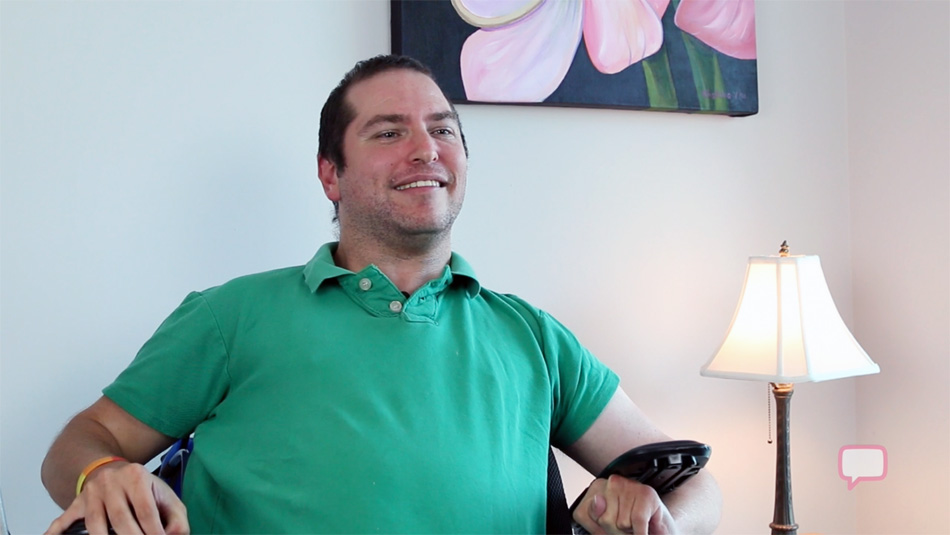
Cerebral Palsy and a Wheelchair: Two Things That Won't Stop Andrew From Going to a Gay Club (VIDEO)
Cerebral Palsy and a Wheelchair: Two Things That Won't Stop Andrew From Going to a Gay Club (VIDEO)
I’m From Driftwood is a 501(c)(3) nonprofit archive for lesbian, gay, bisexual, transgender, and queer stories. New stories are posted on the site every Wednesday.
When Andrew Morrison-Gurza, 19 at the time, was preparing to go to a gay bar for the first time, he did what most young gay men do: He had a friend over, talked about what to wear, and put on some pre-party music. Andrew recalls:
[W]e made a bunch of mix CDs with a bunch of early-2000s pop songs on it, like Christina Aguilera and all those things, and I just thought, “OK, well, I really have to hype it up and get really excited and really do it, because this is my first thing, and I want to ‘be gay.'” So I had a pink shirt on. I had some glow sticks that we had gotten from somewhere. And we were like, “Yeah! We’re gonna go!”
What makes Andrew’s experience different from most others is that he has cerebral palsy and uses a wheelchair. After an awkward conversation with the driver of the special wheelchair-accessible bus about where he was going, and then entering the club through the freight elevator, Andrew had an experience that reminded him that he’s different from an already-different group:
I remember going up to a couple of guys, trying to dance, and having them look at my chair and not being sure what to do but back away from me. So it was almost like parting the sea, because they would see me coming and all move out of the way, thinking they were being polite, thinking they were moving for me to get through, when all I wanted to do was dance. I knew right at that moment that I was different from them.
Reflecting on the experience, Andrew realized that sharing his story provides a face to an issue that is often overlooked in the LGBTQ community:
It showed me right away, whether people were saying it or not, or whether I was believing it or not, that this — my chair, my disability — was not something this community had really, really, truly understood yet, and so every time I went to a bar like that, or every time I went to a gay function, I would have to deal with people not knowing how to process this, not knowing what to say, and not knowing how to process me.
WATCH:
Andrew Morrison-Gurza also happens to blog on The Huffington Post. Read his posts here.
For more stories, visit I’m From Driftwood, the LGBTQ Story Archive.
Lgbt literature
Lgbt literature
COELHOS TUBARÕES E MARIDOS APOCALÍPTICOS

Buyer and Cellar in Dallas: Urie Back Home, Heading to TV After
Buyer and Cellar in Dallas: Urie Back Home, Heading to TV After
Ugly Betty predates Glee as one of the shows that made mainstream gay OK in TV-land. The now iconic ABC one hour dramedy stayed on top of the ratings for years, and launched the career of America Ferrera in to overdrive while giving Vanessa Williams another star turn. It also brought Michael Urie to fame as Marc St. James, the bitchy gay friend that everybody wanted; one with a golden heart under it all.
Urie played St. James from 2006 to 2010 and received a SAG Award nomination for Outstanding Performance by an Ensemble in Comedy Series.
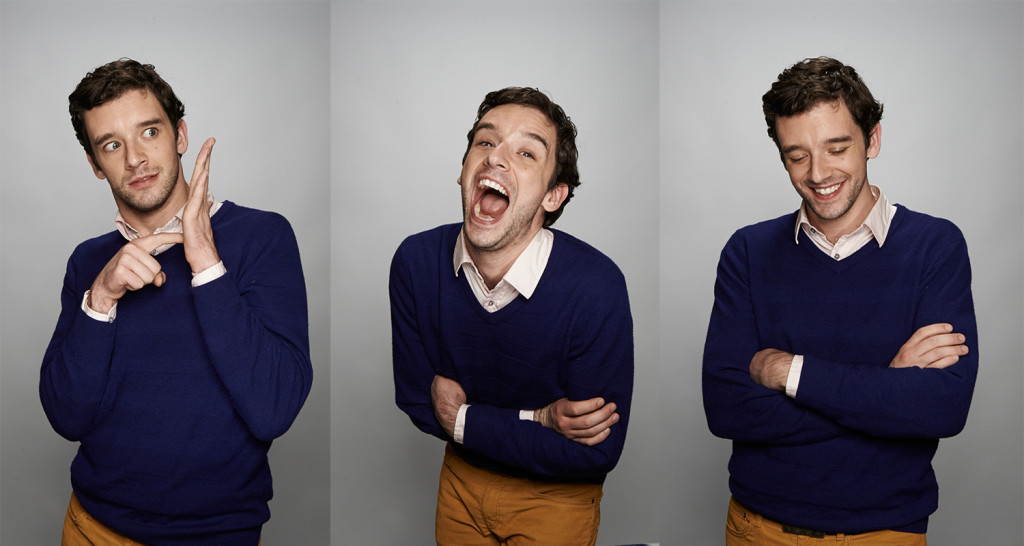
Along the way, in 2009, he went back to the theatre (having trained at Juliard) in The Tempermentals and in 2012 played Bud Frump in How To Succeed In Business Without Really Trying. But it’s 2013’s Buyer and Cellar which is creating a stir, and which has kept him extremely busy. It just finished a sold-out run in San Francisco Aug. 31st. It moves to Urie’s hometown of Dallas Sept. 3 through Sept. 6 and then Nov. 11 through Nov. 30th to Toronto. Tour details are at Buyer and Celler’s official website.
The play is a hilarious look at an out of work actor finding a job in the most unlikely of places: Barbra Streisand’s basement mall. Yes, her basement mall. How on Earth did he come up with this?
“I did it the smartest way an actor can, which is by letting a writer come up with it,” he laughed on my international Karel Cast recently. “Jonathan Tolins told a joke at a party about a guy working in Barbra Streisand’s basement mall. That developed in to a blog about a guy that worked down there, Alex Moore, gets hired to work down in the her basement. And of course, the basement is real!” he exclaimed.
What? The Diva of all divas has a mall in her Malibu cliff home basement that she shares with Mr. Brolin? The one she wrote a book about decorating and renovating?
“Oh my dear yes,” he laughed. “She has a mall in her basement! It’s where she keeps her collectibles, old dresses from movies, antiques, there’s a gift shop with a wrapping station with bows and boxes. There’s a root cellar, although I”m not sure what one does in those,” he laughed.
Streisand is an enigmatic figure for sure; a diva who has been famous for over five decades and one whose place in gay culture, until recently seemed solidified. However, a recent poll of users of the app Jack’d put her, Garland and Minnelli as three icons to be retired. When Urie heard that the icon he actually portrays at one point in the show was up for retirement his reaction was sudden.
“Gasp! Oh my, I don’t agree at all. I mean, I’m only 34, I”m a younger gay with an old soul but I don’t think an icon ever retires,” he stated emphatically, “An icon never stops being one. They may become less relevant, but they remain iconic. Judy you can never remove from the GLBT movement as an icon for Stonewall alone,” he continued.
“Young people need someone to identify with, it’s why icons are important,” he added. “And yes, we need to have new ones, like GaGa and others, Beyonce in some ways, and even Katy Perry, I love her and she seems very supportive. We need the new ones for sure, but we must never, ever forget the ones that helped make it all possible. Streisand has been a huge GLBT advocate and remains one, as well as a good citizen in general. She is someone to be admired, even if she does have a mall in her basement, ESPECIALLY because she has a mall in her basement!” he laughed.
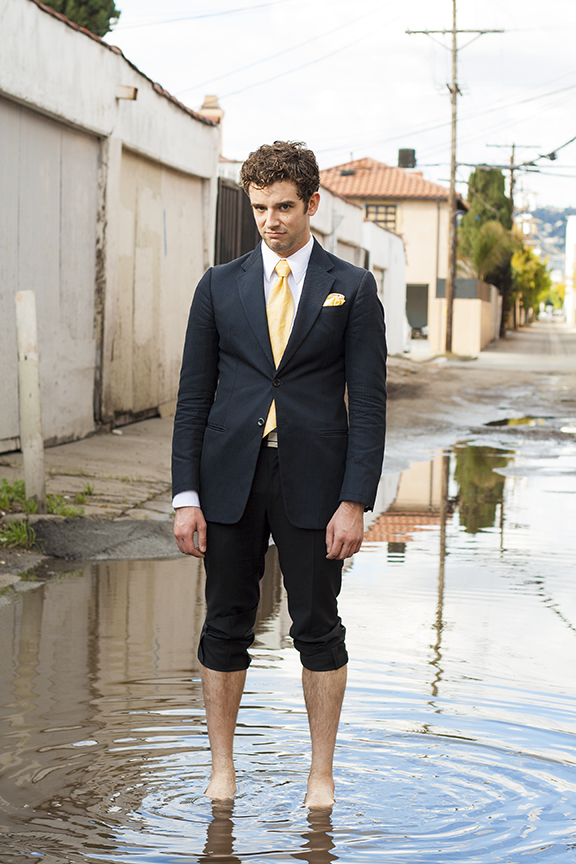
As for whether or not the diva has seen the play?
“She hasn’t seen it but she has said she’s looking forward to seeing it,” he said. She’s amused that between our show and Bette’s show about Sue Mengers she finds it amusing to be on Broadway without ever going on a stage. Even though ours was technically off Broadway,” he chuckled.
Urie has toured with the play almost since its initial run, something an actor seldom does. And while his late scheduled date is November, he definitely wants to do more.
“I love this work. I’d love for it to be even bigger, on Broadway, not just near it!” he joked. “And who knows where it could go, but it’s so much fun to do, exhausting, but fun.”
And, at the recent television up-fronts in Pasadena, CA USA announced it’s 2015 schedule with a Michael Urie sitcom tentatively titled Majordomo on the schedule, so it’s back to TV for him.
“TV is an iffy game, I’ve found,” he added. “It’s hit and miss. You never know why shows make it. So, you get a great team and give it all you got and see. So, obviously, we have high hopes. But it’s a long way from here to a finished and aired show, but the journey really is the best part,” he concluded.
For more on Urie go to his website.
To hear Karel and Michael Urie get the Karel Cast App, subscribe in iTunes to the Podcast or simply go to the most incredible website on all the planet, save this one, iamkarel.com. He appears in the August 8th Karel Cast.
Scruff Unveils New “Philanthropic Endeavor”
Scruff Unveils New “Philanthropic Endeavor”
 Charitable endeavors are to be admired and applauded, don’t get us wrong. But there’s a difference between doing good for the sake of doing good, and doing good to increase their fan base/market share.
That’s the dilemma facing folks who both want to do good but also gain audience for it at the same time.
Scruff, the anti-Grindr smartphone hookup app, just announced that they’ll donate ad space to nonprofits to help get the word out to horny guys everywhere that there’s more to life than your next “date.” Great. We love the plan, guys. Honestly.
But when you call the program “BenevolAds (trademark)” and release a self-congratulatory video with a certain “yay, me” sort of tone it does raise questions about your motive.
As Scruff puts it:
- “…Scruff has come forward with an incredible solution for the smaller, local efforts.”
- “We’re looking for partners around the world who want to help take advantage of this philanthropic endeavor.”
- “Join us and the rest of the Scruff community in making a difference today.”
On the one hand, Scruff is doing a great thing here and don’t want to minimize anyone’s effort to positively affect local communities. There are too few people who give a damn in the first place.
There’s just a slight whiff of “brand management” — you can almost hear the conversation that took place when they came up with “BenevolAds.”
Here’s the video of founder Johnny Skandros & “activist and fundraiser” Jake Mackenroth introducing the exciting, philanthropic, groundbreaking program:
But this is not just Scruff’s problem. Another example is the ice bucket challenge. Donating money and spreading the word about a debilitating disease? Great. Stripping completely naked so the world can ogle you yet again and blasting it across social media? Not as great.
When Dan Osborn stripped to his birthday suit to take the ice bucket challenge, he says, “I’m going to do it naked just to do something different.” No, Dan. You did it naked so that the maximum level of public attention would go to you, your package, and your charitable spirit. He runs from the chair after being doused in chilly water, baring his ass in what was surely a planned maneuver, exposing his narcissism along with it.
Dan Tracer
feedproxy.google.com/~r/queerty2/~3/L5AbsXU7sS8/scruff-unveils-new-philanthropic-endeavor-20140904
Glee グリー カロフスキーのIt Gets Better マックス・アドラー LGBT ゲイ
Glee グリー カロフスキーのIt Gets Better マックス・アドラー LGBT ゲイ
Trans Woman Convicted of Murder For Silicone Injections
Trans Woman Convicted of Murder For Silicone Injections
Tracey Lynn Garner was sentenced to life in prison after fatally injecting illicit silicone into another woman, illuminating a troubling trend.
Mitch Kellaway
www.advocate.com/crime/2014/09/04/trans-woman-convicted-murder-silicone-injections
By Limiting Inclusion, NFL Loses on Diversity
By Limiting Inclusion, NFL Loses on Diversity
Many people who hoped Michael Sam would be the “Jackie Robinson” for LGBT inclusion in sports, a key civil rights issue of his generation, are disappointed that he was cut from the roster of the St. Louis Rams. While there are many variables in a decision to cut a high profile player, the root causes of Sam’s release may be clearer than we dare admit. In the NFL, there are limits to inclusion. The problem lies in a conflict between Baby Boomers, who lead the teams, and Millennials like Sam, who know little of the bigotry that colors the perspectives and actions of older generations.
By most accounts, Michael Sam should have been a shoe-in for a top draft pick, as the All-American and Southeastern Conference defensive player of the year. But Sam, who had taken the bold step of publicly announcing that he is gay prior to the draft, was selected 249th out of 256 picks by a team that didn’t need him. Rather than being drafted by a team where he could shine, he was chosen as the last man on a deep and competitive defensive bench that rendered him superfluous from the start. The issue isn’t why the Rams released Sam; the issue is why he wasn’t picked up earlier in the draft.
Some will claim homophobia on the part of team scouts, coaches and owners as the reason Sam was not drafted earlier by a suitable team; others will suggest that Sam undercut himself by “coming out” so publicly before landing a contract and proving himself on the field. Unfortunately, both may be true, but the issues are more nuanced. Sam’s coming out was undoubtedly a bigger deal to Baby Boomers (born between 1946 and 1964), who run the teams and have long histories with societal limitations placed on individuals based on their sexuality than it was to Millennials (born 1981 or later), who don’t share this history. Data show that just 38% of Baby Boomers versus 70% of Millennials support marriage equality, which is a good barometer of how the two groups are divided on social issues more broadly.
Further, Millennials are substantially different than their parents. Millennials are more liberal in their thinking, and see big government as necessary to support society, two things that Baby Boomers generally reject. Millennials view “coming out” as living in truth, authenticity and wholeness. They largely reject the sense of hetero-normative privilege that undergirds American society. For many, the events of Ferguson, Missouri were a profound experience with our nation’s underbelly of bigotry. The difference between the bias displayed in Ferguson and that of the NFL in dealing with Sam is that in Ferguson, this bias was more outwardly evident. In Sam’s case, bigotry was silent, yet no less profound, facilitated by a decision not to sign a great pick because he’s gay.
Corporations understand that by 2020 Millennials will account for 88.5 million people in the U.S., far surpassing Baby Boomers, and that with such numbers Millennials will control the social and economic substance of the nation. By 2019, the earnings and spending of Millennials will outpace Baby Boomers in what will be a dramatic shift of economic dominance. The reluctance of suitable teams to engage Sam suggests that the NFL has not grasped the significance of America’s changing demographics. Now the NFL faces a conundrum that corporate America has spent millions of dollars addressing over the past decade: How to adapt to the Millennial mindset.
Sam, too, bears some responsibility for what happened. As a strategic matter, coming out prior to getting signed by and incorporated into a team was a mistake. His celebrity status exacerbated feelings that he was more focused on being a gay icon than a football player, for which he gained detractors. But Sam’s biggest mistake may have resulted from his generational optimism that does not see bias where it sometimes exists, that believes in being authentic as elemental to living freely, and that sees diversity in all of its iterations as a social good. Yet, Sam could not be a Jackie Robinson because unlike Robinson, he had no “Branch Rickey” in a seat of power who was willing to put their professional standing on the line to make the NFL more inclusive. Robinson, through Rickey, was supported by a bold MLB, whereas Sam encountered a weak and conflicted NFL.
The NFL should recognize that the degrees of separation between overt bigotry and unconscious biases may be few, and the effects equally harmful. If a team failed to draft Sam based on his sexual orientation, the team discriminated against him and should consider the rightness of its actions. Michael Sam should be celebrated for living in his truth and given every opportunity to pursue his dream on the field.
To the NFL’s credit, Sam has been signed by the Dallas Cowboys’ practice team, and has another shot at integrating the NFL. For him to be a successful champion of LGBT inclusion in professional football, however, he must have a “Branch Rickey” who will have the courage to blaze new trails with him. Who in the Cowboys franchise will step into those shoes?
