All posts by GayFriendschat.com

Overvalued Genitals and Undervalued Brains – A Trans Response to Christian Conservatives Uncomfortable with Caitlyn Jenner

Overvalued Genitals and Undervalued Brains – A Trans Response to Christian Conservatives Uncomfortable with Caitlyn Jenner
The impact of Jenner’s debut has been nothing short of extraordinary. Media outlets that struggled to properly report on trans persons in police blotters just a few years ago are suddenly interested in the topic. “Ex-trans persons,” those few scattered across the country over many years, suddenly become resurrected. Christians of all stripes begin to weigh in directly, not simply flinging afterthoughts to their decades-long homophobia.

I’d like to address the response of the Christian conservatives. I had found it tantalizing during my years of advocacy in Maryland that some of those most opposed to gay rights and marriage equality were either supportive of trans persons or, at worst, apathetic. They wouldn’t support gender identity legislation, so as not to break with their anti-gay team which found the distinctions between and trans confusing, and thereby dangerous to consistency of message, but seeing trans as a medical condition they were surprisingly sympathetic.

Today, post-Jenner, with the surrender of many religious conservatives on the impending “redefinition of marriage,” they can no longer afford to treat trans persons as afterthoughts. We must be attacked head-on theologically. That, however, is proving to be rather difficult.

The most notorious transphobe, the Catholic Professor Paul McHugh, a decade ago accepted the reality of gender identity when his Hopkins colleague, Bill Reiner, proved its existence scientifically. While he still sees trans women as mentally ill, because he can’t unravel gender identity from sexual orientation, he’s been left behind by his fellow psychiatric colleagues who long ago, with few exceptions, gave up any religious underpinning to issues of sex and gender. The article referenced above with his most recent rant (pity poor Johns Hopkins University which can’t get this guy to stop from embarrassing them) actually had the temerity to state that ” there are scientists who disagree,” as if there are today more than a handful. McHugh is a classic example of a professor in over his head – a psychiatrist who doesn’t understand the basics of human sexuality recognized by all professional medical organizations, including the World Health Organization, and a Catholic fundamentalist who seems to have never studied ancient texts.

An American Catholic theologian, Salvatore Cordileone, the Archbishop of San Francisco, sums up his critique of transsexualism by stating, categorically, “The clear biological fact is that a human being is born either male or female. “End of story. However, there are traditions in ancient Biblical culture (Midrash Bereshit Rabbah 8:1) that had the first being as an intersex person, an hermaphrodite.

The Rabbis of 2000 years ago recognized six types of sex among humans – female, male, androgynous, tum tum, aylonit and saris -and the Torah (Isaiah 56:4-5), as well as later Christian Scripture, recognized eunuchs (saris, many of whom were either intersex or trans women) as a higher form of humanity. It’s very hard to pin your entire catalog of disapproval on one sentence in Deuteronomy, and those efforts pale in comparison to the concoction of millennia of homophobia rooted in one sentence in Leviticus.

So why this resistance? Even Biblical literalists must recognize there are many passages which conflict with the absolute pronouncements of a Cordileone or McHugh, who, by the way, was responsible for the Vatican’s pronouncement back when it was run by the right-wing Benedict. When they get down to it, they always revert to a view of biological sex as rooted in genitalia. But, as I’ve pointed out, religious authorities (and the Greeks before them) have for millennia recognized that sexual anatomy and physiology are not that simple.

This belief, that genitals = sex, has been so deeply rooted in society that intersex babies have been left to die or “converted” into vagina-bearing beings raised as girls once the surgical techniques allowed the condition of ambiguous genitalia to be resolved to the wishes of the parents. When modern medicine routinely considered the birth of an intersex infant to be a pediatric emergency, and hid the follow-up care in silence and obfuscation, it’s no wonder that the average individual can’t comprehend that we have minds that are sexed to the degree where we know what sex we are, irrespective of our genital anatomy. There are millions of intersex individuals whose chromosomes and genes don’t match their genitalia or whose genitals are ambiguous, and it seems clear that if they would only come out as gay and trans persons have over the past few decades, society would have a hard time ignoring the complexity of human sexuality.

It’s one thing to deny the embodied brain and its manifestation in a subjective feeling of gender identity, because that is a function of a theory of mind that as yet has few tangible physical manifestations. People’s difficulties coming to grips with all sorts of brain conditions and their mental and emotional manifestations makes that abundantly clear. But when presented with live humans with Androgen Insensitivity Syndrome or 5′-alpha reductase deficiency, it become impossible, short of a categorical denial of reality, to ignore the scientific evidence. Church leaders have been allowed for too long to evade the medical evidence.

Southern Baptists who talk of trans persons “rejecting your gender” misread the fact that trans people are doing the exact opposite – embracing their gender and their sex as embodied in their brains. Russell Moore, the head of the ethics arm of the Southern Baptist Convention, said, “The cultural narrative behind the transgender turn … is rooted in the ancient heresy of Gnosticism, with the idea that the ‘real’ self is separate from who one is as an embodied, material being.” Aside from the fact that few people care about “ancient heresies” in general or Gnosticism in particular, the core of the trans experience is indeed rooted in “an embodied, material being.” Just not in the overvalued genitals but in the undervalued brain.

At times it hard for me to accept that some men of religious persuasions are so intent to circle the wagons to maintain their hegemony and control over their womenfolk, and so afraid of a few hundred thousand trans women who are comfortable with being rid of an appendage that developed in opposition to their brain (because, if you bother to check, human sexual development in utero is a complex dance with many moves and, therefore, many outcomes). Acceptance of the trans experience will not lead to millions undergoing gender transition, just as the growth of same-sex marriage has not led to the catastrophic disappearance of opposite-sex marriage. If it’s led to anything novel, beyond the bourgeoisification of the gay experience, it’s the growth in gay divorces.

The Christian community is the victim of its forty-year tradition of equating every natural disaster with gay behavior, and imagining the worst possible outcome to every possible situation. Maybe that tradition derives from the Revelation stories, and so has a long and venerable history, but it’s a lousy way to live. Especially when it means driving your children to suicide or being in a state of high anxiety every time you enter a public bathroom.

I will take issue with Emma Green’s closing comment in The Atlantic piece: “The adjustment period on this issue will be complicated. And as the response to Caitlyn Jenner has shown, it’s only just beginning.” The adjustment period is at times complicated, but it has been going full throttle for the past 15 years. While few have been paying attention, science and medicine, academia, corporate America, the federal government, almost half of the state governments, and over 200 municipalities, many of which exist in red states, have been adjusting and doing so successfully. Cait Jenner just lifted the lid off the volcano; the pioneers have been at work for decades, and thanks to seemingly endless supplies of courage, tenacious advocacy and education, often against strong resistance and heavy odds, have made Jenner’s transition possible.

All that’s changed is that now, thanks to Jenner, “the whole world’s watching.”

— This feed and its contents are the property of The Huffington Post, and use is subject to our terms. It may be used for personal consumption, but may not be distributed on a website.

www.huffingtonpost.com/dana-beyer/overvalued-genitals-and-u_b_7528440.html?utm_hp_ref=gay-voices&ir=Gay+Voices

'Gilmore Girls' Michel Wasn't Necessarily Gay, But Sookie Was Supposed To Be

'Gilmore Girls' Michel Wasn't Necessarily Gay, But Sookie Was Supposed To Be
The question of Michel’s sexuality on “Gilmore Girls” is perhaps best summed up by this fan page asking if he is “gay or just French.” The show’s creator, Amy Sherman-Palladino, spoke with The Huffington Post at ATX Television Festival in Austin, Texas, Friday and gave us what may be the closest thing we’ll ever have to a definitive answer.

“We all know men who seem creative, who have wives and children,” she said, giggling. “So we never actually pursue it one way or the other and sort of let it lie.”

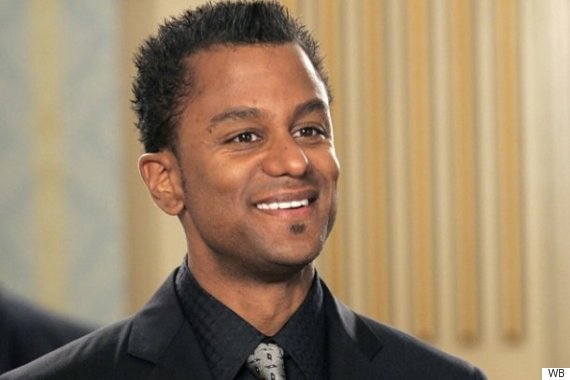
“We left it ambiguous and I think that was a choice,” said Yanic Truesdale, who played Michel. “I actually never asked Amy! … I’ve never asked, swear on my mother’s head.”

michel

As Sherman-Palladino noted, early on in the series Michel makes a few comments insinuating he is straight. “We sort of went on record saying he was into women, because we put it in the script once,” she said, “but things can change or shift.”

Truesdale remembered that people speculated his character was in love with Lorelai, though his sexuality was never really part of Michel’s character. “They couldn’t figure it out and Amy liked that,” he said. “That’s why she made it like, ‘Oh, he loves Celine Dion.’ But he’s French. French guys are more feminine. French guys are more sophisticated… If you go to Paris, it’s like, ‘Oh my god, is he gay?'”

Sherman-Palladino did, however, explicitly think of other Stars Hollow residents as gay. “We had characters in the town that we thought of as gay,” she said, refusing to reveal who. “And we just thought of them as characters.”

When the show started in 2000, LGBT characters were few and far between (read: mostly limited to Showtime’s “Queer As Folk”). Sherman-Palladino actually intended Sookie (Melissa McCarthy) to be gay, but executives wouldn’t approve.

“Things were different back then,” Sherman-Palladino said. “The networks were very different in how permissive they would allow you to be. So, Sookie was originally supposed to be gay, but that was a non-starter at that time.”

Although she has said the show couldn’t exist today, if it had started a bit later, things might have been different.

“It changed so quickly,” she said. “By the time ‘Gilmore’ had been on a year or two, that shit was starting to drop right and left. But by that point, Sookie was in a relationship. It was really right at the cusp of when things were starting to turn. You know, today everyone would be gay. Lorelai would be gay!”

Lauren Duca is currently covering the ATX Television Festival for The Huffington Post. Follow her on Twitter @laurenduca and expect much more to come!

— This feed and its contents are the property of The Huffington Post, and use is subject to our terms. It may be used for personal consumption, but may not be distributed on a website.

www.huffingtonpost.com/2015/06/06/gilmore-girls-michel-gay_n_7521330.html?utm_hp_ref=gay-voices&ir=Gay+Voices

Gay Iconography: Whitney Houston's Legendary Hits

Gay Iconography: Whitney Houston's Legendary Hits

Whitney

I could fill an entire post merely listing out all of Whitney Houston’s accomplishments: the nearly 200 million records sold worldwide, the number one hits, the Grammy Awards. But that’s not nearly all of Whitney’s story. She was unquestionably a superstar, a woman who broke records and boundaries, riveted tabloid writers and left one of the most memorable, powerful voices etched into history.

Like some of the other large looming gay icons, (Liza, Judy, Marilyn), part of Houston’s enduring legacy is her struggles. The R&B legend battled with addiction, which eventually led to her demise. If her triumphs and trials weren’t enough to endear her to legions of gay fans, her pop earworms and tremendous ballads certainly captivated attention. It’s a career architected in large part by bisexual music mogul Clive Davis. (Before her explosive 1985 debut, she also sang on an album for gay artist Paul Jabara.)

Those aren’t her only connections to the LGBT community. Houston was plagued with rumors she was a lesbian, which she vehemently denied to Out Magazine in 2000. She explained, “If I was gay, I would be proud to tell you, ‘cause I ain’t that kind of girl to say, ‘Naw, that ain’t me.’ The thing that hurt me the most was that they tried to pin something on me that I was not. My mother raised me to never, ever be ashamed of what I am. But I’m not a lesbian, darling. I’m not.”

While her career deteriorated as her addiction worsened, the songs she’s left behind continue to loom large over audiences, gay, straight and otherwise. Get down with some of our favorite Houston hits, AFTER THE JUMP

 
Though she already had one number one single under her belt (“Saving All My Love For You”) it was her next number one, “How Will I Know,” and third single from her debut album, that would really make her a U.S. phenomenon. At a time when MTV still struggled to showcase artists of color, Whitney broke out into heavy rotation on the network. The catchy tune persists, receiving an excellent mash-up with Robyn’s “Dancing On My Own” in 2012.


The impact of Whitney’s bombastic balladry inspired singers for decades. Everyone from Mariah Carey to Celine Dion, Beyoncé to Jennifer Hudson name her as an influence. It’s difficult to turn on any season of a singing competition and not hear a contestant try to imitate the signature style of one of R&B’s most distinctively powerful voices. A particularly popular choice of song is “The Greatest Love of All,” a song that on its surface is so schmaltzy, but in Houston’s hands, it had the power to knock over cities.


Whitney’s second album, Whitney, was another strong showing, full of what would become pop classics. There was “So Emotional” and “Where Do Broken Hearts Go,” and, of course, the bubblegum pop of “I Wanna Dance With Somebody.” Those tracks, along with “Didn’t We Almost Have It All,” would make Houston the first woman to score four number-one singles from a single album.


Of course, no discussion of Whitney could overlook “I Will Always Love You.” The Dolly Parton-penned tune was a massive hit for Houston, acting as the lead single to the soundtrack of The Bodyguard, in which she starred opposite Kevin Costner. The 1992 track sold 20 million copies, and remains the best-selling single by a female solo artist.


Before addiction, exhaustion and the toll of fame wore on Houston, she dropped her critically-acclaimed album My Love Is Your Love in 1998. Though the years leading up to her untimely death saw her voice lose its power and clarity, and her personal troubles often eclipsed her musical output, one of the album’s dance hits “It’s Not Right But It’s OK” can still be heard in clubs today.

Do you still love Whitney?


Bobby Hankinson

www.towleroad.com/2015/06/gay-iconography-whitney-houstons-legendary-hits.html

Why 'Empire' Uses The F-Word But Not The N-Word

Why 'Empire' Uses The F-Word But Not The N-Word
There has been some discussion around the slurs used on “Empire.” At a panel at the ATX Television Festival in Austin, Texas, Saturday, the TV drama’s co-creator Danny Strong talked about forbidden language on network TV, explaining why writers avoided a racial epithet for black people but used one for gay men.

Terrence Howard, the show’s star, had come out saying using the former is needed to make the show more authentic. “I’m mad that we don’t say n– in the show,” he told Entertainment Weekly in February. “Why is TV showing something different from the reality of the world? Why is there a thing called censorship that stop people from hearing everyday talk? We use n– every day. It’s become part of a conversation—why aren’t we using it in the show?”

Strong insisted that was not necessary. “It’s not a documentary about hip-hop,” he said Saturday, addressing Howard’s comments. “It’s a soap opera that takes place in the hip-hop world.”

Toward the end of the panel, an audience member asked Strong why he felt comfortable using a particular gay slur, if the N-word was off-limits in the writer’s room. In the scene in question, Cookie (Taraji P. Henson) shouts at Lucious (Terrence Howard). “I want to show you a f– really can run this company,” she says, referencing their gay son Jamal (Jussie Smollett) taking control of the company.

“That was really important to [co-creator] Lee [Daniels], in particular, who is gay,” Strong said. “The idea is that she is throwing his homophobia back in his face… So to use one of the most offensive slurs is a powerful way to do that.”

Lauren Duca is currently covering the ATX Television Festival for The Huffington Post. Follow her on Twitter @laurenduca and expect much more to come!

— This feed and its contents are the property of The Huffington Post, and use is subject to our terms. It may be used for personal consumption, but may not be distributed on a website.

www.huffingtonpost.com/2015/06/06/empire-f-word_n_7525272.html?utm_hp_ref=gay-voices&ir=Gay+Voices
Queer Classic Querelle Will Screen At Frameline For Fassbinder’s 70th

Queer Classic Querelle Will Screen At Frameline For Fassbinder’s 70th

Querelle French poster
Frameline39: the San Francisco International LGBTQ Film Festival will kick off in a few weeks at the city’s glorious Castro Theatre showcasing hundreds of new LGBT films along with one very special vintage presentation: a screening of the 1983 gay classic, Querelle. In honor of what would have been director Rainer Werner Fassbinder’s 70th birthday the festival is also premiering a new documentary portrait of the famously challenging gay German filmmaker, Fassbinder: To Love Without Demands.

Fassbinder’s swan song adaptation of the Genet novel, Querelle is also notable for generating an excellent array of great movie posters. The U.S. campaign for the film settles for a simple hunky shot of star Brad Davis leaning against a wall, with a lot of boring text about how this is “Fassbinder’s last and most controversial film.” The French have him leaning against something much more interesting (also gotta love the special Andy Warhol version – below).
Querelle U.S. poster
Querelle Warhol poster

Jenni

feedproxy.google.com/~r/queerty2/~3/TXb8NZlFWw0/queer-classic-querelle-will-screen-at-frameline-for-fassbinders-70th-20150606