
Gay bathhouse blasts other venues as ‘immoral’ for staying open
After Lance Bass was criticized for keeping his West Hollywood restaurant and bar open (Rocco’s) and allowed crowds to pack in, while other local businesses closed to assist public health efforts, now management of a bathhouse in London is issuing similar criticisms of a similar situation
Monthly Archives: March 2020
Here’s How Elections May Have to Change During the Coronavirus Outbreak
Here’s How Elections May Have to Change During the Coronavirus Outbreak

ProPublica is a Pulitzer Prize-winning investigative newsroom. Sign up for The Big Story newsletter to receive stories like this one in your inbox.
As the novel coronavirus spreads through the U.S. during presidential primaries, election and government officials are scrambling to figure out how to allow voters to cast their ballots safely ― or postpone primaries altogether. Managing in-person voting during an unprecedented pandemic has forced authorities to overcome new virus-related hurdles: providing sufficient cleaning supplies to polling places, moving polling places out of nursing homes and ensuring there are enough poll workers.
There’s also a huge open question: If the virus continues to infect large numbers of people, how can the general election take place safely this fall?
Just this week, Arizona, Florida and Illinois held primaries, and Ohio postponed its election at the last minute, causing widespread confusion. Several states with upcoming primaries, including Georgia, Kentucky, Louisiana and Maryland, also announced they would postpone their elections. Voting rights advocates have recommended states expand early voting and access to no-excuse absentee voting, among other measures. One advocacy group, Common Cause, called for a delay in in-person voting for “at least the next few weeks.”
Given the daunting logistical challenges of holding elections in the time of the coronavirus, we had a lot of questions for Rick Hasen, an election law expert and a law and political science professor at the University of California, Irvine. He’s the author of several books on elections, including “Election Meltdown: Dirty Tricks, Distrust and the Threat to American Democracy,” published this year. This interview has been condensed for clarity.
So what happened during voting in four states this week?
Well, we only had voting in three of those four states [that were scheduled to vote] because in one state at the last minute, the governor and Ohio election officials essentially postponed the primary, despite a court saying that the primary should not be postponed. In other states where the voting actually took place, we saw a number of problems, including missing poll workers, last-minute people deputized as election judges, some unsanitary conditions at polling places and what will probably turn out to be a decline in in-person turnout at those elections.
How can states hold elections without being in violation of the Centers for Disease Control and Prevention guidance of avoiding gatherings of more than 50 people?
Well, I’m not all that familiar with the CDC guidance, but I believe that the guidance relates to social activities. I’m not sure it relates to government activities. So a group of firefighters, for example, at a fire, there might be more people than the CDC recommends. [Editor’s note: Earlier this week, the CDC issued guidelines for large gatherings of more than 50 people, with separate guidance for workplace,first responders and polling places.] But I think a better question to ask is how can elections be conducted safely under these conditions where we need to practice social distancing? I think it’s a challenge. It’s a challenge because people queue up to vote on Election Day. People are handling the same machinery, the same surfaces. Those can’t be constantly cleaned between each voter. So it’s going to be difficult. I think this is why you’re seeing so many government officials trying to delay their primaries to a later point in time. And of course, increased use of absentee balloting can vastly increase the safety of voting at this point because you’re keeping people further away from each other, and allowing people to vote in the comfort of their own home.
What legal authority do states have to postpone elections like happened in Ohio?
So this is a state-by-state question if we’re talking about something besides the presidential election. The presidential election is set by federal statute, the date of the presidential election. So it could not be easily postponed. And there are provisions of the Constitution for what happens if the election cannot take place. The question of whether or not a state can postpone a primary is a function of what the state constitutions and state statutes say. One of the points I make in my book, “Election Meltdown,” which was written before this coronavirus crisis arose, is that many states do not have adequate Plan Bs in place to deal with questions of election emergencies, whether it’s a hurricane, a cyberattack or in this case a pandemic. So, we really need state legislatures and Congress right now to be thinking about what steps need to be taken in November to assure that as many people as possible will be able to exercise the franchise and vote.
So, on the local level, for example, who decides what changes get made on Election Day?
Again, these are state-by-state questions. Often decisions about closing polling places or making voting changes are done by county election boards. Sometimes they come from a state’s directive. Because we have such a decentralized election system in the United States, we don’t run a single election for president — we run something like 8,000 or 9,000 elections for president. Given that we have that, it’s really hard to generalize about who has authority.
I should add that until the Supreme Court’s decision in the Shelby County v. Holder case in 2013, before any polling places could be closed in a state that had a history of racial discrimination in voting, approval had to be obtained from the Department of Justice or [from] a court in Washington, D.C. That protection for voters is now gone.
When changes are made on Election Day, like they were this week, for example, how are election officials communicating those changes? How are voters supposed to find out if their polling place was moved?
So this is very problematic because often there is not adequate communication. Often this information will appear on a government website. Sometimes voters don’t learn that a polling place has moved or changed until they try and show up to vote. Another good practice is that election officials should be doing whatever they can to use a variety of methods of communication, including social media, to try to get the word out about any changes in polling place or rules. One of the things we saw earlier in Ohio was that there was tremendous confusion about whether the election was on or off. Poll workers didn’t know if they were supposed to show up until the day before. I think what we saw on Tuesday in Ohio and in other states is a good indication, for those states that still have primaries, that they better have good plans in place, including the extended use of absentee balloting. I think we’re going to see a huge increase in absentee balloting for the remaining primaries, given the dangers of going to the polling place.
How are the states protecting voting rights when changes are made? And what more should states be doing?
Some states do not have a very good record of protecting voting rights. So it is going to require the public or voting rights groups to push the states to make sure that people are not disenfranchised. I think states need to be asking themselves: How can we ensure that as many voters as possible under these difficult conditions still may be able to exercise their constitutional rights and register and vote?
And I want to underline this point about voter registration, because I think it’s getting a lot less attention in this conversation than voting itself. Many people would ordinarily be registering to vote between now and November. Under state laws, there are different cutoff times for when you can register to vote. If people have to register to vote in person, this can also create problems if there are orders to not visit government buildings, and government buildings are closed. So I think it’s very important for states, if they actually care about voting rights, to move to online voter registration if they don’t already have it. Many states have online voter registration, some don’t. But providing ways that people can exercise their constitutional rights without having to show up in person is something that should be on the minds of all election administrators around the country.
Has something like this happened before in terms of a big crisis? And if so, what did states do and what did we learn?
Well, we had voting taking place on 9/11 in New York. That was not a federal election. They were able to postpone that election and reschedule it. I think the lesson we should have learned is that it’s crucial to have a backup emergency plan in place in the event of a disruption. The closest thing is probably the voting that took place during the flu pandemic in 1918, and voting was disrupted in a number of places. Vote-by-mail was not really a thing back then. And so many people ended up being disenfranchised. There are pictures of people lined up wearing surgical masks at polling places which, you know, seems like such a strange image. But it probably won’t seem strange to us now.
What about hurricanes?
So, Florida is a state that often has problems with hurricanes occurring during voting season. They have enacted rules for dealing with voting and they do make accommodations, for example, extending the period of early voting, or allowing people to vote outside their polling place in the event of an emergency. As I detail in “Election Meltdown,” even with these rules, sometimes election administrators take matters into their own hands, such as an election administrator in one county in Florida who allowed people to vote electronically, sending in a ballot by email, which was against the rules and not part of the emergency rules.
I think it’s very problematic for election administrators, even with the best of intentions, to change voting rules, even to enfranchise voters, if it’s in violation of state law. And so this is why I think states need to be thinking now before we get to the next set of voting as to what the rules should be in the event of an emergency. So everybody’s on the same page. Because we don’t want different election administrators coming up with different rules that may or may not be fair and secure as a means of voting.
What do you think will be most affected by changes to voting regulations caused by the coronavirus? Are there some states it could affect more than others or some demographics it could affect more than others?
If we don’t make accommodations for increased vote-by-mail, I think there is a special burden that’s going to be placed on older voters who are most susceptible to having serious complications if they get this virus.
And so I think that the most important thing right now is for election officials to think about those vulnerable populations and ask what they can do to ensure that they’re not disenfranchised. We don’t know what things are going to look like now in November. I certainly hope that things are better, but we should plan as though things are not going to be better and provide the tools now, so that every eligible voter will be able to have a means of safely casting a ballot.
Given the potential impact of the virus, does the U.S. need to make changes to how it votes before November on a federal level?
I support federal legislation. I recently wrote a piece in Slate advocating that Congress pass a law requiring states that don’t currently offer no-excuse vote-by-mail to require that the states do so in November. I think Congress also needs to come up with funding. Assuming we continue to have problems, there’s going to be a flood of new vote-by-mail voters. It’s more expensive to process those ballots, and states are going to need all the help they can get in this environment. So I support folding into some of the coronavirus bills that are coming before Congress now additional funding and this mandate for states to allow this option. We also need to have protections for voters who are voting by absentee [ballot], because one of the things we know is that absentee ballots are much more likely to be tossed for noncompliance.
And also, we know that although voter fraud is very rare in this country, when election crimes do happen, they tend to happen with absentee ballots. And so we need rules to make sure that there’s no ballot tampering.
Given all of the logistics involved with vote-by-mail and the decentralized nature of our elections, is it logistically possible that we could roll out a full-scale vote-by-mail system by November?
I’m not advocating a full vote-by-mail system for November. I’m not saying we should have only vote-by-mail. I think that would be extremely difficult to do. It took the states that have moved in that direction years to get their systems in place. What I’m suggesting is that voters have the option of voting by absentee ballot. I think that is something that is doable so long as there’s enough planning and resources and we start thinking about it now.
Can the general election be postponed or canceled? Can you talk about the constitutional aspect of that?
The Constitution gives Congress the power to be setting the time of the election. Congress has done that in the statutes in order to change the election date. That statute would have to be changed. I don’t foresee that happening. That’s not really a concern I have, although I hear that a great deal.
I’m much more concerned that the federal government, or state officials, as we saw in Ohio recently, say people have to stay away from the polling places on Election Day. That would not be postponing Election Day, but that would be disenfranchising potentially millions of people. And that’s why I think we need to have an absentee ballot backup system, because if the election takes place and people can’t go to the polling places, the vote would then be either done by those who were able to vote early or by absentee before there might be some restrictions.
Or in the case of the presidential election, state legislatures might take back the power that the Constitution gives them to appoint electors to the Electoral College directly. That is, the state legislature in Pennsylvania might say, you know, we’re not going to let voters vote for president this time. We’re going to decide who gets Pennsylvania’s Electoral College votes. I think that would be profoundly anti-democratic and dangerous. I don’t want that to happen, and I don’t want the excuse to be “Well, voters can’t vote,” which is all the more reason I think we need this vote-by-mail backup system in place in as many places as possible.
There is a dispute over whether a state legislature could decide to take back the power to appoint electors directly, and whether that would have to happen through ordinary legislation signed by the governor or [being passed into] law over a veto or if it could be done by the state legislature acting unilaterally. I hope we never have to test this to find out the answer.
Filed under:
The post Here’s How Elections May Have to Change During the Coronavirus Outbreak appeared first on Towleroad Gay News.
Here’s How Elections May Have to Change During the Coronavirus Outbreak
Virginia Values Act Is Making LGBTQ History in the South
Virginia Values Act Is Making LGBTQ History in the South
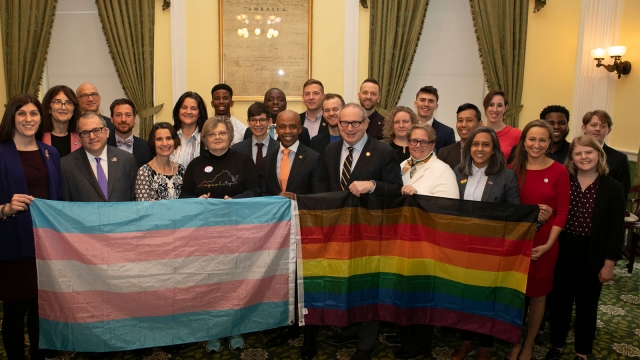
Post submitted by HRC Senior Regional Campaign Organizer Narissa Rahaman
In August 2019, HRC endorsed and committed to invest in and help elect 27 pro-equality candidates across Virginia. The historic endorsements marked the beginning of HRC’s largest field, digital and direct mail program in the Commonwealth of Virginia — and it paid off.
On Election Day, HRC celebrated a huge victory. Virginia’s newly elected pro-equality majorities in both the House and Senate allowed for a slate of pro-LGBTQ legislation to move forward this session.
Last week the Virginia General Assembly closed out a banner legislative year with legislators advancing protections and equality for LGBTQ Virginians who call the Commonwealth home, and we couldn’t have done it without you. From Election Day in 2019 through the end of the legislative session in March, you took action at the ballot box, via email and by phone to make sure your voice was represented and heard in Richmond.
HRC staff has been on the ground in Richmond working with Equality Virginia to advance the historic Virginia Values Act (SB 868), landmark bipartisan non-discrimination legislation, through both chambers of the Virginia General Assembly.
Thanks to your work the Virginia Values Act is on its way to the governor’s desk to become law. Once this bill is enacted, Virginia will be the first state in the South to have non-discrimination protections for LGBTQ people, the first state in more than a decade to add sexual orientation and gender identity to existing non-discrimination law and the first state since 1993 to add a prohibition on discrimination in public accommodations where none existed before.
But there’s still work to do. Opponents of equality are threatening to gut reforms that would protect all Virginians from discrimination at work, in housing, in credit and in public places before the bill is signed into law. And it could happen: Under Virginia law, the governor can add amendments and send bills back to the General Assembly.
The governor needs to know HRC members and supporters are in favor of a clean bill without any amendments. Take action here: hrc.im/SignVVA
And there’s more:
- Bills waiting to be signed by the governor:
- SB 657 and HB 1041 – Removes unnecessary and invasive requirements that prohibit many transgender residents from correcting the gender marker on their birth certificate.
- SB 246 – Adds a non-binary gender marker option on state driver’s licenses and IDs for transgender, non-binary and gender non-conforming Virginians.
- HB 1429 – Prohibits a health insurance carrier from denying or limiting coverage to a transgender individual.
- Bills the governor has signed into law:
- A bill that requires the Department of Education to develop and make available policies regarding the treatment of transgender students in primary and secondary schools.
- A bill that prohibits state-licensed health care providers from engaging in the dangerous, discredited practice of so-called “conversion therapy” with minors.
- A bill that requires the reporting of hate crimes based on sexual orientation and gender identity along with other protected characteristics.
Thanks to our members and supporters and Virginia’s pro-equality lawmakers, we are making real change across the commonwealth. But there is still work to be done. Learn more about how you can get involved with HRC in Virginia as we work to elect pro-LGBTQ candidates up and down the ballot this year by visiting hrc.org/Virginia.
Owen and Jay Raw
Owen and Jay Raw

Views: 4308
Rating: 75
Duration: 310
"Owen and Jay Raw" Added: 2020-03-19, Duration: 310, Rating: 75, Views: 4308
Lance Bass says he and husband may adopt if tenth round of IVF fails
Lance Bass says he and husband may adopt if tenth round of IVF fails
When we read about same-sex couples successfully having children, it’s easy to forget how difficult the process can sometimes prove to be. One couple who knows all about that is *NSYNC singer and businessman Lance Bass and his husband, artist Michael Turchin.
The couple have previously spoken of the trouble they’d had to become dads. Most recently, a ninth round of IVF treatment resulted in their surrogate becoming pregnant but miscarrying at the eight-week stage last August.
Related: Lance Bass blows the lid off ‘The Boy Band Con’
It was the first time their surrogate became pregnant following IVF treatment, and they even knew the sex of the embryo – a boy – so it was a particular blow for the couple.
“We unfortunately lost him after eight weeks, which happens to pretty much everyone when you’re going through IVF,” Bass told Entertainment Tonight. “I didn’t even know that as we were going through this, but we’ve met so many great couples who have the same story. So, you do feel a lot of support knowing other people have gone through it.
“Getting over that has been hard. It’s like all these hopes and dreams I had won’t be happening this time. But everything happens for a reason and when it needs to happen, it’ll have to happen.”
Related: Ricky Martin and Jwan Yosef become dads again – share photo with new son
He said that he and Turchin, who he married in 2014, were not giving up.
“It’s been a very long process, years in the making… There have been a lot of ups and downs—way more downs than ups.”
They intend to try a tenth round of IVF soon. If that fails, they may consider adoption.
“Of course, in a perfect world, I would love to have my own kids. But if it’s not meant in the cards, then it’s not meant in the cards and there are plenty of kids who need adopting. So, I’m not opposed to going right ahead and adopting if this fails next time.”
Gal Gadot Responds to Coronavirus Quarantine with Star-Studded Cover of ‘Imagine’: WATCH
Gal Gadot Responds to Coronavirus Quarantine with Star-Studded Cover of ‘Imagine’: WATCH

Inspired by a trumpeter who played the song from his balcony during Italy’s coronavirus quarantine, Wonder Woman actress Gal Gadot recruited fellow stars for an Instagram video cover of John Lennon’s “Imagine.”
“Hey guys. Day six in self-quarantine. And I’ve got to say that these past few days got me feeling a bit philosophical,” Gadot says at the start of the video. “You know, this virus has affected the entire world, everyone — doesn’t matter who you are, where you are from, we are all in this together.”
Celebrities who make cameos in the video include Kristen Wiig, Jamie Dornan, Labrinth, James Marsden, Sarah Silverman, Eddie Benjamin, Jimmy Fallon, Natalie Portman, Zoë Kravitz, Sia, Lynda Carter, Amy Adams, Leslie Odom Jr., Pedro Pascal, Chris O’Dowd, Dawn O’Porter, Will Ferrell, Mark Ruffalo, Norah Jones, Ashley Benson, Kaia Gerber, Cara Delevingne, Annie Mumolo and Maya Rudolph.
Watch it below.
View this post on InstagramWe are in this together, we will get through it together. Let’s imagine together. Sing with us
All love to you, from me and my dear friends. #WeAreOne ……. #KristenWiig #JamieDornan @labrinth @james_marsden @sarahkatesilverman @eddiebenjamin @jimmyfallon @natalieportman @zoeisabellakravitz @siamusic @reallyndacarter @amyadams @leslieodomjr @pascalispunk @chrisodowd @hotpatooties #WillFerrell @markruffalo @norahjones @ashleybenson @kaiagerber @caradelevingne @anniemumolo @princesstagramslam
A post shared by Gal Gadot (@gal_gadot) on
The post Gal Gadot Responds to Coronavirus Quarantine with Star-Studded Cover of ‘Imagine’: WATCH appeared first on Towleroad Gay News.
Gal Gadot Responds to Coronavirus Quarantine with Star-Studded Cover of ‘Imagine’: WATCH
American Family Association’s hope for COVID-19: Fewer kids in LGBTQ-affirming schools
American Family Association’s hope for COVID-19: Fewer kids in LGBTQ-affirming schools
As we come together in these trying times, most of us are holding on to hope. Hope for the health of those who have contracted the virus. Hope for the economic wellbeing of those who are hard hit. Hope for the mental health of those who are under long term lockdown. Ultimately, hope for a timely and resounding end to this global pandemic.
But leave it to the American Family Association and its spokespeople to latch onto a worldwide crisis and use it to continue their anti-LGBTQ crusade. This is precisely what the AFA’s Bryan Fischer is  doing over on the organization’s website, where, in a piece thoughtlessly titled “The Good That Could Come From Coronavirus,” he writes the following about his hope for COVID-19:
“…closing public schools will protect vulnerable young children from force-fed indoctrination into the absurd and anti-science environmental agenda. It will protect them from being brainwashed into normalizing sexual deviancy, gender confusion, and Drag Queen story hours. By forcing parents to home school their children at this time, big government nannies may discover that all they did was to give parents a chance to try home education and discover they liked it more than they thought.”
SOURCE: AMERICAN FAMILY ASSOCIATION
Such values, huh? While millions of us around the world are in restless worry about this hurting world and how we can fix it, this man who professes to be a “family values” voice of a “pro-family” organization is seriously citing the saving of children “from being brainwashed into normalizing sexual deviancy” as a goal. A hope. A plan forward for a planet that’s suffering.
Not to mention, parents all over this country are struggling to figure out both care and education for their children who have now lost their schools and teachers. How heartless can you be to look at this, one of the most impactful blows to working families to stem from coronavirus, and tell these families that their burden and lost educational opportunities for their children is actually a blessing? A blessing, as Bryan tells it, because these schools were always too darn queen for proper educatin’ in the first place.
They say that crises really show people and communities for who they are. Well, AFA–we hear and see you! While you all spend this time of crisis misplacing your “values” and pushing your un-American obsessions that seek to harm families, the rest of us will work to save the world from normalizing deviant values like yours.
March 18, 2020
Lila_R.Zysset-0845


014431
014431

Views: 6559
Rating: 92
Duration: 308
"014431" Added: 2020-03-19, Duration: 308, Rating: 92, Views: 6559
Rachel Maddow Calls Out 7 States Which ‘Aren’t Doing Much at All’ in Response to Coronavirus: WATCH
Rachel Maddow Calls Out 7 States Which ‘Aren’t Doing Much at All’ in Response to Coronavirus: WATCH

On last night’s Rachel Maddow Show, Maddow broadcast several informative and enlightening segments on COVID-19, echoing experts who have pointed out that the curve of coronavirus infections in the U.S. looks much like Italy’s curve. Yesterday, Italy recorded 475 deaths in a single day, the highest one-day toll of any nation in the world so far.
Maddow also spoke with Donald McNeil, science and health reporter for the New York Times, who offered a grim forecast of what is ahead for the U.S.
But before we get to that, Maddow expressed her concern over 7 states, some with enormous populations, that don’t seem to be doing anything to curb the spread of coronavirus at all. Those states are Texas, Tennessee, Oklahoma, Idaho, Mississippi, Missouri, and Wyoming.
“No state-mandated school closures. No state-mandated limits on large gatherings,” said Maddow. “No state mandates on the operations of businesses like bars and restaurants. …. Because sure, why not? Make it up yourself. See how it goes. No reason to panic, right? No reason to hustle. Let’s just see how this plays out.”
In another segment, Maddow highlighted one town in Italy, Vò, which very successfully used aggressive testing to neutralize the spread of the virus. Those tested, including several people who were asymptomatic, were isolated from the rest of the population quickly.
“They have now gone days with no new cases in that town.”
Unfortunately, the U.S. can’t manage to get enough test kits manufactured and distributed.
Another segment offered a grim forecast of what is ahead for the U.S.
Said McNeil to Maddow: “I will predict that since we are going down the path of Italy, and we are a much bigger country than Italy, that we will surpass Italy in the number of dead in a few weeks. … I don’t understand why we’re talking about a small town like Vo in Italy when that same lesson, that you have to test and isolate as many people as possible was a lesson learned in cities all over Asia months ago, and we have been paying very little attention to what they’re doing.”
If you’re interested in hearing more from McNeil, he has just published a Q&A about the virus over at the New York Times.
The post Rachel Maddow Calls Out 7 States Which ‘Aren’t Doing Much at All’ in Response to Coronavirus: WATCH appeared first on Towleroad Gay News.
Rachel Maddow Calls Out 7 States Which ‘Aren’t Doing Much at All’ in Response to Coronavirus: WATCH
