D.C. Police Hunting Man for Anti-Gay Attack with Machete: VIDEO
Washington D.C. police are searching for a machete-wielding assailant who chased two men into the lobby of a building late last week.
NBC Washington reports: “The victims told police they were walking south in the 1200 block of North Capitol Street NW at about 11 p.m. Friday when one of the two men said to the other, “f— you,” a police report says. The suspect, who was walking north, heard the comment and assumed it was directed toward him, the report says. The machete-wielding man chased the two men into the lobby of Tyler House, near New York Avenue, and made “stabbing motions” at them, the report and a statement from police says. … According to the police report, the crime is being investigated as an assault with a dangerous weapon with anti-gay motivation.”
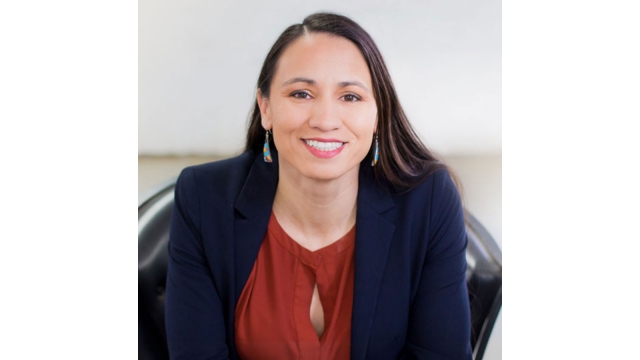
5/ I am humbled to serve the people in my district, and I am honored every day to walk the halls of the Capitol as a woman, a member of the Ho-Chunk Nation and as a part of the LGBTQ community. —@ShariceDavids#HRCTwitterTakeover
7/ In 2019, we are still seeing laws and practices persist that disenfranchise Native voters, LGBTQ voters, voters of color and so many other marginalized communities, not just in Kansas, but all across the U.S. —@ShariceDavids#HRCTwitterTakeovert.co/aTXiOGNfgD
9/ It’s why being a part of the House’s historic passage of the #EqualityAct was so meaningful to me—not because I thought that the Senate or Mitch McConnell would do their jobs—but because it is the kind of thing that can literally save lives. —@ShariceDavids#HRCTwitterTakeover
10/ According to the @CDCgov’s 2017 Youth Risk Behavior Survey, among Native American LGBTQ youth:
❌50% report feeling sad or hopeless
❌15% did not go to school because they felt unsafe
❌More than 1/3 were bullied on school property
—@ShariceDavids#HRCTwitterTakeover
12/ For LGBTQ youth and Native youth and people who have been left out of the conversation, it means a lot for leaders across this country to step up and say, “Your experience matters. It matters that you’re here.”
—@ShariceDavids#HRCTwitterTakeoverpic.twitter.com/2TZ03fA99y
13/ If I could go up to every single young person in this country and tell them “you matter,” I would.
But right now the only thing I can do is to keep pushing for policy that’s going to institutionalize that message for our kids. —@ShariceDavids#HRCTwitterTakeover
14/ I get to stand before you as:
��The first out LGBTQ member of Kansas’ delegation
��One of the first two Native American women to ever serve in Congress
��Part of the most diverse Congressional class ever
Tell Me Why is the first major studio game to feature a playable transgender lead character
Xbox Game Studios
Tell Me Why, a new game revealed today at the Xbox X019 celebration in London, promises to set a new standard for transgender representation in gaming. This gripping narrative adventure from DONTNOD Entertainment and Xbox Game Studios will be the first game from a major studio to feature a playable transgender lead character. Check out the trailer below.
Tell Me Why tells the story of Tyler Ronan – a young transgender man – and his identical twin sister Alyson as they uncover mysteries surrounding their loving but troubled childhood in small-town Alaska. Both characters will be playable across the game’s three chapters, which will all be released in the summer of 2020.
Nick Adams, GLAAD’s Director of Transgender Representation, has worked alongside DONTNOD and Xbox Game Studios from early in the game’s development to bring this authentic trans narrative to life. Through consultation in story, dialogue, character design, environmental design, and voice casting, GLAAD and the game’s creators have taken care to ensure that Tyler is a genuine, multi-dimensional character, avoiding the many harmful transgender stereotypes and tropes of the past. Tyler is voiced by out trans actor August Black.
In a statement released by Microsoft today, Nick Adams said, “Microsoft and DONTNOD have approached Tyler with a real commitment to authenticity. Tyler is a fully-realized, endearing character, whose story is not reduced to simplistic trans tropes. Creating a playable lead trans character – and taking such care to get it right – raises the bar for future LGBTQ inclusion in gaming.”
GLAAD will have more to share closer to the release of the game next summer, but are proud to celebrate this announcement. Xbox Game Studios, DONTNOD Entertainment, and GLAAD are excited for players to learn more about Tyler’s story, and we trust that players (both transgender and cisgender) will grow to love Tyler and Alyson as much as we do
“I’m so sorry I had to push,” he apologizes. “It was for truly the most obnoxious gay reason!”
We ask if Booster had a Grindr overload. He clarifies: he was booking a New Year’s vacation with friends.
He has a reason to celebrate. The Illinois native spent years doing guest spots and small roles on television, as well as touring as a stand-up comic, in which he often made fun of his life as a gay, Asian man. The years of work paid off: earlier this season, Joel Kim Booster landed a role on the ensemble sitcom Sunnyside for NBC. In the show–which follows a disgraced politician (played by series co-creator Kal Penn) coaching a group of immigrants to get their citizenship–Booster plays Jun Ho, a spoiled millennial joined at the hip to his sister, Mei Lin (played by queer actress Poppy Liu). The origins of Mei Lin & Jun Ho remain purposely murky throughout the show…though they seem to come from enormous wealth, and possibly have a despotic dictator as a father.
Sunnyside originally aired as part of NBC’s fall lineup before moving to a digital release on Hulu & NBC.com. New episodes stream every Thursday.
Queerty connected with Joel Kim Booster to chat about his transition to stardom, the somewhat controversial reception of the show, and the perils of trying to make it in Hollywood as a gay, Asian man.
So what’s the state of your life at the moment?
I don’t know; it’s sort of hard to gauge. I think it all feels mostly the same. I will say, I feel a bit more financially stable than I ever have before in my entire life. It’s weird to go from a couple years ago not knowing how exactly I would make rent to now putting, you know, a vacation home on my credit card. It feels like a little bit of existential whiplash.
Joel Kim Booster as Jun Ho, Poppy Liu as Mei Lin — (Photo by: Gilles Mingasson/NBC)
Yeah?
It’s so strange. This is never a place I thought I would be growing up or even a couple years ago. It’s nice to have a level of relative success where I don’t feel on edge all the time the way I was when I lived in New York.
Great. And it’s been some time coming: you’ve been doing a lot of stand-up and working for a few years doing smaller acting gigs. Guest spots, voiceover work.
And working in writer’s rooms too. The odd thing about sort of being a multi-hyphenate comedian is that I was never quite sure in what form success would come. I was spinning a lot of plates in the industry. I was touring a lot doing clubs and colleges for people who didn’t know who I was. That’s kind of a slog. Then, working in the writer’s room on other people’s shows, trying to sell my own shows as a writer. Then auditioning. I feel like I’ve been doing pilot season for so many years that it became a weird tradition of going through the motions.
Ok.
But this year—every year I feel like in years past, every time I’ve gotten close to something. It always felt like this is it. This could change my life. But this year, I felt ok. My life felt ok. I thought if it happens, then great. If not, I’ll be ok. I had other things I could focus on. I feel like that’s always the case when something big happens.
Sure.
So I booked [Sunnyside] and it was fun to go to all of the later auditions sort of like I’m arriving here. I wasn’t a mess of nerves. I think that’s part of the reason I got the part.
Really?
Yeah, I think, like most people in this industry, I tend to get inside my head and second guess myself. I always auditioned before sort of playing to what I thought the other person wanted. Like, how can I be the kind of archetype they want? But this part, the way it was described from the get-go, from the very first audition in the breakdown that [casting director] Allison Jones sent my reps, was this guy is a finance douche bag. He’s a bit like Donald Trump, Jr. That’s the direction we’re going. And I was like I can’t do that.
[Laughter]
I had just literally gotten off doing stand-up on a cruise, I think, a day before the audition. I was exhausted, I was sick. This was like my 11th pilot season audition, so I was sort of like I’m going in there and being myself. That is, to be funny in the way I know how to be funny. Ultimately, I guess they liked it. Every time I went in for callbacks, and then the [screen] test, I was like I’m going to go in there and do this the way I know how to do it. It was the first time I’ve ever done that, as opposed to giving them what I thought they wanted.
That’s terrific. So how has the approach to the character changed? You mention that this part wasn’t written for you, that this was a character you weren’t really big on when you saw the initial concept. What have you brought to it? How have the writers changed their approach now that they know they’re writing for you?
You know, I think it’s the chemistry with Poppy [Liu, who plays his sister Mei Lin]. Both of us have talked about how they didn’t audition us together. I think they just struck gold in a lot of ways by having to cast two people that got on well. But I think we both have done a lot to figure out how the characters are different. I think, also, bringing some amount of depth and likability to a character that just could be a shallow joke machine. The writers do a really good job. There’s so much in every script that works for us. For me, it’s a balance between how much of it is stupidity, and how much of it is entitled naivete. There is, already famously on the network, a stupid Asian guy: Manny Jacinto’s character on The Good Place.
Joel Kim Booster as Jun Ho, Poppy Liu as Mei Lin — (Photo by: Gilles Mingasson/NBC)
Of course.
I didn’t want to go into doing what he does on that show. For Mei Lin and Jun Ho, and for me and Poppy specifically, it’s not that these characters are stupid. It’s that they’ve been insulated so much by their wealth that they see themselves in a completely different way. Finding those balances and making it not straight stupidity has been very fun for us.
I’m glad you mention that idea. One major source of humor in the series is the different perspectives and entitlements that all these characters have. They take what we would consider some odd things for granted, but then other concepts are totally foreign to them. It’s that clash that generates the humor.
Mmmhmm.
Do you think that the reception to the show on network, prior to the Hulu move, is sort of a reaction to the irreverence of the subject matter? In other words, do you think that a show that is about—and makes fun of—the American obsession with immigration, maybe cuts too close to the bone? And I don’t mean that at all as a dig at the show.
No, no, no.
I mean that more as a way of reading the public.
For sure. This question has been asked in different iterations before. I wouldn’t say our intention is to really make fun the obsession with immigration. What I think that it is—it’s more a backdrop of a hangout comedy. Community has a study group. Always Sunny in Philadelphia has the bar. For us, I think it’s just a more textured version of that.
It’s giving context to why these people are hanging out. For our show, it just has to be that. Especially as you get past Episode 3 of the show, it really does evolve beyond the initial premise of the pilot. It becomes less and less about the immigrant experience and more about hard jokes and these characters and their idiosyncrasies. So that’s how we see it.
Yeah.
And I hope people can look past the initial trappings of the premise and see the comedy in it. Poppy and I have talked about this. We see the immigrant experience sort of play out as trauma porn in dramas. For us, the thing that’s so appealing about the show, is that it does sort of allow, in a heightened, sometimes absurd way, to see that in the background as part of a character’s story in the same way Chandler [on Friends] worked at a marketing firm. It’s incidental.
Poppy Liu as Mei Lin, Joel Kim Booster as Jun Ho — (Photo by: Ron Batzdorff/NBC)
Speaking of comedy… Do you prefer to think of yourself as an actor or a comic? So many performers have really surprising answers.
I always think of myself as a comedian. No matter what I’m approaching I have that part of my brain working. It’s the hardest wrought part of my creative identity. I’m very apt to hold onto it in a weird way. I’m really good at acting. But I will always, no matter what I’m doing, even when I go into drama auditions, there’s always the undertone comedy. In a lot of ways it’s just as truthful.
You also discuss your family life, your race, your adoption, your sexuality. How do other comics respond to that? I’m continually horrified by some of the answers I get when I talk to comics about the bigotry in the comedy scene.
That’s interesting. I’ve been thinking about that a lot, this year especially. It’s been a question turning in my brain because as my platform has grown and I’ve been introduced to a wider audience, I started getting critical responses from my peers or people who haven’t laid eyes on me before. I guess for me, it’s sort of the same answer I had about the immigration experience on the show. I don’t ever look at my material, my notebook and say “Here’s where the gay jokes are and here’s where the Asian jokes are.” I approach it in the same way I think most comedians do, which is what is the most interesting thing that has happened to me today to write about? I find some kernel of absurdity or universal truth. I sort of vacillate between those two, whichever I find more interesting.
Interesting.
The standard for relatability is a little bit higher for me because of my identity than it is for other comics, usually like straight, sometimes male, sometimes white comics. I get knocked a lot by people who look at my material and say “This isn’t relatable to me because he’s just talking about being gay or being Asian or whatever.” It’s so strange. I’m not going to name names, but any sort of mainstream, headlining, straight, male comedian that is sort of the Face Of The Art Form, I’m supposed to look at his life as a father or dating women or any of those things and say “Yes, that is a universal experience. I recognize the universal in that and therefore I can laugh at it.”
I know what you mean.
I’ve been asked to do that. Queer audiences are asked to do that. And yet a straight person can’t sit down at my show and try and put themselves in that position too? It’s a little frustrating. Nevertheless, I persist. I will talk about whatever I want to talk about or find interesting.
Well done.
Does that answer your question?
I think so, but it does beg the follow-up: what kind of impact has that had on your career? Have you been limited to the kind of gigs you book or auditions you’re called in for?
Hmm. I think it has. I think that there will always big a segment of my audience that considers me an “XY comedian.” A gay, Asian comedian, or what have you. I will always be fighting that to some degree. However, I don’t know—it’s so hard. I tour all over the country and play the Midwest, the South, the Northeast—all these places. My material does work, and most of my audiences are not predominantly gay. They’re not mostly Asian.
Right.
Especially when I’m going places like St. Louis. It’s not that. And yet, I make it work, and think there is something universally funny in my material. I care less and less though about relatability. I feel like relatability is such a scourge for us, in that it makes people like me move to where people are. Comedians that are straight and male don’t do that. They’re not doing that for me. Louis CK isn’t looking at his material and thinking “How will a gay person relate to this? How will an Asian person relate to this?” He’s not doing that. He doesn’t give a sh*t.
Kal Penn as Garrett, Joel Kim Booster as Ju Ho, Poppy Liu as Mei Lin — (Photo by: Tina Thorpe/NBC)
That makes sense.
Honestly, now, I used to care very deeply about oh my God, an eating *ss joke. Will that play in the Midwest? Is it too alienating? Will it gross-out a guy in the front row? Now I think I’ve been doing this long enough that I don’t give a sh*t. I know that the structure is there. There’s a setup and there’s a punchline and it is recognizable as a joke to audiences no matter who they might be or where they might come from. So I’m going to do it, and not be afraid or water down who I am so I can seem relatable to someone I don’t even care about.
Sunnyside streams to NBC.com and Hulu every Thursday.
Nancy Pelosi Shades Trump Directly, Schooling Him on ‘Exculpatory,’ Says President Has ‘Admitted to Bribery’ — WATCH
Nancy Pelosi spoke to reporters on Thursday, addressing Donald Trump directly and explaining that the president has admitted to bribery.
Said Pelosi: “The devastating testimony corroborated evidence of bribery uncovered in the inquiry and that the president abused power and violated his oath by threatening to withhold military aid and a White House meeting in exchange for an investigation into a political rival,” Pelosi told reporters at her weekly press conference. … you know we’re talking Latin around here — e pluribus unum, from anyone, quid pro quo, bribery, and that is in the Constitution, attached to the impeachment proceeding. … The bribe is to grant or withhold military assistance in return for a public statement of a fake investigation into the elections — that’s bribery.”