
2nd round sex

Views: 13863
Rating: 82.8571
Duration: 648
"2nd round sex" Added: 2019-10-16, Duration: 648, Rating: 82.8571, Views: 13863
Please enter your date of birth to proceed.
Drag Race’s Tatianna Releases Mug-Shot Merch Following Arrest
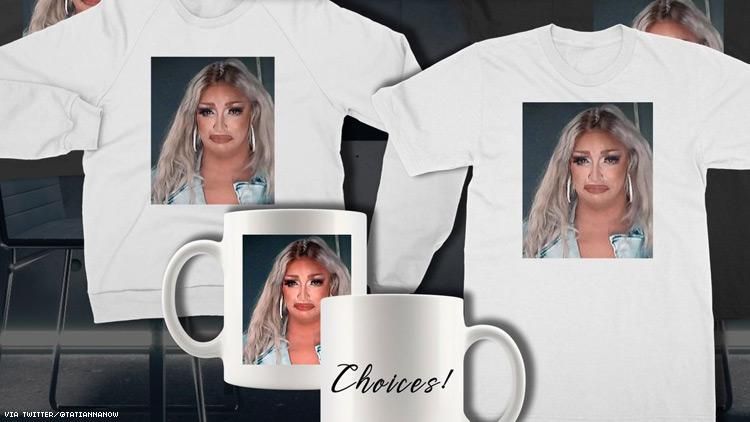
The drag queen put her mug shot on a mug — and is raising funds for sex workers as well.
www.advocate.com/crime/2019/10/16/drag-races-tatianna-releases-mug-shot-merch-following-arrest
Texas GOP Speaker of the House under fire for homophobic insult in leaked audio

Texas Republican House Speaker Dennis Bonnen has come under fire for a leaked recording in which he referred to a married Democratic representative as “gay,” and offered to sell media accreditation to a lobbyist firm.
In the recording, Bonnen requests gossip from a lobbyist about other members of the Texas legislature. Of Democratic Rep. Jon Rosenthal, Bonnen said Rosenthal’s wife was “gonna be really pissed when she learns he’s gay.” Bonnen also refers to colleagues as “a piece of sh*t” and “vile.”
In an ironic twist, conservative radio host Michael Quinn Sullivan made the recording and released it to his website. Sullivan also works as CEO of Empower Texans, a petroleum lobbying group that donated $4.7 million to far-right candidates in 2018. Perhaps it should come as no surprise that Bonnen can also be heard begging Sullivan to keep the conversation private.
Related: Unsolicited nudes are now against the law in Texas
In the recording’s most damning passage, Bonnen offers quid pro quo with Sullivan, exchanging access to the legislative floor in exchange for campaign donations. “Let me tell you what I can do for you. Real quick, you need to hear what I want to do for you,” Bonnen says. Empower Texans had previously been blocked from attending legislative sessions due to its status as a lobbying firm.
Bonnen released a statement addressing the recording saying “no laws were broken: This was nothing more than a political discussion—the problem is that I had it with that guy. My colleagues have always deserved the facts and context this recording provides, and with clear evidence now disproving allegations of criminal wrongdoing, the House can finally move on.”
HRC Foundation Launches the First-Ever #HBCUOutLoud Day

Today, HRC Foundation announced the first-ever National #HBCUOutLoud Day, providing an important opportunity for everyone who cares about supporting the LGBTQ community and Historically Black Colleges and Universities (HBCUs) to speak up and speak out. As part of #HBCUOutLoud Day, and in cooperation with the bipartisan HBCU Caucus and the Congressional LGBT Equality Caucus, HRC is today hosting a discussion on Capitol Hill exploring the ways Congress can partner with HBCUs to support LGBTQ diversity and inclusion efforts on campuses.
“For decades, HBCUs have been driving forces of social justice movements and equality around the country — however, the stories, experiences and contributions of Black LGBTQ folks can often go unnoticed or under-recognized,” said HRC Foundation HBCU Program Director Leslie Hall. “HRC’s #HBCUOutLoud Day seeks to elevate the visibility, awareness and stories of LGBTQ students, staff and alumni of HBCUs who are challenging norms and stereotypes and pushing to create a more equitable and inclusive society.”
The HRC Foundation is also on the ground today at Prairie View A&M University (PVAMU) in Texas for the grand opening of the school’s LGBTQ+ Resource Office. The event will include a “Building an Inclusive Campus” workshop at 10 a.m., conducted by HRC Foundation HBCU Program Manager Rishard Butts, and a ribbon-cutting ceremony at noon. The office at PVAMU will be the fifth designated LGBTQ office or center at an HBCU in the U.S.
Research demonstrates that the landscape for equity and inclusion for LGBTQ students on HBCU campuses is improving, yet many still lack the policies and practices that seek to end discrimination, stigma and bias still experienced by too many. In creating the national #HBCUOutLoud Day, the HRC Foundation is not only raising public awareness about the HBCU LGBTQ community, but also providing easy ways for people to make a make a difference on their campuses and in their wider communities.
The HRC Foundation’s HBCU Program mobilizes and supports HBCUs in enhancing policies and services that promote excellence in LGBTQ inclusion, equity and engagement. The program focuses on promoting individual competencies and collective action, empowering leaders and stakeholders and building a network of committed leaders in pursuit of eliminating stigma and enriching the college experience for LGBTQ students and the entire student body.
HRC’s HBCU Program was founded to support LGBTQ students at HBCUs by providing resources and trainings to advance affirming and supportive college campuses. The program is supported by the Coca-Cola Foundation.
For more information about HRC’s HBCU Project, visit www.hrc.org/hbcu.
6 GLAAD Campus Ambassadors share why pronouns are important to them
Every year on the third Wednesday of October is International Pronouns Day. This year the annual volunteer-run event that “seeks to make respecting, sharing, and educating about personal pronouns commonplace” falls on October 16th. This is the second year that this day is being celebrated by people around the world and by several supporting organizations including The National Center for Transgender Equality and The Trevor Project. The day was founded by Shige Sakurai, a student at the University of Maryland. They also created the website “MyPronouns.org” that provides free resources about pronouns.
Pronouns are how people refer to one another and how we talk about others. This event is focusing on third-person personal pronouns such as he, she, they, and ze. It is one of the main ways we identify people besides their name. Using the correct pronouns is a sign of respect. Pronouns are not assigned to gender and everyone deserves to be able to use the pronouns that they connect with.
Happy #PronounsDay! What are your pronouns? Drop them below.
— GLAAD (@glaad) October 16, 2019
My pronouns are they, them, theirs and they are important to me because they are a part of me that will never go away. I remember my first time hearing someone use they/them pronouns for themself. It was a teacher during my tenth-grade year. I previously did not know that those pronouns were even an option. I felt like someone was finally telling me about a part of myself I didn’t know existed. The only way I can describe it was that I felt full. I felt whole, giddy from this new possibility. I then introduced myself to them using they/them pronouns and it was like introducing myself as me for the first time.
Using my pronouns is a small way to express my identity and when people use them, it leaves a huge impact on me. The people that use my pronouns are the ones that make me feel like I matter most. One way that people can make a difference to me is by introducing themselves with their pronouns. This is how it all started for me and it is often how I feel comfortable sharing my pronouns. When people do this, I feel more welcomed and like I matter to this person. This also opens the space for me to introduce myself.
Check out the perspectives of 5 other GLAAD Campus Ambassadors about why pronouns are important to them.
Somaya Gupta, New York
All Pronouns

Pronouns are important to me as a gender-fluid person because they make me feel seen. When I tell people I use any pronouns, they usually default to she/her because that’s what they feel most comfortable referring to me with since I come across as a cisgender woman. I’m okay with she/her pronouns, but whenever people refer to me with other pronouns it feels like they’re saying “I see and respect your identity.” Even though there is no one way to be genderqueer, I often feel like my gender isn’t queer enough. I feel a sense of validation from people using different pronouns with me. It also feels so welcoming whenever you enter a new space and people introduce themselves with both their names and pronouns. It’s especially important for cisgender people to take the initiative to set this standard in spaces because as people under the trans umbrella, we don’t always know if it’s safe for us to do.
Morg Hand, New York
They/Them Pronouns

I think that pronouns are important because they allow the person to feel comfortable, seen, and validated within a space. Pronouns also serve as an extension of one’s name and, therefore, a person’s identity. This means that the correct use and recognition of one’s pronouns are linked directly to recognition of their core identity.
Jacob Meade, Texas
He/Him, She/Her, and They/Them Pronouns

Since I do use multiple pronouns, most people would assume that I don’t really care what I get called, or even worse, they think my gender identity is not valid. However, my pronouns are important because it allows people to know that I am queer and I am visible. To me, pronouns let people know that although I should be treated the same, I have had different experiences in my life that have come from people’s different responses to my gender identity. If you are choosing to call me by my preferred pronouns when I am presenting more towards certain spectra of masc or fem, I know that you see me and respect me, and I feel safe around you.
Alex Nguyen, Colorado
They/Them and He/Him Pronouns

For me, normalizing pronoun use is key to making everyday life for trans people safe. I hear pronouns regularly being shared in queer and trans spaces, but pronouns are important for everyone to use. They are especially important for cisgender allies when trans people aren’t around. As someone who’s nonbinary, I feel betrayed and isolated when people fail to use my pronouns, but there are many other trans people who feel dysphoric and singled out when cisgender allies only use pronouns because they know a trans person is present. Other trans people may not feel comfortable either misgendering themselves to stay safe, or outing themselves to others they don’t feel safe around. If everyone normalized pronouns, from using pronouns in their professional lives to deconstructing harmful narratives around what pronouns get to be used by people of certain genders, the world would be much safer for all of us.
Sarah Ondak, California
They/Them Pronouns

Pronouns to me are like a hug, or a squeeze on my shoulder, something that says, “I see you for who you are in your entirety, and I love you for it.” When I’m misgendered, it’s a stab at my heart. That sounds dramatic, but there’s no easy way to describe the whirlwind of disappointment, anger, and sadness that courses through me. But when people use my correct pronouns it means that on some level, they respect my experience and they recognize this essential aspect of who I am.

Regardless of what pronouns you use, take the time to learn about pronoun usage and how to support others. Happy International Pronouns Day!
 Athena Schwartz is a GLAAD Campus Ambassador and second year at University of Utah studying health and education. Athena is a member of Kappa Kappa Gamma Delta Eta chapter and a part of their campus It’s On Us campaign.
www.glaad.org/amp/6-glaad-campus-ambassadors-share-why-pronouns-are-important-them
Freedom Youth – Temptation Comes Out
Proper Job Productions posted a photo:

Freedom Youth – Temptation Comes Out

Private Classics Threesome

Duration: 05:15
Keywords: 3some,adult toys,redhead,brunette,cumshot,dildo,facial,pornstar,privateclassics,public,retro,strapon,threesome,toy,vintage,Private,blowjob,doggy
www.tube8.com/threesome/private-classics-threesome/58778911/
Mormon Church Says It’s Against Banning Conversion Therapy in Utah
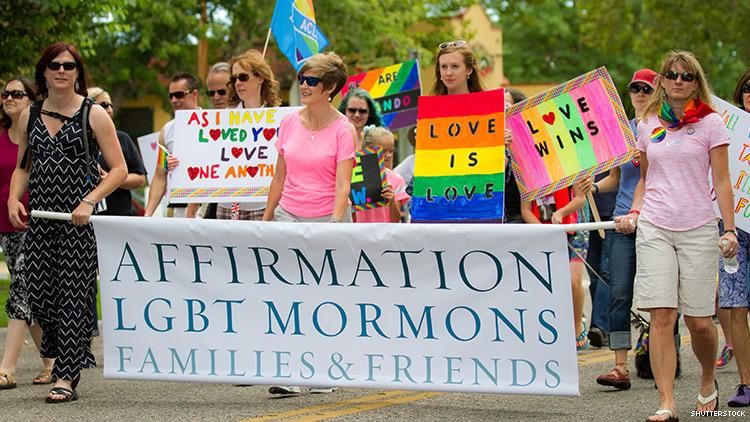
The state’s governor wants rules that prohibit the harmful practice.
www.advocate.com/religion/2019/10/16/mormon-church-says-its-against-banning-conversion-therapy-utah
Young people more likely than older to think LGBTQ people ‘immoral’

A UK survey has found that 18 to 24-year-olds are more likely than any other age group to hold negative views towards LGBTQ communities.
The survey of over 1,600 adults was analyzed by the British LGBTQ anti-violence charity, Galop. The results were revealed yesterday in its Hate Crime Report 2019.
The report carries some encouraging news, such as more than 4 in 5 people said that LGBT+ people should be free to live as they wish.
However, it also found that intolerance and anti-LGBTQ sentiment is far from uncommon. Although only one in 20 said LGBTQ people should not be free to live as they wish, one in five said they’d be uncomfortable with an LGB+ neighbor, and one in four uncomfortable with a trans neighbor.
Disturbingly, it found younger age groups showed a greater lack of acceptance towards gay, bi and trans folk.
One in five people said being LGBTQ was “immoral or against their beliefs.” This rose to one in four among 18- to 24-year-olds, higher than other age groups.
Ten percent of people said being LGBTQ could be “cured.” Again, this rose to 20% for under-25s, compared to 5% of those aged 55-65.
When asked if they believed LGBTQ people are “dangerous” to others, only 3% of the oldest age group agreed with the statement. This rose to 15% of those aged 25-34 and 16% of those aged under 25.
Related: Homophobic Oregon man makes history as first person charged under new hate crime law
In their report, Galop’s authors speculate the intolerance shown by younger people, “perhaps reflects a combination of the influence of the rise of anti-LGBT+ rhetoric globally … It may also be connected to the influence of a growing number of siloed online communities of hate.”
It recommends more research into why some younger people have negative attitudes towards gay and trans folk, and greater work with social media companies to challenge, “toxic cultures of hate online.”
Nick Antjoule, Galop’s Head of Hate Crime Services said the findings offer, “a sobering reminder that progress achieved in recent decades can easily be reversed.
“Young people polled tended to hold more negative views toward LGBT+ people than other age groups. This alarming finding warns of a generational pivot ahead and a bumpy road for those of us committed to challenging anti-LGBT violence and abuse.”
The report arrived on the same day the UK’s Home Office published its latest hate crime statistics. Compared to last year’s figures, these showed a 10% increase in hate crimes toward people because of their sexuality, and a 37% increase in transphobic hate crimes.
Over the summer, one such incident made headlines around the world. A same-sex female couple were assaulted on a London bus after being ordered to kiss by a group of young men. Five teenagers were subsequently arrested in connection with the attack. One of the women, Melania Geymonat, posted about the incident to her Facebook.
Related: Lesbian bashing couple speaks out after 5 teens arrested
Campaigners say Brexit and right-wing populism have contributed towards a rise in hate crime. Others say some of the increase can be attributed to more people feeling confident enough to report such crimes to the police.
Nik Noone, Galop’s Chief Executive said, “Recorded anti-LGBT+ hate crime has doubled in the last three years. This is reflected in the escalating scale, severity and complexity of hate crime cases we are supporting at Galop.
It was today reported that UK authorities will increase sentencing terms for those found guilty of anti-gay or anti-trans hate crimes. British judges will be instructed to sentence those found guilty of either to at least six months in jail.
Although Galop has published previous Hate Crime Reports, it has not included exactly the same data, so is unable to say whether these figures represent an increase or decrease in regards to acceptance. However, these UK findings around millennials are not isolated. In June, A GLAAD report in the US found that younger Americans feel increasingly ‘uncomfortable’ with the LGBTQ community.
GLAAD’s annual Accelerating Acceptance Index showed increasing acceptance across its first three surveys. However, the last two surveys have shown a reversal in acceptance among younger age groups: “the number of young Americans ages 18-34 who are comfortable across all seven scenarios [of LGBTQ acceptance] dropped from 53% to 45%, the second consecutive year that this age group has shown a drop.”
You must be 18 years old or older to chat

