2018 in Review: Ten HRC Resources for Moving LGBTQ Equality Forward

2018 in Review: Ten HRC Resources for Moving LGBTQ Equality Forward

2018 has been a long, hard-fought year for our community. From this administration’s continued attacks on asylum seekers, inclusive health care access, its attempts to erase transgender people to the obstacles LGBTQ people still face in their everyday lives, it has at times felt like an endless battle.

But this year has also seen stories of amazing resilience and progress — including a historic victory for transgender equality in Massachusetts and a growing number of legislators, advocates and allies speaking out to protect LGBTQ youth from dangerous and debunked “conversion therapy.” Transgender trailblazers like the cast and crew of Pose and Supergirl’s Nicole Maines bring important stories and visibility into homes around the world.

As we look back and reflect on the highs and lows of this year and celebrate the pro-equality majority that will soon be sworn into the House of Representatives, here are ten of HRC’s 2018 resources to guide the work ahead:

1. A National Epidemic: Fatal Anti-Transgender Violence in America in 2018
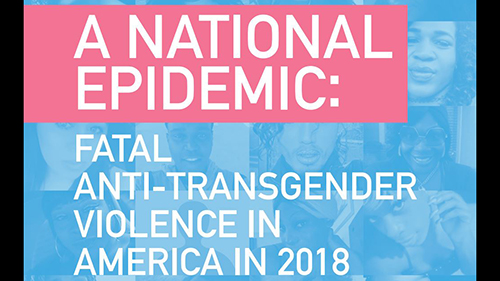
A National Epidemic, Fatal Anti-Transgender Violence, Transgender, TDOR

In honor of Transgender Day of Remembrance, HRC Foundation released a heartbreaking report honoring the more than 20 transgender and gender-expansive people killed in 2018 (at the time of publication). It also details the contributing and motivating factors that lead to this tragic violence, and outlines how we all can take concrete steps to end this crisis. In life, each of the individuals memorialized in this report went to extraordinary lengths to live authentically as who they were. In death, we must honor their truth with bravery and action.

2. 2018 U.S. LGBTQ Paid Leave Survey

US LGBTQ Paid Leave Survey

In conjunction with the 25th anniversary of the Family and Medical Leave Act, HRC Foundation released a groundbreaking report detailing the results of its nationwide survey of LGBTQ people that reveals an urgent need for inclusive paid family and medical leave. More than 5,400 LGBTQ people from all 50 states responded to HRC’s 2018 U.S. LGBTQ Paid Leave Survey, the largest and most comprehensive ever of its kind. HRC Foundation also released two subsequent breakout reports from this survey highlighting the unique needs of transgender and non-binary workers and LGBTQ working people of color.
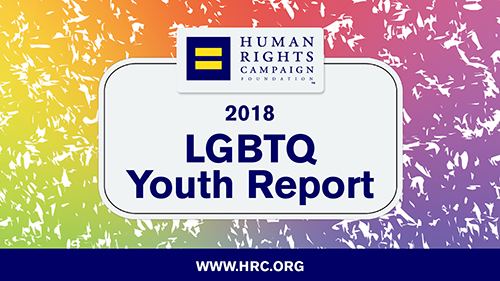
3. 2018 LGBTQ Youth Report

LGBTQ Youth Report 2018

HRC Foundation partnered with the University of Connecticut to conduct an innovative survey of more than 12,000 LGBTQ youth, ranging in age from 13 to 17, and from all 50 states and Washington D.C. The largest-of-its-kind survey revealed in distressing detail the persistent challenges so many of them face going about their daily lives. It found that these teenagers are not only experiencing heartbreaking levels of stress, anxiety and rejection, but also overwhelmingly feel unsafe in their own school classrooms. Survey participants also made it crystal clear that supportive families and inclusive schools are key to their success and well-being. HRC Foundation released two sub-reports later in the year, highlighting the unique issues facing both Latinx LGBTQ youth as well as gender-expansive youth respondents, with additional breakouts of the data to come in 2019.

4. All Children – All Families Program resources
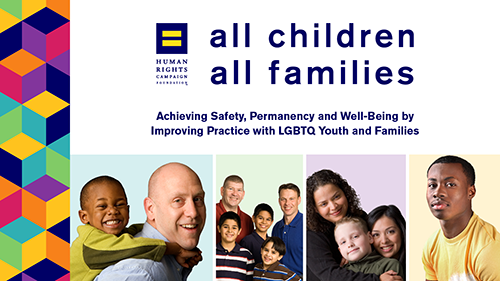
All Children - All Families, HRC Foundation

In June, HRC Foundation’s All Children – All Families program unveiled groundbreaking new resources to guide child welfare agencies in better serving the more than 430,000 children and young people in foster care. The resources include assessment tools and a comprehensive webinar series on how best to serve LGBTQ youth. With these tools, agencies can assess their policies and practices around working with young people and prospective parents.

5. Coming Home to Evangelicalism and to Self
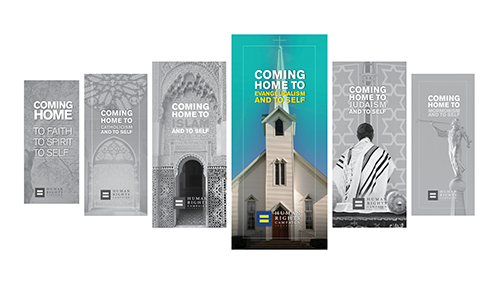
Coming Home to Evangelicalism and to Self

This guide, latest in HRC Foundation’s ‘Coming Home’ series, is aimed at LGBTQ Evangelicals who are on the journey toward living fully in their sexual orientation, gender identity and expression and in their faith and its traditions. The guide offers general, overarching insights and suggestions that draw on a wide variety of evangelical voices. The hope is always to spark new ideas, new dialogue and new courage.

6. Coming Out: Living Authentically as LGBTQ API Americans
Coming Out, Living Authentically as API Americans,

In partnership with the National Queer Asian Pacific Islander Alliance, HRC Foundation released a coming out resource for Asian and Pacific Islander (API) Americans, a valuable conversation starter for LGBTQ APIs, their families and their communities. Although, there is no universal coming out experience, this resource aims to offer support and guidance for members of this diverse community. For instance, Some LGBTQ API Americans raised in religious communities must reconcile themselves with traditions and teachings that may condemn LGBTQ identities. Language differences can also make it difficult to identify relevant or relatable resources, support and role models.

7. Coming Out: Living Authentically as LGBTQ Latinx Americans
Coming Out, Living Authentically as Latinx LGBTQ Americans

HRC Foundation, in partnership with the Hispanic Federation, League of United Latin American Citizens and UnidosUS, released Coming Out: Living Authentically as LGBTQ Latinx Americans to aid LGBTQ Latinx Americans in navigating the intersectional challenges when coming out. This resource offers support for those finding their way across multiple languages, cultures, religious affiliation, ethnicity, nationality and LGBTQ identities.

8. HIV 101: a Guide to HIV Prevention, Treatment, and Care on College and University Campuses
HIV 101, Campus Guide

This comprehensive guide outlines many of the critical steps higher educational institutions can take to improve student health and wellbeing. As a group, college students experience heightened risk factors that can lead to contracting HIV, including engaging in high-risk sexual behavior and experimenting with drugs or alcohol. This resource details ways in which administrators, staff and even students themselves can foster a campus environment to support those living with HIV and help mitigate this national public health crisis.

9. Making HIV History + A Pragmatic Guide to Confronting HIV at HBCUs
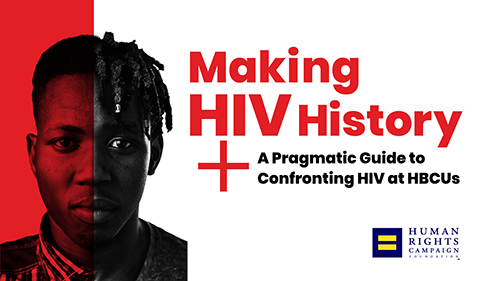
Making HIV History, HBCU Guide

Despite declining HIV infection rates in the U.S., college-aged and Black Americans continue to be at a higher risk of acquiring HIV than the general population. In 2015, youth and young adults ages 13- to 24-years-old represented more than one in five new HIV diagnoses in America. Eighty percent of those diagnoses occurred in people ages 20- to 24-years-old. Among youth diagnosed with HIV in 2015, 55 percent were gay or bisexual Black men. This comprehensive guide for HBCU administrators, staff and students outlines many of the critical steps higher educational institutions can take to help achieve an HIV-free generation.

10. Play to Win: Improving the Lives of LGBTQ Youth Through Sport
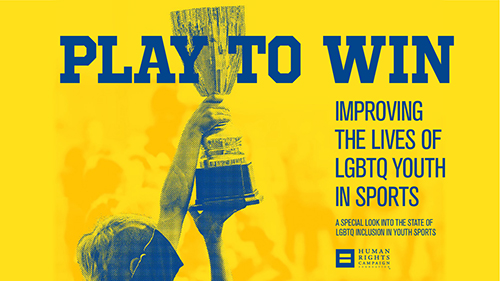
Play to Win, LGBTQ youth and sports

For millions of Americans, sport embodies our ideals of equality, fairness, perseverance, discipline and integrity. But in too many places, sports are not always a safe or affirming space for aspiring LGBTQ athletes. HRC’s “Play to Win”, “Equality in the Stands” and “Be a CHAMPION” resources aim to empower LGBTQ people and allies on the field, court or track, in the ring, on the ice or in the stands.

To view more resources HRC published in the past year, visit hrc.org/resources.

www.hrc.org/blog/2018-in-review-ten-hrc-resources-for-moving-lgbtq-equality-forward?utm_source=rss&utm_medium=rss-feed

Prefeitura entrega nova sede do Centro de Referência LGBT

Prefeitura entrega nova sede do Centro de Referência LGBT

Prefeitura de Belo Horizonte posted a photo:

Prefeitura entrega nova sede do Centro de Referência LGBT

A Prefeitura de Belo Horizonte entregou a sede própria do Centro de Referência LGBT (rua Curitiba, 481, Centro), localizada no novo endereço da Secretaria. Com a mudança, o Centro foi expandido e passa a contar com instalações adequadas para atendimento ao público, atividades e reuniões, sem gerar nenhum gasto extra à Prefeitura. Fotos: Amira Hissa/PBH

Prefeitura entrega nova sede do Centro de Referência LGBT

Lady of Leisure

Lady of Leisure

Julie Bracken posted a photo:

Lady of Leisure

Numerous jokes have been made about me being a lady of leisure, and it’s true! I am indeed.

My husband usually comes home to find me lounging on the sofa with a glass of wine, reading Fifty shades of Gray.

My daughter knows that I’ll be taking a bubble bath between the hours of 8 and 9.

My personal trainer expects to see me bi-weekly.

I spray my favorite perfume on before going to bed and first thing when I wake up.

And, the thought of being in a hurry rarely crosses my mind.

Makeup and styling by the talented Kelayla of www.transvista.co.uk/

DSC05038
9 Feb 18

Lady of Leisure

‘When Brooklyn Was Queer’ Uncovers A Hidden History

‘When Brooklyn Was Queer’ Uncovers A Hidden History

Hugh Ryan’s upcoming historical tome on the history of LGBTQ life in Brooklyn from the 19th century on is a riveting reading and cinematic in scope.

Ryan’s history essentially starts in 1855 with the publication of Leaves of Grass by Walt Whitman.

A lot of people forget that Whitman, the grand daddy of American gay literature, made his home in Brooklyn and observed many facets of what gay life was like in 19th century in his writing. WH Auden, Truman Capote, and Christopher Isherwood all appear but really serve as a backdrop to the real stars: the working class men and women who lived on the margins and  the constant influx of sailors that came through the Brooklyn Navy Yards. Ryan finds other documented stories of queer life in police records for sexual perversion and in the records of doctors who carried out  pseudo-scientific research on queer (especially trans) bodies.

Ryan told Towelroad, “The working class was more open to all kinds of non-marital sex, not just same-sex or gender nonconforming desires. Many of these communities were predominantly immigrant, and the ratios of men to women were all out of whack, making marriage less of an option. Men and women inhabited separate social spheres, and had little access to private spaces where they could meet together – but at places like the municipal baths or aboard ships, men (and to a lesser degree, women) had chances to gather together in semi-private places. Also, new ideas about sexuality-as-an-identity were more common among upper-class people, and those ideas gave an added level of risk to same-sex desires, because now not only were you participating in an activity that might be frowned upon, that activity defined who you were as a person.”

Above: Hugh Ryan

Ryan says the very richness of the queer history of Brooklyn was also a lesson in and of itself about the hiddenness of LGBT history, still to this day.

“To be honest, I wrote this book because I had a very basic revelation one day: though I had a degree in Women’s Studies, grew up the child of New Yorkers in the suburbs of New York City, had lived in Brooklyn for more than a decade, and had worked in the field of queer history for years, I knew absolutely nothing about the queer history of Brooklyn. I’d accepted that the story of queer New York revolved around Manhattan: Greenwich Village, Harlem, Chelsea, Times Square, etc. So discovering that there was (more than) enough history to fill a book was a real eye opener.”

When Brooklyn Was Queer comes out in hardcover on March 5th.

You can pre-oder it here.


The post ‘When Brooklyn Was Queer’ Uncovers A Hidden History appeared first on Towleroad Gay News.


‘When Brooklyn Was Queer’ Uncovers A Hidden History

Trump Fires HIV-Positive Air Men Right Before Christmas

Trump Fires HIV-Positive Air Men Right Before Christmas

In a bold move pernicious even for the Trump administration, two US Air Force service members have been discharged for their HIV status.

According to an exclusive in today’s Washington Post, “two U.S. airmen filed suit on Wednesday against Defense Secretary Jim Mattis in the U.S. District Court for the Eastern District of Virginia, arguing that the Pentagon’s decision last month to discharge them from the military owing to their HIV status violates the Constitution’s equal protection clause and federal law. They have asked the court to strike down the decision.”

Lambda Legal quickly issued a statement in support that said in conjunction with OutServe-SLDN, and with the law firm Winston & Strawn, they filed a lawsuit on behalf of two HIV-positive members of the United States Air Force who were given discharge orders just days before the holiday season. Lambda Legal and OutServe-SLDN filed the lawsuit, Roe and Voe v. Mattis, in the U.S. District Court for the Eastern District of Virginia.

“It’s disgusting that the Trump Administration is sending some men and women in uniform home for the holidays without jobs simply because of their HIV status,” said Scott Schoettes, Counsel and HIV Project Director at Lambda Legal. “These decisions should be based on science, not stigma. Lambda Legal is suing to stop these separations and will keep fighting until President Trump understands that there’s not a job in the world a person living with HIV cannot safely perform, including the job of soldier.”

Lamda’s statement explains that the lawsuit “challenges the Pentagon’s discriminatory deployment policies, which prevent service members living with HIV from deploying outside the United States without a waiver. For years, these policies have restricted the opportunities of service members with HIV. Now these same deployment restrictions are being used to justify separating service members solely based on HIV status. The ‘Deploy or Get Out’ policy, unveiled by the Trump administration in February 2018, directs the Pentagon to identify service members who cannot be deployed to military posts outside of the United States for more than 12 consecutive months and to separate them from military service. Since current U.S. military policy identifies service members living with HIV as non-deployable, they face immediate discharge under this Trump policy.”

Photo credit: Shutterstock

The post Trump Fires HIV-Positive Air Men Right Before Christmas appeared first on Towleroad Gay News.


Trump Fires HIV-Positive Air Men Right Before Christmas