Here's How the Feds Can Fight Trans Murders

Here's How the Feds Can Fight Trans Murders

Last Thursday morning, House Minority Leader Nancy Pelosi grieved the loss of at least 21 transgender women murdered in the U.S. this year as a result of anti-trans bias. 

“We can pass a law, we can help to break down barriers in people’s minds,” said Pelosi at her morning press briefing, according to the Washington Blade. “Now we have to get to their hearts.” 

Her remarks come on the heels of Sen. Al Franken’s letter the previous day to the Department of Justice and the Federal Bureau of Investigation, urging an end to law enforcement’s frequent misgendering of trans murder victims, and an increase in the reporting and tracking of hate crimes against gender-variant people. 

The White House also weighed in at an afternoon press conference Thursday. Deputy White House press secretary Eric Schultz offered “thoughts and prayers” for the victims and their families, adding that the White House has no new “legislative or official reviews” on the matter. But, “obviously the president’s record on this is well known,” concluded Schultz. 

So now that top officials of the federal government are addressing what advocates are calling an epidemic of transgender murders, beyond prayers and existing legislative measures, what can they do?

Drawing from the valiant efforts of advocates, outreach specialists, policymakers, and government officials, here are two steps that Congress and the White House can take to fight deadly violence against transgender people in the United States. 

1. Increase and improve the tracking and reporting of hate crimes based on gender identity.

In his letter, Sen. Franken noted that the current federal Hate Crimes Prevention Act does not specifically require state or local law enforcement to report such incidents. Consequently, underreporting of hate crimes is a widespread problem.
 
Franken was not the only federal official to acknowledge the woeful state of the tracking and reporting of hate crimes. The FBI director himself, James B. Comey, also highlighted the problem in a statement to the House Judiciary Committee Thursday.

In his statement, Comey stressed the importance of reporting bias-motivated attacks:

“We need to do a better job of tracking and reporting hate crime and ‘color of law’ violations to fully understand what is happening in our communities and how to stop it. … There are jurisdictions that fail to report hate crime statistics. Others claim there were no hate crimes in their community — a fact that would be welcome if true. We must continue to impress upon our state and local counterparts in every jurisdiction the need to track and report hate crime and to do so accurately. It is not something we can ignore or sweep under the rug.”

But in response to a question about tracking police shootings, Comey told The Huffington Post earlier this month, “I don’t have the power to require people to supply us with data.” He can only tell local law enforcement that it is “in everyone’s interest” to collect data, he explained.

Likewise, U.S. Attorney General Loretta E. Lynch also said that requiring local jurisdictions to collect data may not be something that the federal government believes is feasible.

“One of the things we are focusing on at the Department of Justice is not trying to reach down from Washington and dictate to every local department how they should handle the minutia of record-keeping, but we are stressing to them that these records must be kept,” Lynch said during the Washington Ideas Forum, hosted by AtlanticLIVE and the Aspen Institute October 1, according to News One

Rather than speaking about trans murders specifically, Lynch was discussing the reporting of police shootings. She cited budgetary constraints and limited resources within local law enforcement departments as the reason why data collection is hampered. Lynch’s remarks reveal a criminal justice culture where systemic issues of resources and funding contribute to widespread problems of poor tracking and underreporting.

Of course, police shootings and trans murders are different in most cases. But underlying both is a criminal justice culture that underreports or fails to collect and track data. And in both police shootings and trans murders, the victims are overwhelmingly people of color.

While police are investigating the possibility that the homicides of Zella Ziona and Kiesha Jenkins were hate crimes, no official determination has been made. Further, it’s unclear to what extent local law enforcement has used federal hate-crime legislation to charge and convict suspects in the cases of the other 19 trans women killed in the U.S. this year.

Imagine if local jurisdictions were required by federal agencies to not only report and track anti-trans violence — not just murders, but the assaults and harassment — but also to proactively use hate-crime legislation in prosecutions where clear evidence from suspects or witnesses points to transphobia as a motive for the crime.

There is little doubt that gender identity played a role in the most recent trans murders. Ziona’s alleged killer, Rico Leblond, is under investigation for killing the woman he allegedly knew, after telling police that she “embarrassed” him by speaking to him after his friends learned that Ziona was a trans woman

2. Expand support for research, outreach, education, and advocacy.

One day after Pelosi discussed the trans murders at her weekly briefing, the Philadelphia Daily News released an in-depth investigation into the world that Kiesha Jenkins lived as an alleged sex worker in Philadelphia. The report — and years of outreach efforts by advocates who support sex workers — provides a reality check about the enormous need for economic justice in the lives of low-to-no-income trans people of color who turn to sex work to survive. 

Certainly, not all murdered trans individuals engaged in sex work. But many did, to survive arduous living conditions exacerbated by the compounding oppressions of race, socio-economic class, and gender. Moreover, while they may not have engaged in sex work, many of the reported trans murder victims this year were low-income individuals who struggled to make ends meet.

Although it won’t stop trans murders immediately, the federal Equality Act is needed because shockingly high numbers of trans individuals face hostile working conditions and pervasive unemployment when they are their true selves. The National Transgender Discrimination Survey showed that 26 percent of trans people had lost a job due to bigotry. 

That lack of economic stability leads many individuals who are most at-risk to turn to sex work, where they face persistent danger and hateful acts of continual harm — and not just murder: maiming, rape, and theft. Without a job free from hostilities, many of the most at-risk trans individuals turn to sex work for money. Others abuse drugs to ameliorate suffering, developing debilitating addictions. 

“Because these trans women are engaging in sex work, when they’re robbed, assaulted or raped, they don’t report it to police; they don’t want to be criminalized,” Naiymah Sanchez told the Philadelphia Daily News. Sanchez is the coordinator of the TransHealth Information Project at GALAEI, a gay Latino social justice organization in North Philly that performs outreach to those most at-risk. “The things that get reported are murders, because they have to be reported,” observed Sanchez.

Researching at-risk trans lives, beyond the statistics and beyond the specifics of the crimes against them, will help reveal the obstacles that place so many in danger. Even as the public learns more about anti-trans violence, many Americans may not truly encounter the narratives of those individuals most affected. Even when the average American does encounter these narratives, it is crucial to understand them through the lens of economic justice, which strives to look at the intersecting factors contributing to one’s situation, rather than blaming the victims or ignoring the realities of low-income trans people who fight everyday to survive, let alone thrive.

Getting these narratives out into the public sphere so that they inform public policy takes a greater degree of attention on the part of government officials. At the same time, expanding this understanding of trans lives must also strike a balance between recognizing the harsh reality of many trans people’s living conditions, but never reducing trans lives solely to illicit practices.

Increasing this support will require a new level of innovative fiscal aid that builds on existing governmental efforts. Of course, given the ongoing anti-trans positions of some members of Congress, increasing such support will be challenging.

As such, meaningful support of trans lives also requires active, ongoing guidance for organizations and advocacy groups. Local trans groups serving hard-hit communities, like GALAEI, must not be forgotten — by contrast, they should be lifted up and supported. 

Likewise, The Trans Justice Funding Project is a community-led funding initiative founded in 2012 that provides mentorship and annual funds to people fighting the issues that affect trans lives like racism, economic injustice, transmisogyny, ableism, immigration, and incarceration. Another effort is the Trans-Latina Worker Cooperative, which is combating trans underemployment by helping trans Latinas pool resources to start collectively run beauty salons.

Still another effort is Someone Cares in Atlanta, the largest trans outreach organization in the Southeastern United States.

Expanding federal funding and mentorship for advocates who study and help at-risk trans individuals will go a long way to combating the systemic problems that play a major role in anti-trans violence. 

Start With Baby Steps

These steps are meant to be taken in tandem with existing federal anti-discrimination efforts, like the Obama Administration’s game-changing new trans health care policies, and the hopeful passage of the federal Equality Act, which Mara Keisling, executive director of the National Center for Transgender Equality, praises as a first-rate legislative measure to combat anti-LGBT discrimination in its myriad forms. 

Needless to say, these two steps are by no means comprehensive. Rather, they expose enormous work ahead and point to the future. Moreover, a few local jurisdictions, like Washington, D.C., have enacted strong local measures as an effort to intervene in anti-trans violence. But, as The Advocate previously reported, while the nation’s capital  is hailed as having some of the best antidiscrimination policies in place for trans people, it also has one of the highest rates of anti-transgender crime.

These recommendations are controversial. It is estimated that 0.3 percent of Americans are trans — just around 700,000 people — and despite increased visibility and legal protections, confusion and hostility still reign about the identities and welfare of one of the nation’s smallest minorities. 

Furthermore, like most of this year’s murder victims, Ziona and Jenkins — both killed in October — were trans women of color. Considering the recommendations here demands intersectional thinking: recognizing the connections between anti-trans violence, economic struggle, and racially motivated bias in a multifaceted fight to lift up low-to-no-income trans people of color, who are often hit hardest by anti-trans violence as it intersects with their class and race. 

November 20 marks the annual international Transgender Day of Remembrance, where trans groups across the country will hold candlelight vigils and read out the names of the deceased. But this year, advocates in multiple American cities are taking to the streets too. The National Trans March of Resilience network seeks to coordinate multi-city protests and draw increased attention to all forms of anti-trans hostilities.

Along with the vigils and the marches, now is the time for high-level action — the kind that the federal government is uniquely poised to do.

CLEIS ABENI is a writer for The Advocate. Follow her on Twitter @CleisAbeni.

Cleis Abeni

www.advocate.com/commentary/2015/10/27/heres-how-feds-can-fight-trans-murders

8 Intimate Photos That Show The Beauty Of Aging Hands

8 Intimate Photos That Show The Beauty Of Aging Hands

A woman’s hands can tell the world a lot about the life she’s lived. The way she keeps and carries her hands throughout her life is highly personal — callouses, freckles, go-to gestures and injuries all tell their own stories.  

Like the rest of a woman’s body, her hands change with time. With each passing day, the stories they tell become more detailed, more nuanced to personal experiences. They become the physical manifestation of a woman’s strength and achievements, and the result can be stunning.

Eleanor Roosevelt once remarked, “Beautiful young people are accidents of nature, but beautiful old people are works of art.” Take a look at an older woman’s hands and you’ll see just that.

Need proof? The Huffington Post photographed the hands of eight women over the age of 75 to showcase the diverse lives they’ve lived and the hands that carried them through it all. 

Also on HuffPost:

— This feed and its contents are the property of The Huffington Post, and use is subject to our terms. It may be used for personal consumption, but may not be distributed on a website.


feeds.huffingtonpost.com/c/35496/f/677065/s/4b00bdfb/sc/28/l/0L0Shuffingtonpost0N0C20A150C10A0C120C80Eintimate0Ephotos0Ethat0Eshow0Ethe0Ebeauty0Eof0Eaging0Ehands0In0I83968760Bhtml0Dutm0Ihp0Iref0Fgay0Evoices0Gir0FGay0KVoices/story01.htm

Rachel Maddow: 'There Is a Difference' Between Sanders, Clinton on LGBT Rights

Rachel Maddow: 'There Is a Difference' Between Sanders, Clinton on LGBT Rights

Hillary Clinton’s version of what happened when the Defense of Marriage Act was signed by her husband took another sharp jab on Monday night.

In another The Rachel Maddow Show interview, this time with opponent Bernie Sanders, the Democratic frontrunner for the presidential nomination was called out in definitive terms for revising history. Perhaps more importantly, Maddow herself told viewers that the contrast between Clinton and Sanders on this point is real.

“There is a difference now, I have to say, between presidential candidate Bernie Sanders and presidential candidate Hillary Clinton,” said Maddow into the camera, having interviewed Clinton on Friday. 

“Even though there is no issue now, no difference now, between them in terms of what policies they support now, there is a difference between them as candidates,” she said, “as to whether or not President Bill Clinton signing that antigay law, whether that was an antigay and lamentable mistake that never should have happened, or whether — as Secretary Clinton argued here on Friday night — it was actually a well meaning effort, a well meaning effort to head off a greater harm that would have been done had President Bill Clinton not signed that discriminatory bill.”

Clinton had told Maddow on Friday that her husband signed DOMA — which banned same-sex marriage recognition by the federal government — as a “defensive action” meant to stave off momentum for a constitutional amendment to ban same-sex marriage. Since then, Sanders used a major speech in Iowa to call that “trying to rewrite history.” And activists including David Mixner, Michelangelo Signorile and Hilary Rosen publicly disputed the notion that DOMA was a stop-gap against a constitutional amendment. In fact, DOMA is remembered more often as a political calculation meant to bolster President Clinton’s reelection chances. The signing was even touted in ads by President Clinton at the time.

“It bothered me to hear Secretary Clinton saying, ‘Well, you know, what DOMA was really about was to prevent something even worse,'” Sanders told Maddow on Monday. “That just wasn’t true.”

In Monday’s interview, Sanders explained why it’s important to get the history right, saying, “We live in a tough world and leadership counts.” As one of only 67 people in the House to vote against DOMA, Sanders said, “It is important to stand up when the going is tough.”

Sanders has taken some criticism for calling Clinton out at all, since it seems like a break from his usual tendency not to attack his opponent. Sanders viewed his comments as a contrast, instead of an attack. 

“What the American people and Democrats have to know: Which candidate historically has had the guts to stand up to powerful people and take difficult decisions?”

The interview was prefaced by an intimate personal story by Maddow, who talked about being a 20-year-old AIDS activist. (“It just felt like the AIDS epidemic was roaring through the gay community, roaring through my community,” she said.) Her own story made it clear how unusual it was for Bernie Sanders to stand up for gays and lesbians in 1996. “Those were nasty, nasty times,” concluded Maddow. 

But the interview wasn’t entirely positive for Sanders. Maddow followed up the DOMA conversation with several questions to the Vermont senator about why in 2006 he said Vermont shouldn’t move ahead with full marriage equality. “Not right now,” he’s quoted as having said at the time.

“The state was torn in a way that I had never seen the state torn,” Sanders noted of the political climate after Vermont became the first state in the nation to pass civil unions. “My view was, give us a little bit of time.”

Maddow asked if that’s the same kind of “political pragmatism” that Clinton is being called out for on DOMA. But Sanders denied that’s what Clinton is being criticized for at all.

“You can argue that… ‘I don’t agree with DOMA politically but I have to do it,’ but you can’t say that DOMA was passed in order to prevent something worse,” he said. “That is just not the case.”

Watch the interview below:

Lucas Grindley

www.advocate.com/election/2015/10/26/rachel-maddow-there-difference-between-sanders-clinton-lgbt-rights

Feminist Germaine Greer Goes on Anti-Trans Rant Over Caitlyn Jenner

Feminist Germaine Greer Goes on Anti-Trans Rant Over Caitlyn Jenner

Prominent feminist Germaine Greer is being denounced for claiming that transgender women “can’t be women.” And in defending her original remarks, Greer has ignited long-simmering tensions between some self-proclaimed feminists and transgender women

In an interview with the BBC’s Newsnight Friday, Greer reacted harshly to the news that Caitlyn Jenner would be named one of Glamour magazine’s Women of the Year. While the magazine has not yet made an official announcement, Jenner and Reese Witherspoon are both rumored to be included in the December issue, which will mark the 25th anniversary of the tradition, according to Gossip Cop.

“I think misogyny plays a really big part in all of this,” Greer told the BBC, “that a man who goes to these lengths to become a woman will be a better woman than someone who is just born a woman.”

When Greer’s BBC comments drew backlash, including a petition to have a scheduled lecture canceled, she responded to the fury both in the media and online, with a statement laced with profanity:

“Just because you lop off your dick and then wear a dress doesn’t make you a fucking woman. I’ve asked my doctor to give me long ears and liver spots and I’m going to wear a brown coat but that won’t turn me into a fucking cocker spaniel.

“I do understand that some people are born intersex and they deserve support in coming to terms with their gender but it’s not the same thing. A man who gets his dick chopped off is actually inflicting an extraordinary act of violence on himself.”

Greer’s response made explicit the transphobia she unleashed in the Newsnight interview, where she suggested that trans women are “not women” because, according to her, many people do not think that they “look like, sound like, or behave like women.”

She also repeated old criticism of Jenner’s transition to womanhood, claiming that it is a media ploy designed to steal the spotlight from her ex-wife, daughters, and stepdaughters and their hit E! reality TV show Keeping Up With the Kardashians. Jenner flatly rejected that theory in a March interview with ABC’s Diane Sawyer.

Greer’s comments are hardly her first public anti-trans statements. Her seminal 1999 book, The Whole Woman, denounced transgender women as “men who believe that they are women and have had themselves castrated,” according to The Huffington Post U.K. 

In 2009, the native Australian academic, long a U.K. resident, suggested in a Guardian article that trans women were “deluded” for “thinking” they are women.

At a Cambridge University speech this year, Greer insisted that trans women do not deserve womanhood because they do not understand what it is like to possess what she called “a big, hairy, smelly vagina.”

Even more worrisome given the rise in anti-trans violence, Greer went on to tell Cambridge students that transphobia does not exist

But after Greer’s latest comments on Newsnight, the backlash has been swift and loud.

An online petition with 2,000-plus signatures urged Cardiff University to revoke her invitation to speak at the school November 18 on the grounds that she spreads hate. In response, Greer canceled her lecture, reports The Independent.

Both trans advocates and queer theorists have counted Greer her among the top of so-called trans-exclusionary radical feminists, or TERFs, along with figures such as Cathy Brennan, Sheila Jeffreys, and Janice Raymond. 

Whether Greer considers herself radical is open to question, but she is a self-described feminist. She addressed her beliefs March 8 during the “All About Women” panel at the Sydney Opera House:

“I’ve always been a liberation feminist. I’m not an equality feminist. I think that’s a profoundly conservative aim, and it wouldn’t change anything. It would just mean that women were implicated.”

While Greer decries what she terms the misogyny behind Jenner’s rise in the media, Greer’s own anti-trans stance is reflective of what advocates like Laura Kacere at Everyday Feminism call transmisogyny. 

Kacere used that word last year to describe “the confluence of … negative attitudes, expressed through cultural hate, individual and state violence, and discrimination directed toward trans women and trans and gender non-conforming people on the feminine end of the gender spectrum.” 

According to Kacere:

“Trans women experience a particular kind of sexist marginalization based in their unique position of overlapping oppressions — they are both trans and feminine. They are devalued by society on both accounts. …  Understanding transmisogyny is absolutely imperative to our work as feminists, and makes clear just how integral trans issues and rights are to our work around gender.”

Watch Greer’s original comments to the BBC about trans women here.

Cleis Abeni

www.advocate.com/caitlyn-jenner/2015/10/26/feminist-germaine-greer-goes-anti-trans-rant-over-caitlyn-jenner

Mr. Smith Goes to Uganda: International Mr. Leather's Worldwide Mission for Equality

Mr. Smith Goes to Uganda: International Mr. Leather's Worldwide Mission for Equality
Chicago has been known to have some very cold winters, but one thing’s for sure: Every Memorial Day weekend, the so-called “Windy City” becomes the hottest place in the world for the GLBT’s tight-knit Leather community. That’s because thousands of Leathermen, Leatherwomen, kinksters of all varieties and their admirers from all over the globe convene for International Mr. Leather (IML). The long weekend always kicks off with pre-IML activities on Thursday, and the traditional grand finale is the “Black and Blue Ball” on Monday night. In between, there are educational seminars, meet-and-greets, merchandise marts, silent auctions and many, many parties to represent a wide range of the community’s assorted fetishes and kinks. IML, widely considered to be the “Big Daddy” of all the Leather events in the world, is all about Leather awareness and education, unity in the Kink and the GLBT community at large and… celebration! And, of course, there’s that climactic moment on Sunday evening when one lucky man is selected to be the face of the Leather Nation. What was born as a relatively small annual event in the 1970’s — the “Mr. Gold Coast” Contest held at Chicago’s Gold Coast Leather bar — has gradually became the major happening that it is as we approach 2016. IML has expanded from 12 contestants its first year to 52 in 2015, with men from a large number of different countries who encompass many ethnicities, ages and lifestyles.

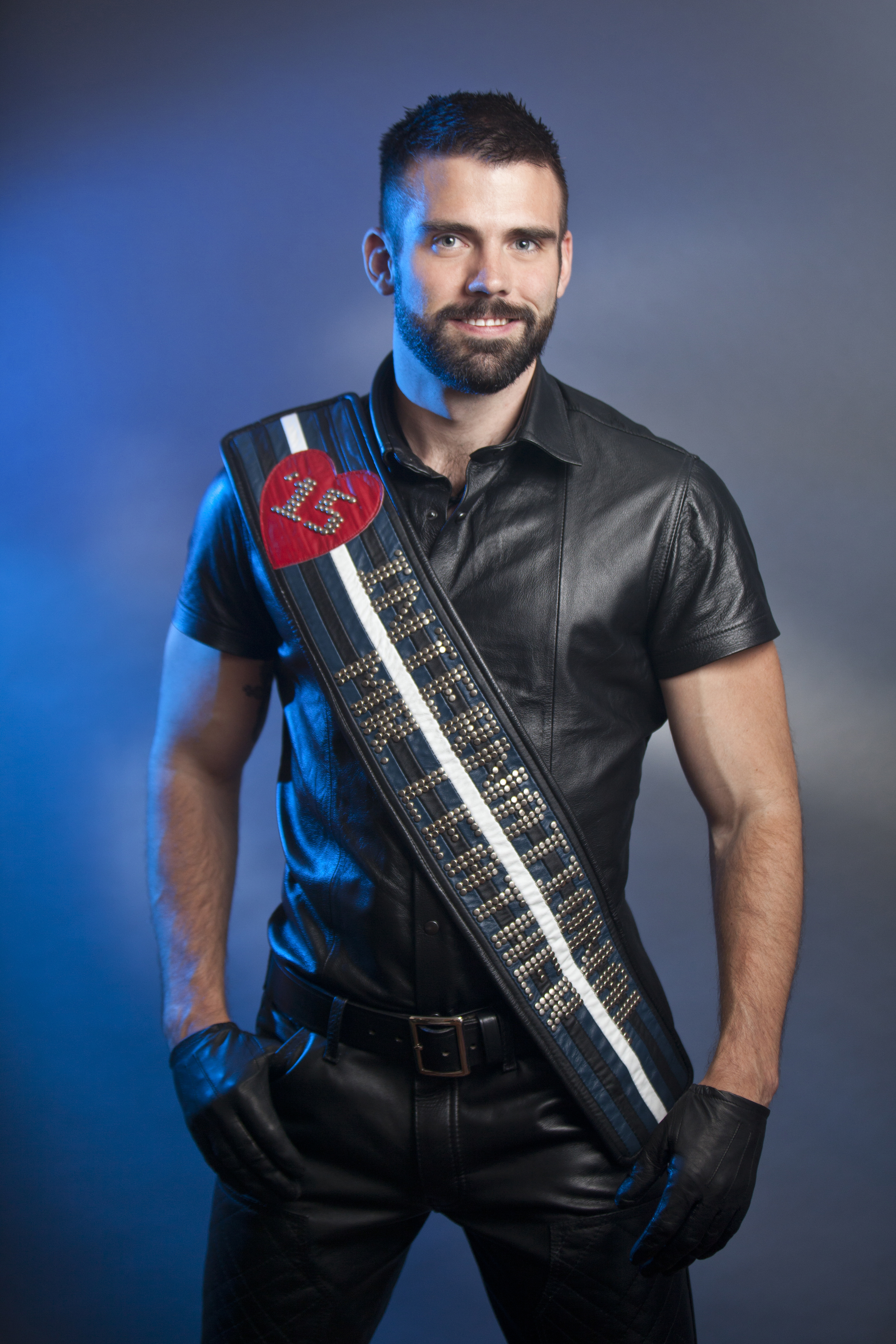
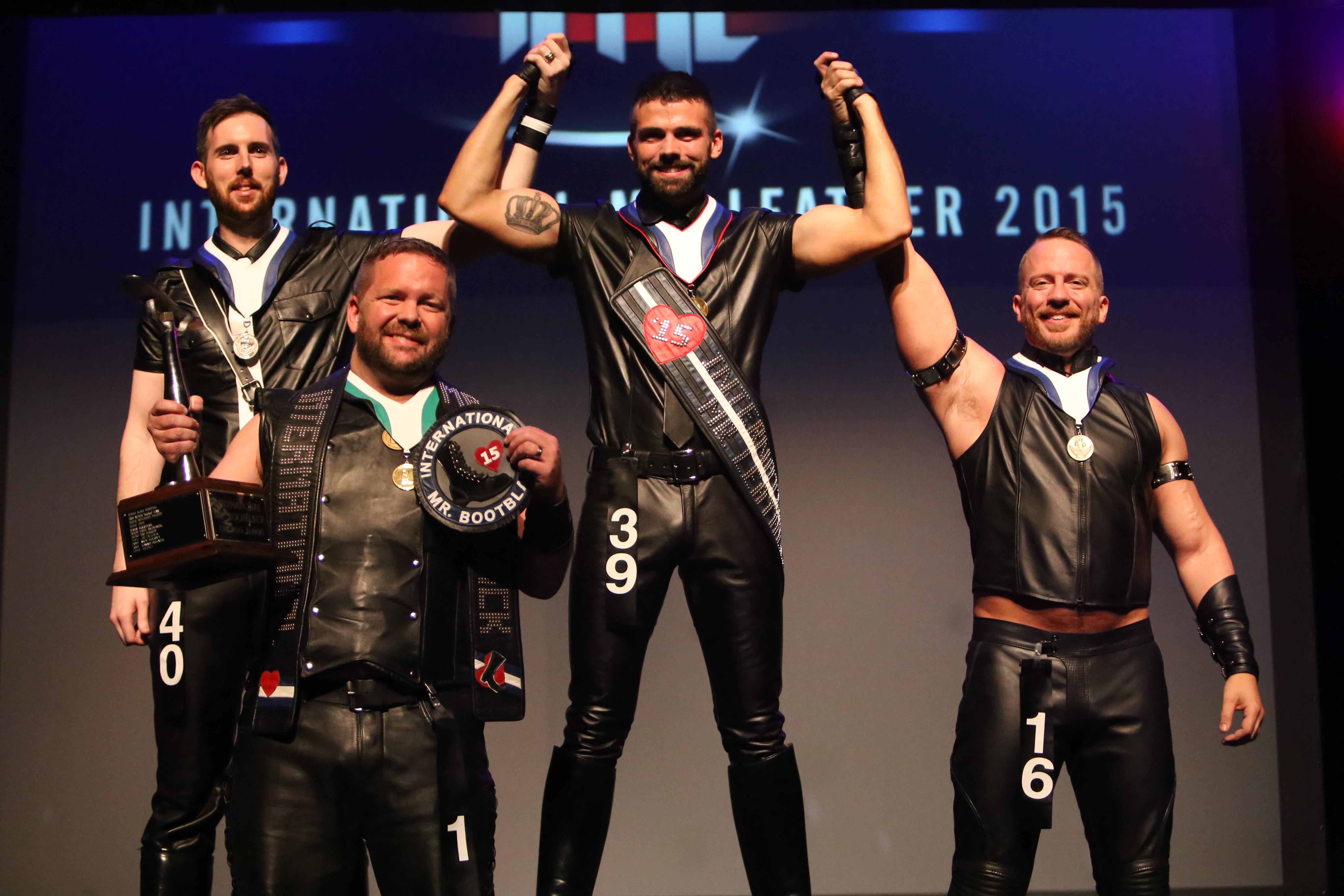
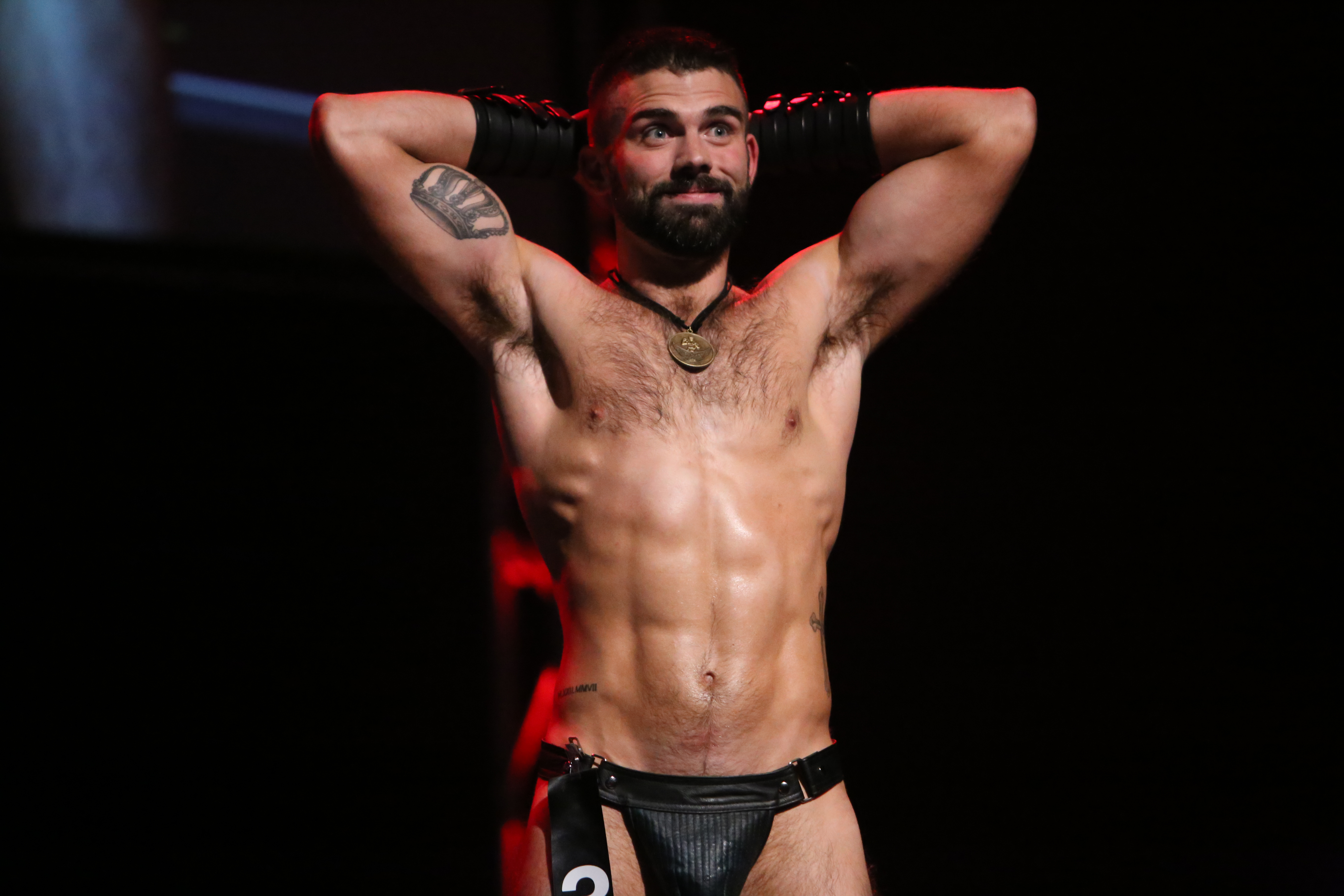
Patrick Smith of Los Angeles is International Mr. Leather 2015. Originally from Winnipeg, Manitoba, the classically handsome Leatherman had been named both “Eagle LA Mr. Leather 2015” and “Mr. Los Angeles Leather 2015” in March early this year. At his big win in Chicago, his mother and sisters joined him on stage in what was one of the most memorable moments of IML 37. As full-time Ambassador for the Leather Community, Smith is determined to emphasize the “International” in his Title. He is committed to the fight for universal GLBT equality as well as for the unapologetic sexual freedom that characterizes the Leather community. That commitment included traveling abroad.

Prior to winning the title, Smith had traveled to India and to numerous Latin American countries. Not long after IML, he was off to Uganda, the African country which received widespread attention in North America for the law that was nicknamed the “Kill The Gays Bill.” The hard-line stance in that nation was largely stimulated in 2009, when a Member of Parliament introduced The Anti Homosexuality Act. The Act would have broadened the criminalization of same-sex relationships in Uganda, as well as introducing the death penalty for “serial offenders,” HIV-positive people who engaged in sexual activity with people of the same sex, and persons who engaged in same-sex sexual acts with people under 18 years of age. In addition, individuals or companies that “promoted” LGBT rights would be fined, imprisoned or both. A slightly watered-down law (punishment of life in prison, instead of the death penalty, for “aggravated homosexuality”) eventually emerged in 2014. That law was annulled (on a technicality), but not before ushering in the more extreme and even violent spirit of homophobia which exists today.

Homosexuality remains a criminal act in Uganda. In fact, it’s well known that a lot of African countries are not safe spaces for openly gay people– for religious and/or political reasons. Smith offers his own observations on the subject:

There is a deep fear and misunderstanding of the GLBT community among many Africans, which is being stoked by irresponsible church leaders and politicians. And in many ways, it’s not unlike the prejudices that were being spread in the Western world not so long ago. Anti-gay figureheads in Africa speak about the need to ‘protect’ children from GLBT people, which echoes the messaging used by U.S. anti-gay figures such as Anita Bryant in the 1970s. And it’s no coincidence — there is a disturbing amount of cooperation between U.S. anti-gay groups and African politicians to pass the heinous legislation that we’re seeing there. That’s why it’s important we continue to fight these anti-gay groups here at home. Despite our recent domestic victories, people are still in need of our help abroad.

It’s a safe bet that most of us will probably never make it to Uganda! Was the visit a culture shock for Smith? He tells me:

There was a culture shock, but I will say that the people of Uganda are incredibly warm and friendly, and did all they could to make me feel welcome. Day-to-day life is so different based on your socioeconomic status there. On one hand, I visited a church with some of the country’s most affluent citizens all dressed to the nines, who could fit into the Western world without anyone batting an eye. On the other hand, you see extreme poverty with citizens selling their wares on the side of the road just to make enough to put food on the table.

I asked Smith if the natives reacted a certain way to a tall, striking-looking Caucasian stranger visiting their homeland. He responded:

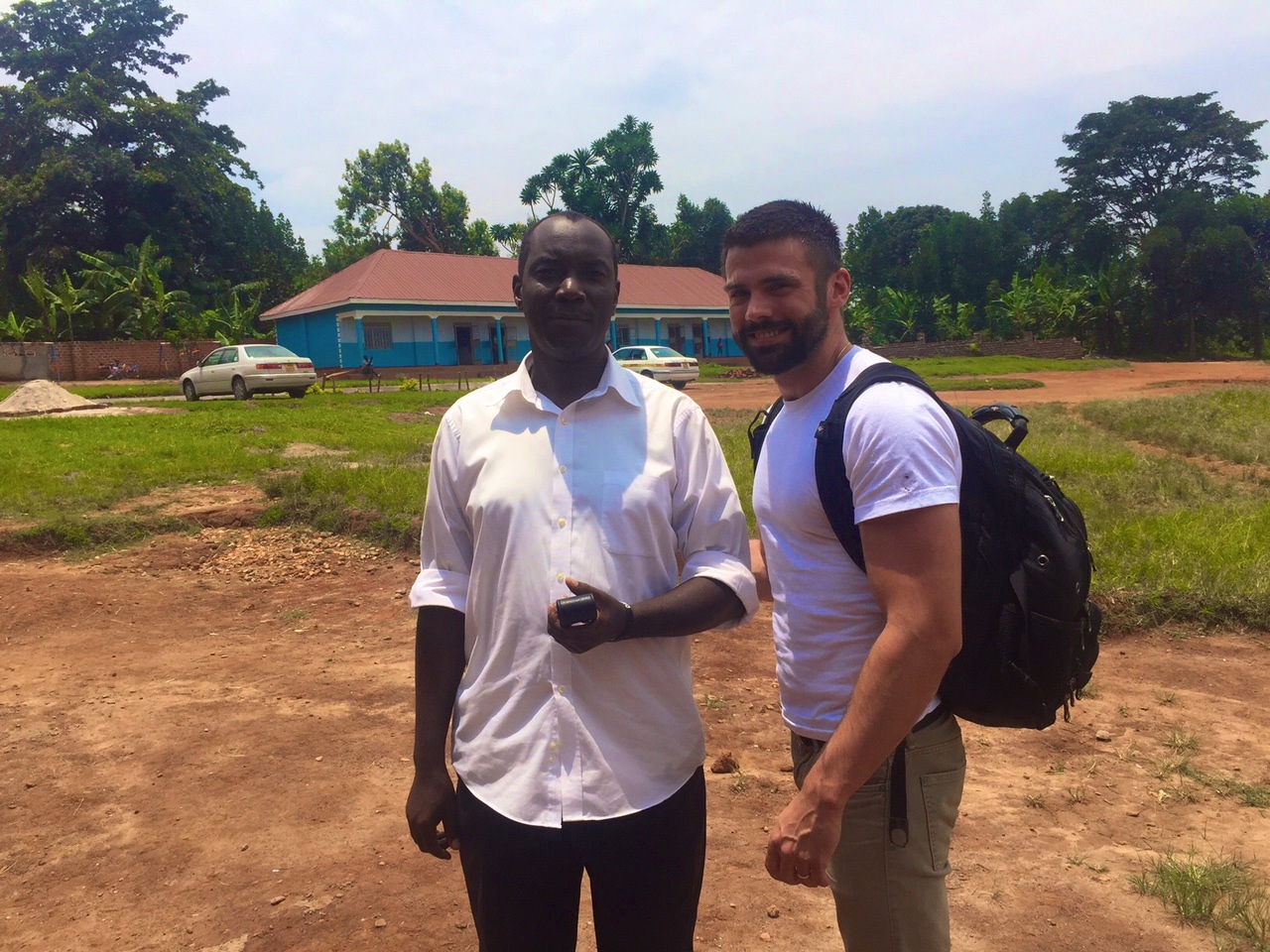
They did. I visited a school in a rural part of the country and I had the incredible opportunity to conduct a lengthy Q&A session with an eighth grade class. I was told that for most of the students, it was their first time seeing a white person face-to-face. Later in the village, I did turn a few heads, but it was nothing threatening– just genuine curiosity. Everyone I spoke with was very pleased that I was visiting. They are very proud of their country, and looking beyond the human rights concerns, it is a beautiful place.

What was the most challenging part of Smith’s visit to the African country?

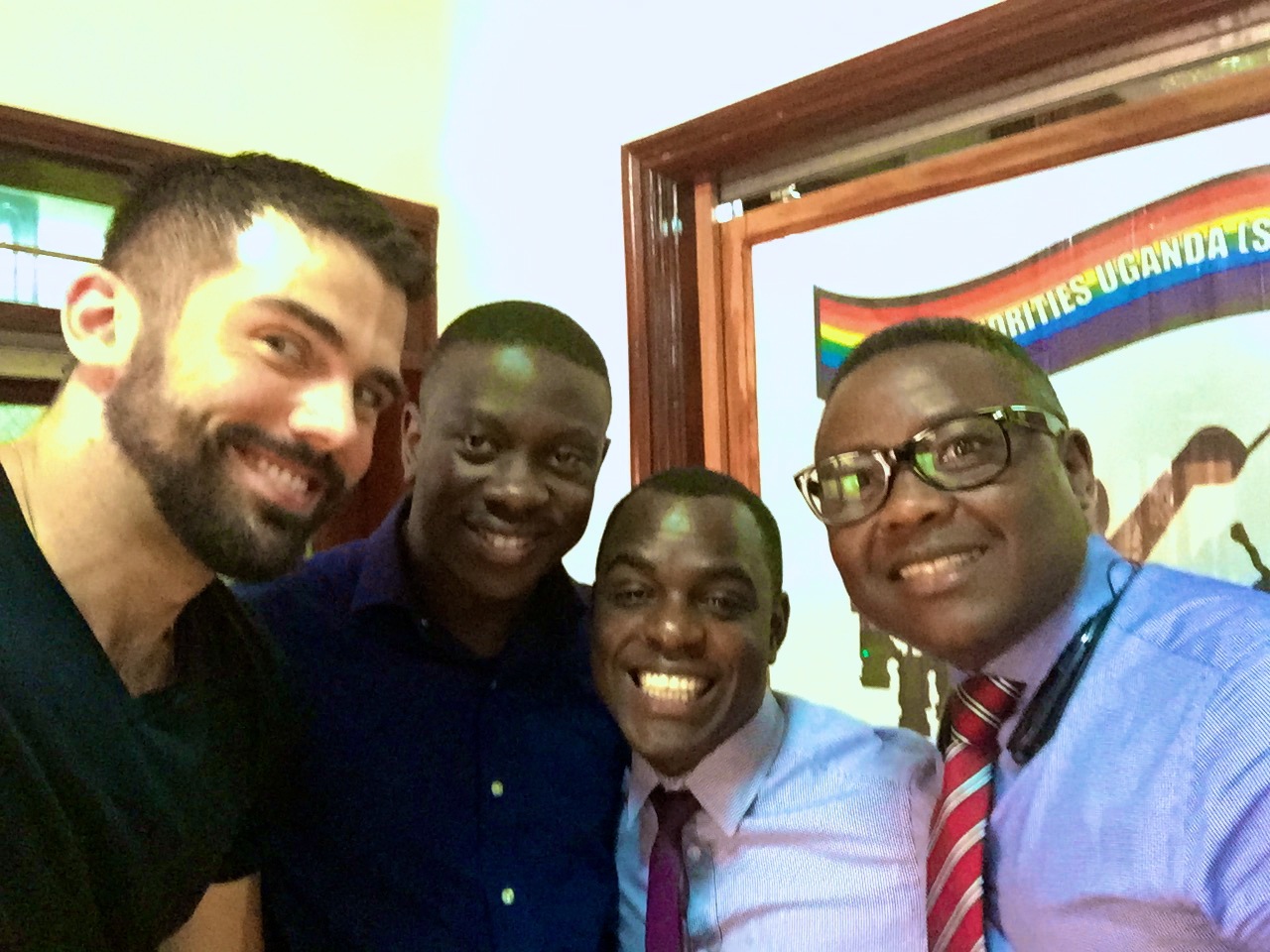
It was actually a bit of a challenge contacting and getting meetings with the community leaders there, but for good reason. Everything is so underground. They have to be very, very careful about whom they put their trust into to meet with, to disclose their address to, etc. There is the very real risk of entrapment for them there. So it took many conversations over e-mail, Facebook and by phone before a level of trust was built allowing me to visit their homes and places of work.

Smith still doesn’t know if the Ugandan government ever knew about his visit. He tells me:

They certainly didn’t know in advance of my visit; I was very discreet in the lead-up to it. My family actually begged me not to go, and while that wasn’t an option for me, I did commit to not publicizing the trip in advance. The most nerve-wracking part of the trip was going through customs once I landed. I had only one backpack with me, which contained my IML sash, correspondence between me and some of the most prominent gay rights activists in Uganda and a computer full of research on the status of the gay community in the country. I was terrified I would be selected for a random search. I still don’t know what would have happened if they had searched me.

After Uganda, Smith went on to visit the Ukraine. When I asked him about why he chose to visit there, he tells me:

I wanted to learn about how the ongoing Russia/Ukraine conflict has affected the community there. I was actually expecting a better situation than what I found, which is unfortunate. Despite now living under a pro-European Union regime, things have gotten worse for the gay community since the revolution in 2014. Pro-Russian forces in Ukrainian border communities are terrorizing GLBT people there — assaulting them, driving them out of their homes. I met with four women living in a shelter in Kiev, who had to flee their homes in Donetsk and Luhansk along the Russian border. They had to pack up everything and flee at a moment’s notice, fearing for their safety due to their sexual identity. It was a terribly heartbreaking story to hear.

A lot of American GLBT’s may wonder why they should care about what happens in foreign countries, when we are still fighting our own struggle for equality on a day-to-day basis. What would International Mr. Leather say to them? He answers:

I would ask them to think, next time they’re sipping champagne at a friend’s same-sex wedding, about what life would be like if they had to fear an 18-year prison sentence for having sex with the person they love. I do understand that there are still battles to be fought at home, but we are light years ahead of where these people are in the international community. And the reason I’m going to these places is to hopefully bring some awareness to this. Should we keep fighting for employment non-discrimination and ending the ban on donating blood? Absolutely. But I think we should start focusing more and more resources on our GLBT brothers and sisters abroad, who are fighting for their lives.

I ask him: As individuals, what can each and every one of us in the U.S. and Canada do to fight for equality worldwide on a daily basis on a local level? He tells me:

There are a few things we can do. First: Money talks. The groups I met with are all able to accept foreign donations, and we must be willing to open our wallets to help them. We also must continue to put political pressure on our leaders to call out GLBT rights violations abroad. In Uganda, it worked. Their most recent anti-gay bill was struck down by the courts and activists, and we are optimistic it will never come back thanks to the international backlash it received in the first go-around. Lastly, there are a disgusting number of US-based anti-gay groups that are funding and lobbying for international anti-gay legislation that would throw GLBT people in jail for life, or worse. We need to work to expose these groups here at home, handicap their fundraising efforts and get them listed as registered hate groups.

For many people, Leathermen are seen as the epitome of classic masculinity and overt, unapologetic sexuality. Arguably the most visible member of the worldwide Leather community, Patrick Smith is clearly not content to be solely a sex symbol or a nightlife presence. He tells me, “I love the Leather contests and the parties, but it’s more rewarding for me to learn about– and hopefully, help to influence — the state of our community in parts of the world where GLBT people still live on the fringes of society.” Only five months into his reign as International Mr. Leather, Smith has clearly shown his willingness to venture into unfamiliar (and possibly even unsafe) territory to reach his goals. This is one leader worth following!

You can follow Patrick Smith at www.PatrickJonSmith.com. To learn more about IML, visit www.IMRL.com.

(All photos courtesy of Patrick Smith.)

2015-10-26-1445841890-6189804-PatrickSashmed.jpg

2015-10-26-1445841995-1567426-patrick8.JPG
2015-10-26-1445842053-5768037-PatrickRevMarkKiyimba.jpg
2015-10-26-1445842089-1417215-patrick.jpg

2015-10-26-1445842146-1154540-patrick2.jpg

2015-10-26-1445842479-4007951-patrick4.JPG

— This feed and its contents are the property of The Huffington Post, and use is subject to our terms. It may be used for personal consumption, but may not be distributed on a website.


feeds.huffingtonpost.com/c/35496/f/677065/s/4afe5888/sc/38/l/0L0Shuffingtonpost0N0Cjed0Eryan0Cmr0Esmith0Egoes0Eto0Euganda0Ei0Ib0I83875820Bhtml0Dutm0Ihp0Iref0Fgay0Evoices0Gir0FGay0KVoices/story01.htm

Open Question: Should I put my ex girlfriend out of her misery?

Open Question: Should I put my ex girlfriend out of her misery?
I got back in my touch with my ex girlfriend and now we’re good friends. She has definitely changed a lot, and I think it’s some sort of disease that’s poisoning her mind. She started talking about the LGBT community and the 100 different f*cking flags for imaginary genders Tumblr has created, talking sh*t about religions and people like Christians, Muslims, etc. and how she’s a radical atheist. I think some sort of virus has infected her brain with these thoughts and I think she shouldn’t suffer anymore. Should I pull the trigger and put her out of her misery? I can tell the real her is in pain and agonizing because she watches Steven Universe and reads Homestuck. The real her would never be involved with such cancerous things.

answers.yahoo.com/question/index?qid=20151026184001AAvWOPi

Accenture to Receive Corporate Equality Award at the 2016 HRC Greater NY Gala

Accenture to Receive Corporate Equality Award at the 2016 HRC Greater NY Gala

Accenture has consistently earned a perfect score of 100 on the HRC’s CEI, a long-term supporter of LGBT equality, and was one of the first companies to sign on in support of HRC’s groundbreaking global workplace equality coalition committed to advancing LGBT workplace equality around the world.
HRC.org

www.hrc.org/blog/entry/accenture-to-receive-corporate-equality-award-at-the-2016-hrc-greater-ny-ga?utm_source=rss&utm_medium=rss-feed