
R&B Singer Tamia: I Compare All My New Music to 'Stranger in My House'

R&B Singer Tamia: I Compare All My New Music to 'Stranger in My House'
“I still get goosebumps when I go to a drag show and they’re performing ‘Stranger in My House,'” admits singer Tamia with a laugh.
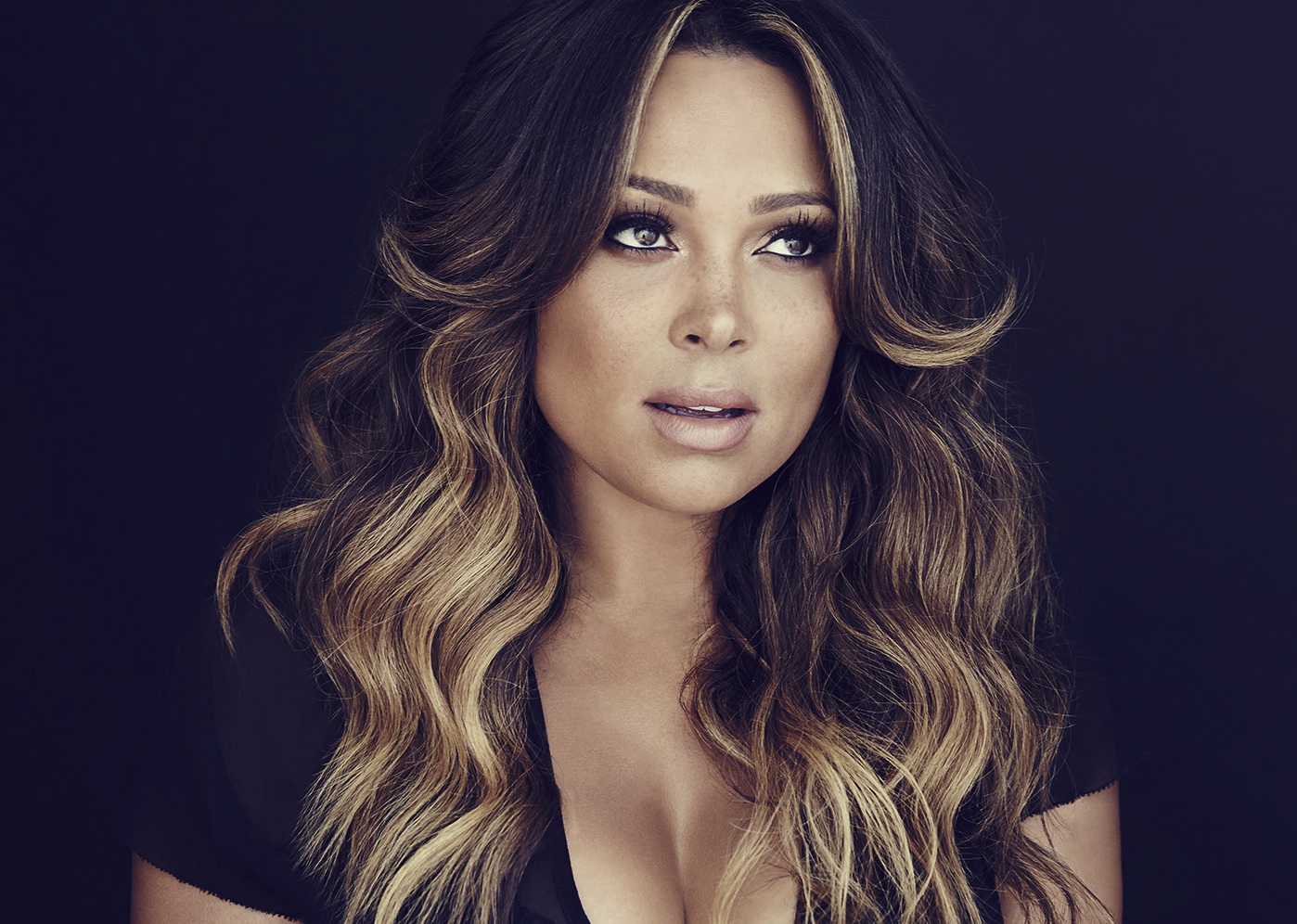
2015-09-10-1441855130-6453818-Tamia.jpg

The star must get chills often then! Nearly 20 years after its release, the chart-topping Thunderpuss remix of “Stranger” is now classic in LGBT clubs…bordering on cliché among drag performers. And the song remains Tamia’s single greatest Billboard chart success to date. Its multi-genre appeal speaks to her approach to music, she says.

“I make music for everyone,” confirmed Tamia during a recent telephone interview, “If you show me love, I show you love back!”

In 2001, the Canadian solidified herself as a recording artist with mass appeal. The smoldering album version of “Stranger” became Tamia’s sole Top 10 mainstream hit — and third such staple at R&B stations. Those remixes, inescapable in gay clubs, topped global dance charts. Even now, Tamia says, fans of all varieties go crazy for the song.

And, she acknowledged, in some ways that continues to guide her career — even influencing the writing on her latest album, Love Life.

Watch “Stuck with Me” from Tamia’s New Love Life Album


“Hopefully, my career is long, and ‘A Stranger in My House’ was a long time ago, but I love performing that song,” she stated. “I can’t wait to get to it in a show. So that’s what I compare [any new material] to.

“I always ask myself, ‘Is this something I want to sing for the rest of my life?'” Tamia confessed, “Or if somebody said, ‘She sings that song!’ am I going to be proud?'”

The formula seems to have worked. After two independent album releases, her major label return Love Life arrived in early June on Plus One, a subsidiary of Def Jam Records. Led by singles “Sandwich and a Soda” and “Stuck with Me,” it opened at No. 2 on the R&B Album tally, Tamia’s highest-charting record to date.

“I didn’t know if I wanted to go with a major label, but when I met with them, they said, ‘We want you to continue everything you’ve been doing, we just want to help you with it,'” she shared.

Apparently Def Jam took note of Tamia’s self-made success! After More in 2004, No. 17 on Billboard‘s “Hot 200” and a Top 5 R&B Album, she left long-time label Elektra. Independently-released Between Friends (2006) and Beautiful Surprise (2012) both broke the R&B Top 10.

Relive Tamia’s Iconic “Stranger in My House” Remix!

Given her track record alone, Tamia was hesitant to re-sign with a major label. However, noting the added reach such an agreement offers, not to mention the financial support, she was open to discussions. Her new label home, she said, proved to be a…well, “beautiful surprise.”

“They didn’t say, ‘If you can just work with this producer’ or ‘If you can just be a little younger or a little thinner’ or a little whatever,” noted Tamia, who has experienced exactly that in the past with other labels. “They just wanted to be there to help me along. They were like, ‘What goals do you have? How do you see this project?'”

With the album now a proven success, a tour in support of the new work is in full swing. Throughout Sept., Tamia has performances scheduled in Houston, New Orleans, Dallas, along the West Coast and across the Southwest. She lands at San Francisco’s Regency Ballroom on Tues., Sept. 22.

“I feel very fortunate that, after 20 years in the music business and six albums later, I’m able to still do what I love and make music that continues to inspire me,” she said in closing, “And, hopefully, will be appreciated by everyone.”

For Additional Information About Tamia’s Love Life Tour, Click Here.

— This feed and its contents are the property of The Huffington Post, and use is subject to our terms. It may be used for personal consumption, but may not be distributed on a website.


feeds.huffingtonpost.com/c/35496/f/677065/s/49bf3e01/sc/28/l/0L0Shuffingtonpost0N0Cpollo0Edel0Emar0Crb0Esinger0Etamia0Ei0Ecompare0Ib0I81142220Bhtml0Dutm0Ihp0Iref0Fgay0Evoices0Gir0FGay0KVoices/story01.htm

Charlie Hunnam cites Queer As Folk as proof he wasn’t afraid of Fifty Shades sex scenes

Charlie Hunnam cites Queer As Folk as proof he wasn’t afraid of Fifty Shades sex scenes

Actor Charlie Hunnam is opening up about his decision to drop out as the male lead of the film Fifty Shades of Grey.

“Oh, it was the worst professional experience of my life,’ Hunnam tells V Man. ‘It was the most emotionally destructive and difficult thing that I’ve ever had to deal with professionally. It was heartbreaking.’

Hunnam was replaced in the role of Christian Grey by Jamie Dornan because of a demanding work schedule that included shooting the final season of his FX series Sons of Anarchy then make the film Crimson Peak directed by Guillermo Del Toro.

The actor wants to make clear the decision was all about scheduling and not the explicit sex scenes in the film.

‘The outside perception of that was that I got really cold feet and got scared of the explicit nature of the sexuality of the piece,’ he says.

For anyone who thinks that, Hunnam points to his very explicit sex scenes as gay teen Nathan Maloney on the original Queer as Folk series in 1999-2000.

‘When I was 18 I was getting f—– in the ass, completely naked on national TV, you know?’

The post Charlie Hunnam cites Queer As Folk as proof he wasn’t afraid of Fifty Shades sex scenes appeared first on Gay Star News.

Greg Hernandez

www.gaystarnews.com/article/charlie-hunnam-cites-queer-as-folk-as-proof-he-wasnt-afraid-of-fifty-shades-sex-scenes/

Mexican Man With 19-Inch Penis Sued U.S. Prison Guards For Penis-Related Mistreatment

Mexican Man With 19-Inch Penis Sued U.S. Prison Guards For Penis-Related Mistreatment

Screen Shot 2015-09-10 at 11.19.35 AMThere is nothing fun about having a 19-inch penis.

We wouldn’t know from experience, but beyond the eye-popping phrase and lifelong conversation starter, Roberto Esquivel Cabrera has had a hell of a time with his third leg.

Here’s a bizarre video from TMZ in which he weighs the oversized member. The clip climaxes with Cabrera slapping himself in the face with his phallus while country music plays in the background:

And to make matters worse (as if they could get any worse), Cabrera has filed a law suit against guards at a Mississippi prison where he served time after illegally entering the country.

He said some prison guards made a spectacle of his abnormal penis and in handwritten documents, Cabrera alleges the guards demanded to take pictures of his penis, which they called “anaconda.” He also claims a female guard watched him as he changed his clothes and that gay prison guards would grab his penis while searching him.

TMZ rightly notes, “he did not explain why he says they’re gay.”

His lawsuit was dismissed when he was sent back to Mexico in 2011, but the legend lives on.

Dan Tracer

feedproxy.google.com/~r/queerty2/~3/AimESNTr1i0/mexican-man-with-19-inch-penis-sued-u-s-prison-guards-for-penis-related-mistreatment-20150910

AsapScience Gets Handsy with a Lesson on Why Self Love is Good for You: VIDEO

AsapScience Gets Handsy with a Lesson on Why Self Love is Good for You: VIDEO

asapscience

AsapScience goes to town on the topic of masturbation and discusses why it’s good for you, both physically and mentally, to touch yourself. Myths such as developing hairy palms go out the window as masturbation is not only good for you, but prevents future erectile dysfunction in males, strengthens sperm and essentially cleans out prostates, thereby reducing chances of developing prostate cancer.

The guys also tackle womens’ masturbatory health and find they carry as many benefits as male masturbation.

Watch as AsapScience gets handsy with masturbation, urging viewers to wank away to their heart’s content, below:

The post AsapScience Gets Handsy with a Lesson on Why Self Love is Good for You: VIDEO appeared first on Towleroad.


Anthony Costello

AsapScience Gets Handsy with a Lesson on Why Self Love is Good for You: VIDEO

Anti-Government Group Threatens To Step In To Keep Kim Davis Out Of Jail

Anti-Government Group Threatens To Step In To Keep Kim Davis Out Of Jail

Kentucky clerk Kim Davis will return to work next week after having been jailed for contempt of court, and one anti-government group wants to make sure she never winds up behind bars again.  

The Oath Keepers, described by the Southern Poverty Law Center, a civil rights organization, as a “fiercely anti-government, militaristic group,” say they have their sights set on defending the Rowan County clerk, who has refused to issue marriage licenses to same-sex couples.

In a phone call with Jackson County Kentucky Sheriff Denny Peyman, Oath Keepers founder Stewart Rhodes said members of his group had reached out to Davis’s legal team and were already forming an on-the-ground presence in Kentucky’s Rowan County, but remained tight-lipped on specifics, Right Wing Watch reports. Rhodes said his group’s action had nothing to do with same-sex marriage, but instead was focused on his belief that Davis had been illegally detained after being found in contempt of court by not issuing marriage licenses. 

“As far as we’re concerned, this is not over,” he said in the audio clip above. “This judge needs to be put on notice that his behavior is not going to be accepted, and we’ll be there to stop it and intercede ourselves if we have to.” 

Rhodes went on to compare Davis’s plight to that of the Founding Fathers, in that it deals “with the magistrates and the officers of the crown who wanted to run roughshod over the rights of the colonists without a jury indictment, without any of that.”

Arguing that the U.S. has an “unconstitutional imperial presidency” in place, Rhodes said in a statement on the Oath Keepers website, “We have had boots on the ground there since last week and will continue to have a presence …  [Federal District Court Judge David Bunning] has assumed unto himself not just the powers of all three branches of government, but has also taken on the powers of judge, jury, and ‘executioner.'”

Earlier this year, the Oath Keepers sparked controversy after sending four armed men to Ferguson, Missouri to reportedly protect conservative writers from the website, Infowars.com

Meanwhile, Davis’s attorney, Mathew Staver, has compared his client’s situation to that of Jews living in Nazi Germany.

“What happened in Nazi Germany, what happened there first, they removed the Jews from government public employment,” he said in a radio interview. “Then they stopped patronizing them in their private businesses, then they continued to stigmatize them, then they were the ‘problems,’ then they killed them.”

Also on HuffPost: 

— This feed and its contents are the property of The Huffington Post, and use is subject to our terms. It may be used for personal consumption, but may not be distributed on a website.


feeds.huffingtonpost.com/c/35496/f/677065/s/49beddc1/sc/7/l/0L0Shuffingtonpost0N0C20A150C0A90C10A0Canti0Egovernment0Emilitia0Egroup0Evows0Eto0Ekeep0Ekim0Edavis0Eout0Eof0Ejail0In0I81193680Bhtml0Dutm0Ihp0Iref0Fgay0Evoices0Gir0FGay0KVoices/story01.htm

American Horror Story: Hotel trailer features queer cast beyond Matt Bomer and Lady Gaga

American Horror Story: Hotel trailer features queer cast beyond Matt Bomer and Lady Gaga

FX unveiled its first sneak peak of American Horror Story: Hotel on Thursday (10 September).

The trailer doesn’t reveal much in terms of plot but does provide the first glimpses of the show’s entire all-star cast which is led by Lady Gaga and Matt Bomer.

The bisexual Gaga and the openly gay Bomer head a cast that also includes bisexual actress Sarah Paulson – a AHS franchise veteran – and out actors Denis O’Hare and Cheyenne Jackson.

Also in the cast: Kathy Bates, Angela Bassett, Wes Bentley, Chloë Sevigny, Lily Rabe, Max Greenfield, Mare Winningham, Evan Peters, Darren Criss and Finn Wittrock.

AHS: Hotel premieres on FX on 7 October. It is the fifth season of the anthology series co-created, executive produced, written and directed by openly gay Ryan Murphy of Glee fame.

The post American Horror Story: Hotel trailer features queer cast beyond Matt Bomer and Lady Gaga appeared first on Gay Star News.

Greg Hernandez

www.gaystarnews.com/article/american-horror-story-hotel-trailer-features-queer-cast-beyond-matt-bomer-and-lady-gaga/

Lesbian Stands Trial For Impersonating A Man And Tricking Woman Into Having Sex With Her

Lesbian Stands Trial For Impersonating A Man And Tricking Woman Into Having Sex With Her

gayleOh, the lengths some people will go just to get laid. The Guardian is reporting that a U.K. woman named Gayle Newland has been accused of pretending to be a man and duping a woman into having a relationship with her male alter ego that included sexual intercourse. The case is currently unfolding at Chester Crown Court with both women taking the stand and giving two different, and bizarre accounts of what transpired between them.

Newland, who is 25, has a fake online profile for a man she named Kye Fortune. She has admitted to the court that she created the male persona when she was 13 years old once she realized she was attracted to women but was unable to come to terms with her sexuality. She hid behind the Kye Fortune identity while she communicated with girls in online chat rooms and eventually created profiles for Fortune on MySpace and Facebook.

The victim, whose name is being withheld for legal reasons, has testified that she struck up an online relationship with Fortune on Facebook unaware that she was being catfished. After two years of cyberdating, they began to meet in person and have sexual encounters and were even engaged at one point, but the complainant never saw Kye. She willingly agreed to be blindfolded for the duration of all of their meet-ups because she was led to believe that Fortune was recovering from treatment of a brain tumor and did not want her to see him. It wasn’t until she removed the blindfold after a failed attempt at performing fellatio on Fortune that she discovered his penis was really a strap-on dildo — and that Kye was really Gayle.

Screen Shot 2015-09-10 at 2.04.44 PM“Every time I met up with Kye Fortune, I either had the mask on already or he would wait outside the door and I would put it on,” the victim testified in court.

Newland, however, claims that her paramour was always aware of her true identity and is in actuality a closeted lesbian. According to her, the two met at a nightclub a few years ago where Newland shared that she met women online using her Kye Fortune alter ego. Newland stated that the victim was a willing participant in their relationship and used Fortune to fulfill some sort of sexual fantasy through role-playing. As for Kye’s brain tumor, Newland explained that since “no one knew [the complainant] was gay” she fabricated the storyline as a way to prevent her family from meeting Fortune aka Newland.

Apparently, Mr. Fortune gets around. Shortly after Newland’s arrest, another woman came forward and revealed that she had also been catfished by the accused but figured out her true identity before meeting in person.

The case of she said, she said continues to unfold in court. If convicted, Gayle Newland is facing five counts of sexual assault.

Jeremy Kinser

feedproxy.google.com/~r/queerty2/~3/PDN_96602LQ/lesbian-stands-trial-for-impersonating-a-man-and-tricking-woman-into-having-sex-with-her-20150910

In Defense Of Gaydar

In Defense Of Gaydar

Screenshot 2015-09-10 12.41.59

Dwight Schrute (Rainn Wilson) attempting to use his homemade gaydar wand on Oscar Martinez (Oscar Nunez,) his gay coworker.

The Interplay is a special biweekly column exploring the intersections of sex, pop culture, and current events.

‘Gaydar’ is a marvelous, complicated, many-splendored thing. If this new study out of the University of Wisconsin in Madison is to be believed, though, gaydar is nothing more than a reliance on problematic stereotypes that ultimately reinforce small-minded thinking about gay people.

“Most people think of stereotyping as inappropriate,” said William Cox, who led the research. “But if you’re not calling it ‘stereotyping,’ if you’re giving it this other label and camouflaging it as ‘gaydar,’ it appears to be more socially and personally acceptable.”

Because gaydar relies on people defining others using only a handful of basic character traits, Cox explained, it runs the risk of encouraging people to be reductive when it comes to others’ identities. Of the three groups that participated in the study, the people who were told that gaydar was definitely real were much more likely to stereotype. That tendency, Cox said, could potentially encourage people to be more prejudiced and potentially violent towards gay people.

The study isn’t entirely wrong in breaking down why gaydar is unreliable, but it misses what makes the pseudo-sense such an integral part of being gay.

For all of its flaws, gaydar is one of the most invaluable assets that gay people when it comes to simply identifying one another. Though we typically describe it as some sort of innate ability that allows us to sense the presence of other gay people, gaydar is, in reality a person’s ability to notice the subtle (and sometimes not so subtle) character traits we associate with gayness. Things like physical mannerisms, style of dress, and tone of voice coalesce into rough outline of who we might think a person is and we operate on those assumptions until they’re proven wrong.

Studies investigating just how accurate gaydar is when it comes to identifying gay folks have shown that it’s marginally more spot-on than randomly guessing, but gaydar’s real value has more to do with the idea behind it.

Even if gaydar isn’t technically the most effective means of finding other gay people (asking usually works well,) it serves a much more subtle purpose for the people projecting it: negotiating and understanding their own sexuality in relation to the people around them. Using or even just believing in gaydar allows for people to experience their surroundings as an implicitly queer-affirming space. Being able to entertain the idea that the people around you might be gay allows for a sort of openness to the larger queer identity that that we all participate in the creation of in different ways.

One of the more interesting cultural challenges queer people have always faced stems from our familial relationships. Because gay people are (usually) born into straight families and oftentimes don’t know any other gay people as they’re growing up, there’s a degree to which being gay can feel like a solitary experience. Gaydar, in certain instances, can act as that first identification with another queer person, even if there is no actual one-on-one interaction.

Gaydar allows us to see our own queerness in others in a way that is powerful and important in constructing our identities. Flawed as it may be, gaydar and the ideas attached to it are an integral part of the way that we as gay people learn and perform cultural gayness. Even if the person you’re cruising isn’t actually gay, your analysis can inform the way that you understand your own sexuality and broaden the way that you view that of others.

Gaydar is far from being a perfect tool, but writing it off as a universally problematic thing simply isn’t fair.

The Interplay is a special biweekly column exploring the intersections of sex, pop culture, and current events. The opinions expressed are those of the author.

The post In Defense Of Gaydar appeared first on Towleroad.


Charles Pulliam-Moore

In Defense Of Gaydar

Trans Lives Matters and Black Lives Matters Join Forces for Justice

Trans Lives Matters and Black Lives Matters Join Forces for Justice

At the same time that the conservative backlash against the Black Lives Matter movement unfolds, new voices within BLM are attempting to rebut critics by showing that BLM is a thoughtful, peaceful protest movement that empowers transgender people, women, and all marginalized Americans. 

Fox News Channel commentator Bill O’Reily campaigned throughout the summer against the movement, charging it with “Gestapo tactics,” as he alleged in a July 29 broadcast, and insisting that BLM is antipolice. O’Reilly was joined in his attacks by Republican presidential candidates like Wisconsin Gov. Scott Walker, who allege that BLM enables crime, as Jamelle Bouie observed in Slate magazine.

But on August 29, a black queer arts and activism collective called the Each-Other Project hosted a panel discussion at the Brooklyn Ethical Society Center to discuss strategies to better highlight the experiences of transgender people and women within BLM. The panel is part of a developing documentary video project. Two black gay partners, Donja R. Love, a playwright and screenwriter, and Brandon Nick, a filmmaker, head the Each-Other Project

Reached by phone on September 1, Love and Nick described the Each-Other Project as a “community-building project” that seeks to “uplift black queer people” by bringing visibility to under-discussed issues through online storytelling and a video series featured on itswebsite and on YouTube. The recent Exploring Black Queer/Trans Lives panel is the second installment of the EOP’s “Exploring” video series. The panel was moderated by the black gay author Alex Hardy, and the panelists included Samantha Master, a member of Washington, D.C.’s Black Youth Project 100; Bryanna A. Jenkins, cofounder and director of the Baltimore Transgender Alliance; Larry Fellows III, a St. Louis native and community activist in Ferguson, Mo.; and Hari Ziyad, the editor in chief of RaceBaitR.com, an online digest devoted to antiracism work. 

The linking of Trans Lives Matters and BLM comes at a pivotal time of rising fatal violence against transgender people in the United States. Of the 20 estimated murders of transgender Americans across the country this year, 17 of the victims were transgender women of color, as The Advocate reported.

BLM began in July 2013 after George Zimmerman shot Trayvon Martin to death in Florida. The protest movement gained momentum after police-involved deaths of unarmed African-Americans like Michael Brown in Ferguson, Mo.

In a phone interview September 2, Master, one of the panelists, described the Exploring Black Queer/Trans Lives panel as a “powerful example of intersectional framework in action. Centering women and trans lives have always been a focus of the BLM movement and our most important protest strategy is to always work within an intersectional framework.”

Master explained that the term “intersectionality” was coined by Kimberlé Crenshaw, a University of California, Los Angeles, law professor, in a 1989 paper for the University of Chicago Legal Forum as a way to show how multiple identities like sexuality, gender, race, and class interact with each other in everyday life and in the struggle for justice. Sometimes, as Master suggested, multiple identities become multiple jeopardies. For example, while a few black trans spokespeople like Janet Mock and Laverne Cox have gained national recognition, most low-income black transgender people suffer from compounded discrimination that make it multiply difficult to obtain vital, everyday resources like employment, health care, and housing, as Master noted. 

“If we do our advocacy within an intersectional framework we ensure that people who are most at the margins are lifted up. Then we all get free,” Master said, adding, “It is the lack of an intersectional analysis that has created strong rifts within justice movements because the movement focuses on people who are most privileged and then works its way out instead of focusing on those who are most vulnerable and working our way inward.”

Of conservative commentators’ backlash against the Black Lives Matter movement, Master said, “Whenever the inviolability of human rights is asserted, there is always pushback that declares the very humanity of oppressed people, our very existence, be it black, women, queer, or trans, as attacking dominant people.”  

“The most important strategy that we have as black trans people is to stop being afraid of entering cisgender spaces and calling attention to our struggles,” said Jenkins, another Exploring Black Queer/Trans Lives panelist, in a phone interview September 2. “Too often transgender people in general and black trans people in particular are isolated. We are thought not to relate to larger ways of life, and this is not true,” Jenkins added. “We are everywhere and our ideas and lives matter.” 

Jenkins was recently featured in Baltimore Style magazine’s “Say My Name” photo essay featuring five transgender Baltimoreans who are making a difference. As part of the Baltimore Transgender Alliance, Jenkins helped organize a groundbreaking community meeting June 9 with Baltimore City State’s Attorney, Marilyn Mosby, to discuss better strategies for law enforcement to deal with transgender people. 

Jenkins noted that the Exploring Black Queer/Trans Lives panel helps combat persistent myths about BLM, including the myth that the movement does not focus on women’s lives. In an article for Cosmopolitan magazine, published online Tuesday, Brittney Cooper debunked the belief that BLM is a leaderless movement that does not center women’s lives. On the contrary, BLM’s three cofounders, Patrisse Cullors, Alicia Garza, and Opal Tometi are black women, and women’s lives  and, indeed all multiply disadvantaged lives  ave always been the movement’s focus, something highlighted in a Fortune magazine report on a #BlogHer15 confab July 16 that featured Cullers and Tometi.


Cleis Abeni

www.advocate.com/2015/9/10/trans-lives-matters-and-black-lives-matters-join-forces-justice